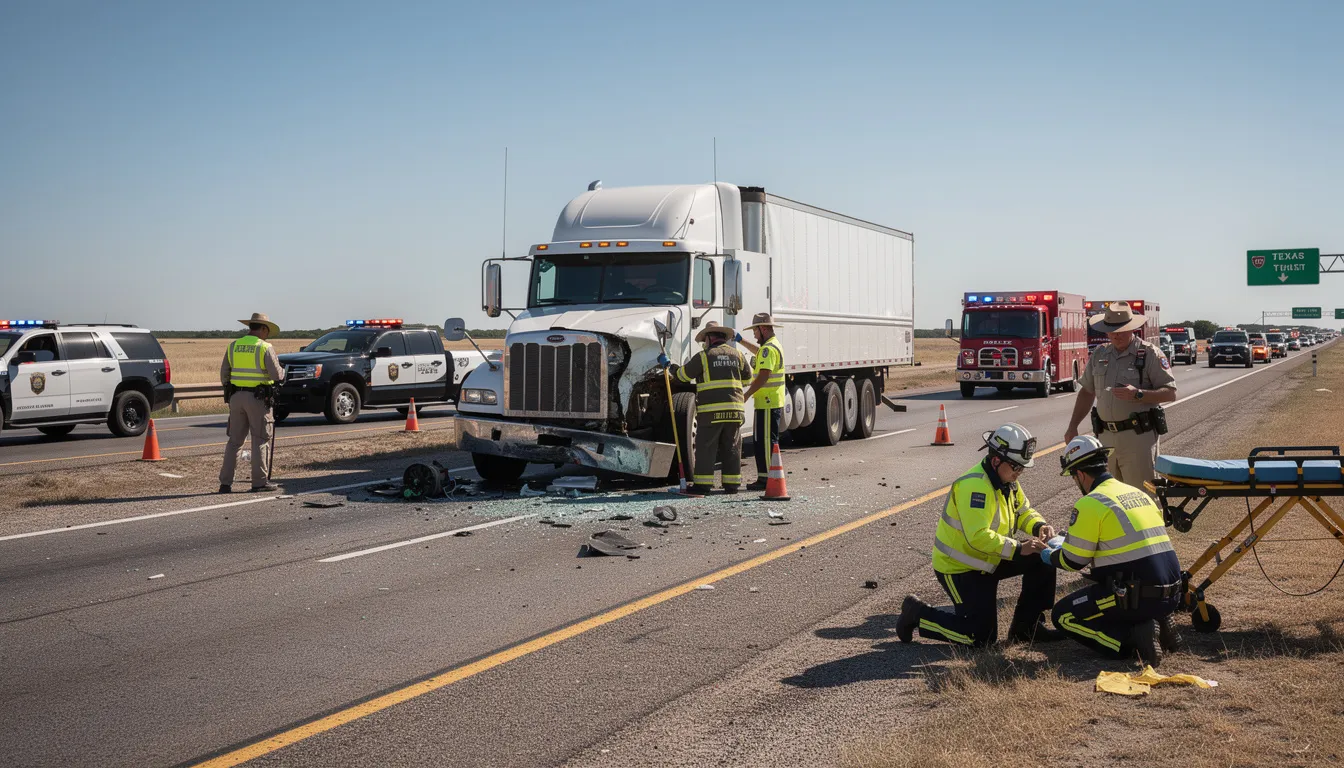
Every year, hundreds of thousands of collisions involving large trucks occur on American roads. These crashes are not just statistics—they represent devastating injuries, lost lives, and families forever changed.
Understanding how truck crashes happen, why they’re so dangerous, and what to do if you’re involved can help you protect yourself and your loved ones. This guide breaks down the essential facts about truck accidents, from the physics behind their severity to the legal steps you should take afterward.
Overview of Truck Crashes in the United States
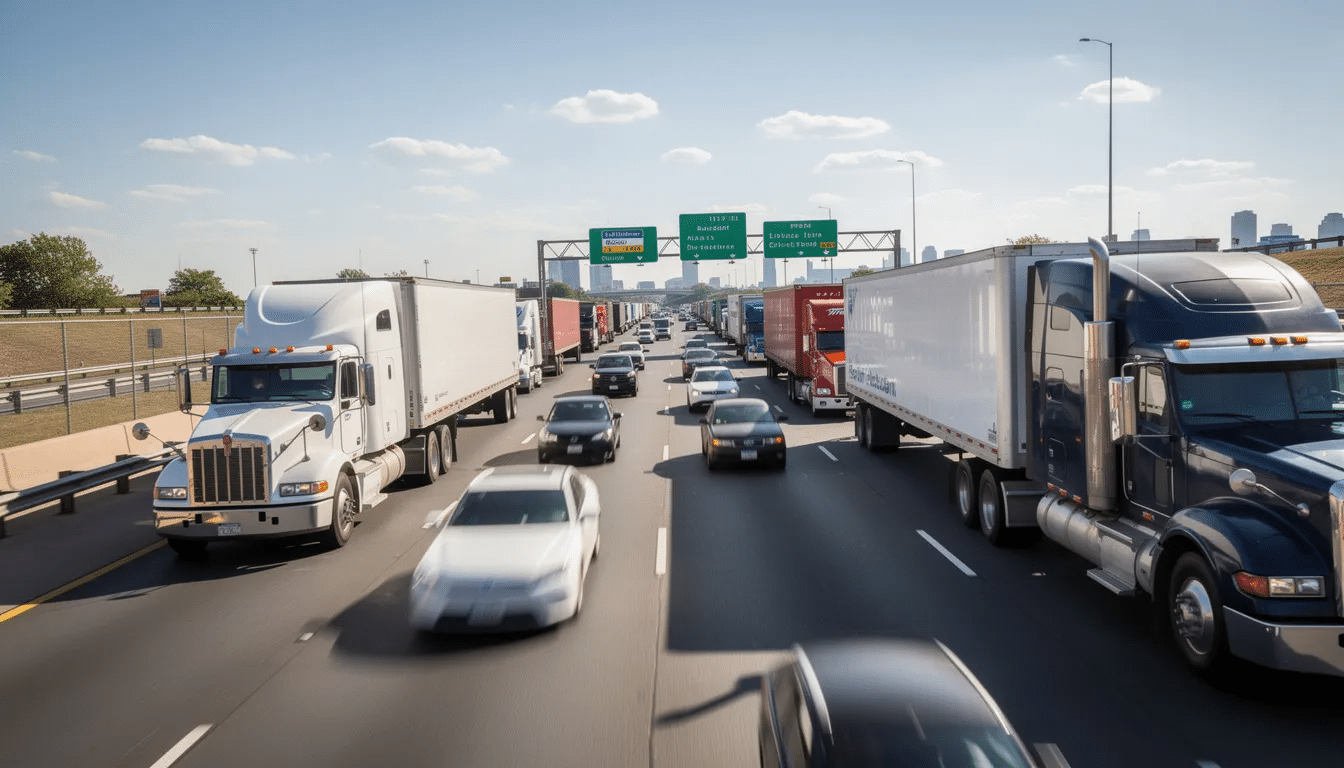
Crashes involving large trucks happen with alarming frequency across the country. In 2023 alone, more than 5,300 large trucks were involved in fatal crashes, and approximately 153,000 people were injured in truck-related collisions.
Here’s what makes these numbers particularly concerning: most people killed or hurt in truck crashes are not truck drivers. According to National Safety Council data, roughly 70% of fatalities in large truck crashes are occupants of other vehicles, while another 12% are pedestrians and bicyclists.
Several factors make truck crashes especially dangerous:
-
Size and weight: Fully loaded tractor trailers can weigh 80,000 pounds or more
-
Stopping distance: Trucks need significantly more room to stop than passenger cars
-
Underride risks: Smaller vehicles can slide underneath trailers in certain collisions
-
Blind spots: Large trucks have extensive “no-zones” where drivers cannot see other vehicles
This article explains the common types of truck crashes, where and when they most often occur, what causes them, and what victims can do to protect their rights afterward.
Why Truck Crashes Are So Deadly
Physics and vehicle design combine to make truck crashes far more severe than typical collisions between passenger vehicles. When a semi truck collides with a car, the outcome is almost always worse for the smaller vehicle’s occupants.
The Weight Problem
A fully loaded tractor-trailer can weigh 20 to 30 times more than an average passenger car. This massive weight difference means:
|
Vehicle Type |
Average Weight |
Comparison |
|---|---|---|
|
Compact car |
3,000 lbs |
Baseline |
|
SUV |
5,000 lbs |
1.7x |
|
Loaded semi truck |
80,000 lbs |
26x |
That weight requires 20-40% more distance to stop, especially on wet roads, downhill grades, or when brakes are worn. A truck traveling at highway speed may need the length of two football fields to come to a complete stop.
Underride Crashes
One of the most catastrophic crash scenarios occurs when a smaller vehicle slides underneath the rear or side of a trailer. In these underride crashes, the top of the car is often sheared off, leading to severe head and neck injuries or instant death for front-seat occupants.
Blind Spot Dangers
Semi trucks have expansive blind spots—sometimes called “no-zones”—along both sides, directly behind the trailer, and in front of the cab. These blind spots increase the risk of sideswipe and lane-change crashes because truck drivers simply cannot see vehicles traveling in these areas.
Structural Mismatch
The height and stiffness of truck frames often bypass the crumple zones and airbags designed to protect passenger car occupants. When a truck strikes a car, the impact frequently occurs at chest or head level rather than at the bumper, where crash protection is concentrated.
Example scenario: A driver in a Mazda is stopped in traffic on an interstate during rush hour. A semi truck driver, distracted by an in-cab device, fails to notice the traffic backup until it’s too late. The truck cannot stop in time and rear-ends the Mazda at 40 mph, crushing the rear of the vehicle and causing life-threatening injuries to the occupants.
Common Types of Truck Crashes
Certain crash patterns occur repeatedly with large trucks, each with distinct causes and legal implications. Understanding these patterns helps explain why these incidents happen and who may be at fault.
The most frequent crash types include:
-
Rollovers
-
Rear-end collisions
-
Head-on collisions
-
Jackknife accidents
-
T-bone and intersection crashes
-
Sideswipe and lane-change collisions
-
Wide-turn accidents
Many of these crashes involve a combination of factors: driver fatigue, speeding, adverse weather, road design problems, and cargo loading issues. Let’s break down each type.
Truck Rollovers
A high center of gravity makes tractor-trailers and tanker trucks vulnerable to tipping and rolling over. When a truck rolls, it often blocks multiple lanes and can crush vehicles in adjacent lanes.
Where rollovers typically occur:
-
Freeway entrance and exit ramps
-
Rural curves
-
Construction zones with sudden lane shifts
-
Areas where drivers swerve to avoid obstacles
Common causes include:
-
Excessive speed for the curve or conditions
-
Sudden steering inputs
-
Cargo shifting inside trailers or liquid sloshing in tankers
-
Soft road shoulders that give way under the truck’s weight
Example: A tanker truck carrying fuel enters an interstate ramp near a major city during morning rush hour. The driver takes the curve too fast, the liquid cargo shifts, and the tanker rolls across two lanes of traffic. Multiple vehicles are involved in the resulting pileup, and the area is shut down for hours while hazmat crews respond.

Rear-End Truck Collisions
A rear-end truck collision occurs when a truck strikes the back of a slower or stopped vehicle ahead. These crashes are particularly devastating because the truck often overrides the smaller vehicle.
Heavy trucks need much longer stopping distances, especially at highway speeds above 55 mph. When a truck driver is following too closely or fails to notice slowing traffic, the result can be catastrophic.
Common causes:
-
Tailgating and inadequate following distance
-
Distracted driving (cell phones, in-cab devices, paperwork)
-
Speeding in congested conditions
-
Fatigue causing delayed reaction times
Rear-end truck crashes frequently cause:
-
Crush injuries to lower extremities
-
Death from vehicle compression
Example: A semi truck is traveling on an interstate when traffic suddenly slows due to a construction zone. The truck driver, who has been driving for hours, doesn’t brake in time and impacts three cars stopped ahead. Two people are pronounced dead at the scene, and several others suffer serious injuries.
Head-On Truck Collisions
Head-on crashes occur when the front of a truck strikes the front of another vehicle traveling in the opposite direction. These collisions have extremely high fatality rates due to combined impact speeds and the massive size difference between vehicles.
Where they typically happen:
-
Two-lane rural highways with no median barrier
-
Roads where trucks attempt to pass slower vehicles
-
Curves where a truck drifts into the opposing lane
Key contributing factors:
-
Fatigued or drowsy driving (especially overnight long-haul routes)
-
Alcohol or drug impairment
-
Distraction from devices or paperwork
-
Sudden medical emergencies like heart attacks or seizures
Example: An overnight long-haul driver has been on the road since Sunday evening. Around 4 a.m. on a two-lane rural highway, fatigue sets in. The driver drifts across the centerline and collides head on with a family’s minivan. All occupants of the minivan are killed.
Jackknife Truck Accidents
Jackknifing occurs when the trailer swings out at an angle to the cab, forming an “L” or “V” shape. Once a truck begins to jackknife, the driver often loses all control. Learn more about common causes of car accidents and how to avoid them.
Typical triggers:
-
Heavy braking on wet, icy, or downhill roads
-
Lightly loaded trailers that are more prone to swing
-
Uneven brake adjustment between tractor and trailer
-
Sudden evasive maneuvers
A jackknifed trailer can block multiple lanes of traffic, setting off secondary crashes as other vehicles cannot stop in time.
Example: A semi truck is traveling on a snowy interstate in October when the driver brakes hard to avoid hitting a deer. The trailer swings out, blocking three lanes. Following vehicles colliding with the trailer and each other result in a multi-vehicle chain reaction crash. One person is killed and several others are injured.
T-Bone and Intersection Truck Crashes
T-bone (side-impact) crashes occur when the front of a truck strikes the side of a car, usually at intersections. These crashes leave vehicle occupants with minimal structural protection.
Common intersection behaviors that lead to T-bone crashes:
-
Running red lights or stop signs
-
Failing to yield while turning left across traffic
-
Misjudging gaps in cross traffic
-
Speeding through yellow lights
Side impacts frequently cause:
-
Chest and rib injuries
-
Pelvic fractures
-
Arm and shoulder trauma
Visibility issues like sun glare or obstructed sight lines, combined with heavy loads that lengthen stopping distances, can worsen outcomes at intersections.
Sideswipe and Lane-Change Truck Collisions
Sideswipe crashes involve contact between the sides of two vehicles traveling in the same or opposite direction. For trucks, these often occur during lane changes when a truck driver fails to see a vehicle in a blind spot.
Common causes:
-
Failing to check mirrors thoroughly
-
Not using turn signals
-
Drifting from fatigue or distraction
-
Wind gusts pushing trailers sideways
Even “minor” sideswipes can force smaller cars off the road or into other lanes, causing rollovers or secondary impacts with other vehicles, guardrails, or fixed objects.
Example: A truck driver on a busy freeway decides to merge into the left lane to pass a slower vehicle. A compact car is traveling in the truck’s blind spot. The truck clips the car, sending it spinning across two lanes where it is struck by another vehicle.
Wide-Turn Truck Accidents
Tractor-trailers often need to swing wide to complete right turns, creating hazards for vehicles, bicyclists, and pedestrians nearby.
“Squeeze play” situations occur when:
-
A car is trapped between the truck and curb
-
A vehicle tries to pass on the right as the truck turns
-
Bicyclists are caught between the turning trailer and the intersection
Misjudged turning radius, failing to check mirrors, and attempting tight turns in crowded city streets all increase crash risks. The danger is particularly severe at urban intersections when trucks turn right across bike lanes or crosswalks.
Where and When Truck Crashes Most Often Occur
Truck crashes are not limited to interstates. They happen on rural highways, major arterials, and urban streets with surprising frequency.
Location Patterns
|
Road Type |
Share of Fatal Truck Crashes |
|---|---|
|
Rural roads |
More than 50% |
|
Interstates and freeways |
Significant portion |
|
Urban arterials |
Lower share, but higher pedestrian/cyclist risk |
Rural roads are particularly dangerous because:
-
Higher operating speeds
-
Two-lane undivided highways increase head-on risk
-
Longer emergency response times
-
Fewer safety features like rumble strips and guardrails
Time Patterns
Nearly half of truck-related traffic deaths occur during daytime hours—typically between 6 a.m. and 3 p.m.—because that’s when most commercial freight moves.
Key timing patterns:
-
Weekday crashes are more common than weekend crashes for trucks
-
Late summer and fall months (August through October) often show higher fatal truck crash counts
-
February and other winter months typically see fewer fatal truck crashes (though crashes that occur may be more severe due to weather)
Example: A busy freight corridor like Interstate 10 in Texas or Interstate 95 along the East Coast sees constant truck traffic during weekday business hours, concentrating crash risk during those times.
Leading Causes and Risk Factors in Truck Crashes
Most truck crashes stem from a mix of human error, mechanical issues, and environmental conditions. Rarely does a single factor explain why a crash happened.
Driver-Related Causes
-
Fatigue: Long shifts, circadian disruption, and pressure to meet delivery windows
-
Speeding: Pressure to meet deadlines or make up lost time
-
Distraction: Cell phones, navigation systems, paperwork, eating
-
Impairment: While commercial drivers have lower rates of alcohol involvement than passenger vehicle drivers, stimulants and other substances are sometimes factors
Vehicle-Related Issues
-
Poor brake maintenance and out-of-adjustment brakes
-
Worn or underinflated tires
-
Inadequate lighting
-
Improperly secured or overloaded cargo
Road and Weather Conditions
-
Rain, ice, fog reducing visibility and traction
-
Construction zones with abrupt lane changes
-
Poorly designed intersections and highway ramps
-
Inadequate signage or faded lane markings
Systemic Pressures
Trucking companies sometimes pressure drivers to deliver quickly, creating unrealistic schedules that encourage speeding and hours-of-service violations. Weak enforcement of driving time limits can compound these problems.
Example: A truck driver begins a route on Friday after only four hours of sleep. By Saturday night, he’s pushing to meet a Monday morning delivery deadline. Rain begins falling as he enters a construction zone. Fatigued, driving too fast for conditions, and hauling an overweight load, he loses control on a curve and crashes through the work zone, injuring three highway workers.
What to Do After a Serious Truck Crash
If you’re involved in a truck crash, your first priority is safety. Take a deep breath—it’s normal to feel shocked and overwhelmed. Focus on these steps to protect yourself and your legal rights.
Immediate Steps at the Scene
-
Move to safety if possible (off the roadway, away from traffic)
-
Call 911 immediately
-
Check for injuries but avoid moving anyone who may have spinal injuries
-
Avoid confrontation with the truck driver—emotions run high after crashes
Gather Evidence
Document everything you can:
-
Photos or video of vehicle positions and damage
-
Skid marks and road conditions
-
Visible company logos on the truck
-
License plates and DOT numbers
-
Traffic signs and signals in the area
-
Weather conditions
Collect Contact Information
Get details from:
-
The truck driver (name, employer, insurance)
-
The trucking company
-
Any witnesses who saw the crash
-
Responding law enforcement officers (badge numbers, report numbers)
Seek Medical Attention
Get a medical evaluation promptly, even if your injuries seem minor. Some conditions—like concussions, internal bleeding, or spinal injuries—may not show symptoms for hours or days after the incident occurred.
Protect Your Rights
Contact an experienced truck accident lawyer before:
-
Speaking with the trucking company’s insurance adjuster
-
Signing any paperwork or recorded statements
-
Accepting any settlement offers

Legal and Insurance Issues After Truck Crashes
Truck crash claims are significantly more complex than typical car accident claims. Multiple parties may share responsibility, and trucking companies have teams of lawyers ready to minimize their liability.
Potential Liable Parties
Unlike a simple car crash where the other driver is typically the only defendant, truck crash cases may involve:
|
Party |
Potential Liability |
|---|---|
|
Truck driver |
Negligent driving, hours violations |
|
Trucking company (LLC or corporation) |
Hiring, training, supervision failures |
|
Freight broker |
Negligent carrier selection |
|
Maintenance contractor |
Brake, tire, or other mechanical failures |
|
Cargo loader |
Improper loading or securement |
|
Parts manufacturer |
Defective brakes, tires, or safety systems |
Insurance Considerations
Trucking companies are required to carry much higher insurance limits than personal drivers—often $750,000 or more for general freight carriers. However, their insurers aggressively defend claims and will investigate every angle to reduce payouts.
Crucial Evidence to Preserve
Time is critical. Key evidence that must be preserved quickly includes:
-
Electronic logging device (ELD) data showing hours of service
-
GPS records showing speed and route
-
Dash-cam footage from the truck and nearby vehicles
-
Maintenance and inspection logs
-
Cargo loading documents
-
The driver’s qualification file and training records
-
Drug and alcohol test results
A qualified attorney can send preservation letters to prevent this evidence from being destroyed or overwritten.
Types of Compensation
Victims of truck crashes may pursue compensation for:
-
Medical bills (current and future)
-
Lost wages and reduced earning capacity
-
Pain and suffering
-
Permanent disability or disfigurement
-
Wrongful death damages for surviving family members
Deadlines Matter
Every state has statutes of limitations that set deadlines for filing claims. Missing these deadlines can permanently bar your case, regardless of how strong it is. An investigation should begin immediately after the crash to preserve evidence and meet all legal requirements.
Key Takeaways
-
Large truck crashes kill over 5,000 people annually in the U.S., with 70% of deaths being occupants of other vehicles
-
Truck crashes are especially deadly due to weight differences, stopping distances, and underride risks
-
Common crash types include rollovers, rear-end collisions, jackknifes, and intersection crashes
-
Most fatal truck crashes occur on rural roads during daytime weekday hours
-
Leading causes include driver fatigue, speeding, distraction, and mechanical failures
-
After a crash, prioritize safety, gather evidence, seek medical care, and consult an attorney
Conclusion
Truck crashes represent some of the most devastating incidents on American roads. The physics of a collision between an 80,000-pound truck and a 3,000-pound car almost always favor the truck—leaving passenger vehicle occupants, pedestrians, and bicyclists to bear the worst consequences. If you are interested in understanding your legal rights after such incidents, resources are available to help guide you.
Understanding how these crashes happen and why they’re so dangerous is the first step toward protecting yourself. If you’re ever involved in a truck crash, remember: get to safety, document everything, seek medical attention, and contact an experienced attorney before speaking with insurance companies.
The data shows that while overall traffic deaths are trending downward—with the first half of 2025 showing an 8.2% decline compared to 2024—truck crashes remain a significant public safety concern. By staying informed and knowing your rights, you can better navigate the aftermath of these life-changing incidents.