A truck crash can change everything in seconds. The injuries are often severe, the medical bills start stacking up immediately, and the trucking company’s legal team is already working to limit what they owe you. A trucking accident lawyer levels the playing field by securing evidence, managing insurance carriers, and building a case that reflects the true cost of what happened to you.
Key Takeaways
- Truck accident claims can be more complicated than ordinary car accident claims. Trucking cases are vastly different from standard car wrecks because they involve federal regulations, commercial insurance policies, corporate defendants, and evidence that can disappear within days. A specialized truck accident lawyer helps identify multiple liable parties and protect your rights from the start.
- Why trucking accidents are often more devastating:
- Trucks can weigh 20 to 30 times more than passenger cars, creating catastrophic impact forces
- Trucking companies often have large insurance policies, meaning higher stakes and more aggressive defense strategies
- Federal regulations govern driver conduct, vehicle maintenance, and company safety practices
- Multiple parties-driver, carrier, broker, shipper, manufacturer-may share fault
- Most states enforce a two-year statute of limitations for truck accident cases. In Texas and Indiana, truck accident claims must be filed within two years. In Colorado, injury claims allow three years, but wrongful death has a two-year deadline. In New Jersey, the statute of limitations is two years for truck accidents. Claims against government entities may have even shorter deadlines.
- Many personal injury attorneys work on a contingency fee basis, meaning there is no upfront payment and no legal fee unless they recover compensation for you.
- Early legal help can significantly improve outcomes for truck accident victims. Immediate legal action is crucial to preserve evidence such as electronic logging device data, maintenance records, and driver qualification files. Critical evidence like black box data can be lost or altered quickly if not preserved through a formal demand.
Why Truck Accidents Are More Devastating Than Car Accidents
A typical passenger car weighs between 3,000 and 4,000 pounds. A fully loaded 18-wheeler can reach 80,000 pounds under federal law. That difference is not just a statistic-it is the reason truck accident injuries are so much more severe than injuries in car accidents. The momentum and kinetic energy involved in a collision between a large commercial truck and a smaller motor vehicle create forces that passenger cars are simply not designed to withstand.
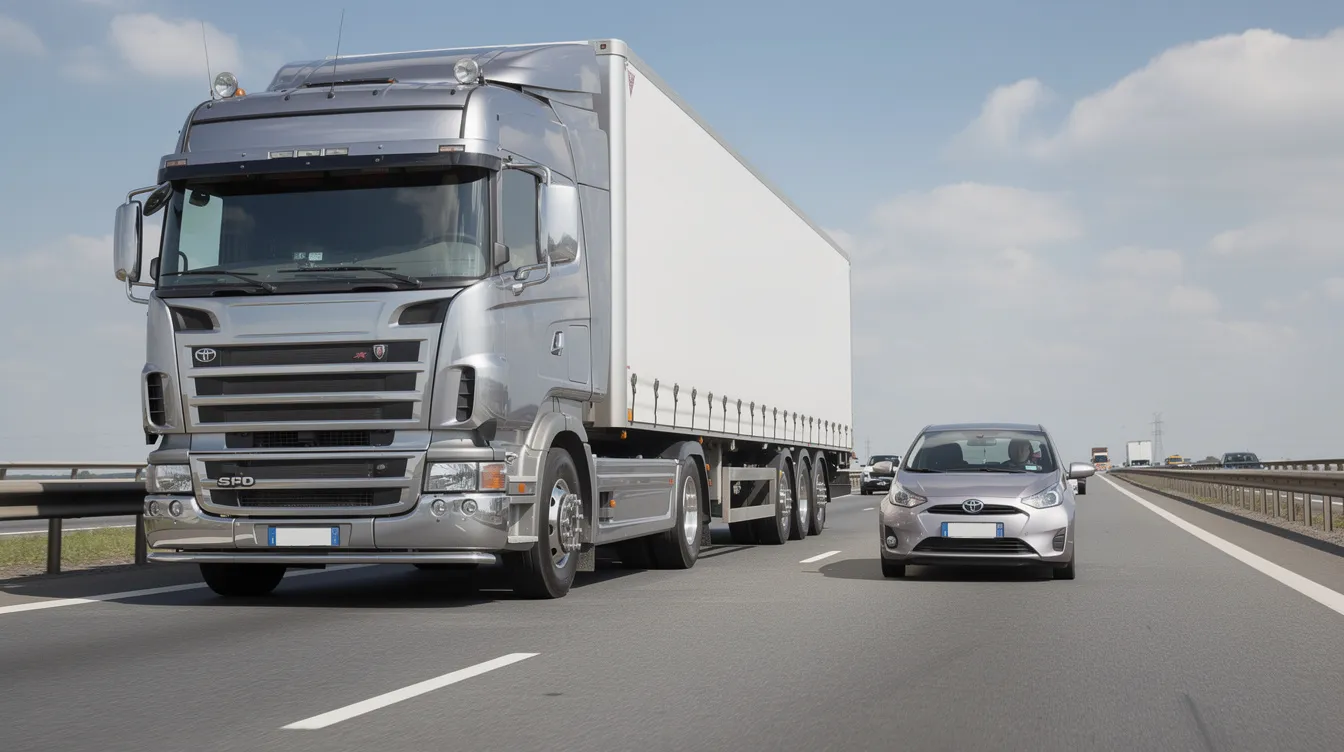
Trucks have higher ride heights, much longer stopping distances, and pose underride risks where a smaller car can slide beneath a trailer. These factors contribute to why 71% of fatalities in truck accidents are occupants of other vehicles, not the truck driver. FMCSA crash data from 2023 recorded approximately 160,997 large trucks involved in crashes that year, resulting in 4,267 vehicle fatalities. In New Jersey alone, 791 fatal crashes involved large trucks over a five-year period.
While car accidents often produce soft-tissue injuries and whiplash, truck accident injuries include traumatic brain injury, spinal cord damage, multiple fractures, broken bones, amputations, and severe burns. Truck accidents can cause life-altering injuries and result in catastrophic injuries like brain damage. Injuries from truck accidents often require prolonged medical treatment, and truck accidents can lead to permanent changes in quality of life-including the need for lifelong assisted care, home modifications, and loss of future earning capacity. The medical expenses alone can reach into the millions, and that is before accounting for lost wages and living expenses during recovery.
How a Truck Accident Lawyer Can Help You Right Away
The first 72 hours after a truck crash are the most critical window for preserving evidence and protecting your legal options. Trucking companies often deploy aggressive defense teams after an accident, sending investigators and adjusters to the scene while you are still in the hospital. A trucking accident lawyer can help manage legal filings and deadlines while you focus on your health.
Here is what an experienced truck accident attorney does immediately:
- Orders the police report and any available body-cam or surveillance footage
- Sends preservation (spoliation) letters to the trucking company, maintenance vendors, and brokers demanding they retain all electronic logging device data, driver logs, maintenance records, and dispatch communications
- Notifies all involved insurance companies of the claim
- Retains accident reconstruction experts, trucking safety specialists, and medical experts to document fault and injuries sustained early in the investigation process
Evidence preservation is critical in trucking accident cases. Trucking accidents often require quick preservation of electronic data because ELD logs can be overwritten, dash-cam footage may reset, and witnesses forget details within weeks. Your lawyer takes over all communications with the trucking company’s adjusters and commercial insurers, preventing injury victims from making statements that could be used against them later.
Many law firms offer a free consultation and can meet injured clients in the hospital, at home, or virtually within 24 hours of a serious 18-wheeler truck accident.
Common Causes of Trucking Accidents
FMCSA and state data confirm that driver-related factors cause the vast majority of trucking accidents involving large trucks. Driver error accounts for 87% of truck accident causes. But vehicle defects, environmental conditions, and company negligence also contribute, and the common causes of semi truck accidents and their impact on settlements are critical to understanding case value.

- Fatigue and hours-of-service violations: Drowsy driving is a common issue among truck drivers. The pressure to meet delivery deadlines pushes drivers to exceed federally mandated driving hour limits, especially during late-night and early-morning hours when drowsiness risk is highest.
- Distracted driving: Cell phone use, in-cab computers, GPS devices, eating, and paperwork while driving are all factors in commercial vehicle accident cases. Even a few seconds of inattention at highway speeds can be fatal.
- Improper loading and overloaded trailers: Unsecured cargo or overweight trailers cause rollovers, jackknife accidents, and lost-load collisions. This is especially common with dump truck and logging truck operations where load securement practices vary.
- Reckless driving and speeding: Following too closely, improper lane changes, and wide right turns by big rigs account for a significant percentage of accidents involving other motor vehicles on highways and surface streets.
- Defective parts and poor maintenance: Faulty brakes are a leading cause of truck accidents in Colorado, and a defective truck part-such as a blown tire, failed steering component, or malfunctioning trailer coupling-can turn a routine drive into a disaster. Inadequate vehicle maintenance by the carrier or a third-party contractor frequently surfaces as a factor in truck accident cases.
Types of Truck and Commercial Vehicle Accidents
A truck accident lawyer handles a wide variety of commercial vehicle accident scenarios, not just collisions with long-haul tractor trailers. Each crash type has distinct characteristics:
- Rear-end collisions: A large commercial truck striking a stopped or slow-moving car from behind, often at highway speed, producing devastating force.
- Jackknife accidents: The trailer swings outward at an angle to the cab, sweeping across multiple lanes and striking several vehicles.
- Underride crashes: A passenger vehicle slides beneath the rear or side of a trailer-one of the most lethal crash configurations.
- Rollovers: Top-heavy loads, sharp curves, or excessive speed cause the truck to tip, often blocking entire roadways.
- Wide-turn accidents: Semi trucks making right turns swing left first, crushing vehicles in adjacent lanes or crosswalks.
- Blind-spot (no-zone) collisions: Truck drivers cannot see vehicles in large blind spots along the sides and rear of the trailer.
- Multi-vehicle pileups: Common on interstates in poor weather, often triggered when a truck crash creates a chain reaction.
Specific vehicle categories include semi truck accidents involving 18-wheelers, dump truck accidents on construction routes, garbage trucks causing crashes in residential neighborhoods, and cement or logging truck incidents on rural highways. Each vehicle type is subject to different safety rules, insurance requirements, and maintenance obligations, which is why truck accident cases demand specialized knowledge and why choosing the best truck accident lawyers for your case can make a significant difference in the outcome.
Federal Regulations in the Trucking Industry
Commercial trucking is heavily regulated by the Federal Motor Carrier Safety Administration under the U.S. Department of Transportation. Trucking litigation involves specialized federal and state regulations that do not apply to ordinary car accidents.
Key regulatory areas include:
- Hours-of-service (HOS) limits: Drivers cannot drive more than 11 hours within a 14-hour duty window and must take a 30-minute break after 8 cumulative hours of driving
- Electronic logging devices (ELDs): Federally mandated devices that automatically record drive time, engine status, vehicle miles, and duty status changes
- Driver qualification standards: Physical fitness exams, background checks, driving history reviews, and periodic requalification under 49 CFR Part 391
- Drug and alcohol testing: Pre-employment, random, post-accident, and reasonable-suspicion testing programs
- Vehicle inspection and maintenance rules: Pre-trip and post-trip inspections, regular maintenance schedules, and repair documentation under 49 CFR Part 396
These specialized rules cover most trucks engaged in interstate commerce with a gross vehicle weight rating of 10,001 pounds or more, including many semi trucks and large commercial vehicles. Non-compliance is powerful evidence of negligence in a truck accident lawsuit. Truck accident lawyers help navigate complex federal regulations by reviewing logbooks, ELD data, and safety audits to uncover violations. A skilled truck accident attorney also compares the trucking company’s safety record-using FMCSA Safety Measurement System data-against what actually happened in the crash, and victims in Texas often benefit from finding the best Texas truck accident lawyer with deep experience in these regulations.
Determining Fault and Liability in a Truck Accident Case
Truck accident cases may involve federal safety regulations and corporate entities, making determining fault substantially more complex than in a standard car accident. Truck accidents may involve liability not just for the driver but also for the trucking company. Trucking claims often involve multiple potentially liable parties, and a good truck accident lawyer can identify all potentially responsible parties.
Possible defendants include:
| Party | Basis for Liability |
|---|---|
| Truck driver | Negligence (speeding, fatigue, distracted driving, reckless driving, driver error) |
| Motor carrier / trucking company | Respondeat superior, negligent hiring, negligent supervision |
| Truck owner (if leased) | Negligent entrustment of the vehicle |
| Freight broker | Selecting an unqualified or unsafe carrier |
| Shipper or loader | Overloading, improper cargo securement |
| Maintenance contractor | Failing to repair known defects |
| Parts manufacturer | Producing a defective truck part (brakes, tires, steering) |
| Government entity | Unsafe road design or failure to maintain roadway |
| Truck drivers can be liable for accidents due to negligence, and trucking companies may be liable under respondeat superior-meaning the employer is legally responsible for the employee’s negligent acts performed within the scope of employment. This doctrine applies even in some cases where the driver is classified as an independent contractor, depending on the level of direction and control the company exercises. |
Attorneys investigate company hiring practices, training programs, supervision records, and prior safety violations to build negligent entrustment or negligent retention claims, drawing on the broader strategies any top attorney for accidents and injury claims uses to prove negligence and maximize compensation. Evidence such as the engine control module (“black box”) data, dash-cam footage, maintenance logs, and weigh-station records help reconstruct what caused the commercial truck accident.
What If You Are Partially at Fault?
- Many states use a comparative negligence system where compensation can be reduced by the victim’s percentage of fault but is not automatically eliminated.
- In modified comparative fault states like Indiana, Colorado, New Jersey, and Texas, a victim is barred from recovery only if they are 50% or 51% or more at fault. For example, if you are found 30% at fault and damages total $100,000, you may still recover $70,000.
- A truck accident attorney works with reconstruction experts and uses physical evidence-such as skid marks, speed data, and road conditions-to push back against unfair attempts by insurance companies to inflate the victim’s share of fault.
- Even if you believe you contributed to the crash-perhaps by speeding slightly or making a late lane change-you should still consult an accident lawyer to assess the real legal impact on your claim, much like you would seek top attorney car crash advice after an accident in a non-trucking case.
- Compensation can be reduced by the victim’s percentage of fault, but partial responsibility does not mean you lose your right to seek compensation entirely.
Insurance Coverage in Trucking Accidents
Commercial trucks generally carry much higher liability insurance limits than ordinary personal auto policies, which directly affects the potential value of a truck accident case. Trucking companies often have large insurance policies because federal law demands it.
- Trucking companies must carry minimum liability insurance of $750,000 for non-hazardous freight under federal rules. Indiana requires a minimum of $750,000 liability insurance for trucks operating in or through the state. Colorado law requires trucking companies to have liability insurance as well. Carriers transporting certain hazardous materials must maintain up to $5,000,000 in liability insurance coverage.
- Additional coverage layers may exist: excess or umbrella policies, motor carrier policies, and policies held by brokers, shippers, or equipment lessors. Understanding how these policies stack is essential to maximizing recovery.
- Insurers for large trucking companies often move quickly after a semi truck accident, sometimes offering low settlements before victims understand the full extent of their injuries. These early offers rarely account for future medical bills, ongoing rehabilitation, or loss of earning capacity, and Texas victims should be aware of key FAQ’s about truck accidents and legal rights before responding.
- An experienced truck accident attorney analyzes all potentially applicable insurance policies to maximize total available recovery for medical expenses, lost wages, property damage, and other losses.
Compensation Available to Truck Accident Victims
The goal of a truck accident claim is to make the victim financially whole for all crash-related losses, including damages that will continue into the future. Truck accident victims can claim up to $5 million in damages or more depending on the severity of injuries and the parties responsible.
Economic damages:
- Current and future medical expenses (surgeries, hospitalization, rehabilitation, therapy)
- Lost wages during recovery and loss of future earning capacity
- Home or vehicle modifications for disability accommodations
- Property damage to the car or other personal property
- Living expenses incurred because of the accident
Non-economic damages:
- Pain and suffering
- Emotional distress
- Loss of enjoyment of life
- Loss of consortium (impact on relationships with spouse or partner)
- Permanent disfigurement or disability
Truck accident settlements often cover medical expenses and lost wages, but in egregious cases-such as drunk driving by a commercial driver, intentional falsification of safety records, or repeated disregard of federal regulations-punitive damages may also be available. Courts have awarded punitive damages in cases like a $1 billion Florida verdict involving HOS violations and distracted driving, and a $44.1 million Texas verdict involving inadequate winter-weather training.
Wrongful death claims after a fatal truck accident can include funeral costs, loss of financial support, and loss of companionship for surviving family members. Each state defines who can bring a wrongful death suit and what damages are recoverable.
What to Do After a Truck Accident

- Call 911 immediately. Request police and EMS. Move to safety if possible, but avoid crossing active traffic lanes.
- Collect evidence at the scene. Take photos and videos of all vehicles, skid marks, road conditions, debris, traffic signals, weather conditions, and any visible company logos, DOT numbers, or trailer numbers on the truck.
- Get information. Obtain contact and insurance details for the truck driver and trucking company. Note DOT numbers, trailer numbers, and license plates. Get names and phone numbers from any witnesses.
- Seek medical attention the same day. Even if you feel okay initially, some injuries-including traumatic brain injury and internal bleeding-may not present symptoms for hours or days. Medical records created promptly after the crash are essential for documenting injuries sustained and connecting them to the accident.
- Do not give a recorded statement to any insurance adjuster before speaking with a truck accident lawyer. Do not sign medical releases or accept quick settlement offers without legal review.
- Contact a truck accident attorney as soon as possible. The sooner your legal team begins, the better your chances of preserving the evidence needed to recover damages and reach a favorable outcome.
How Truck Accident Cases Are Investigated and Built
A truck accident attorney approaches case investigation differently from a standard car accident claim. Truck accident claims often require thorough investigations across multiple evidence sources, and attorneys need resources for rapid investigation in trucking cases.
Standard evidence sources:
- Police reports, body-cam videos, surveillance footage from nearby businesses, dash-cam recordings, and 911 call logs
Trucking-specific materials:
- Driver logs or ELD data as defined under 49 CFR § 395.26, pre-trip and post-trip inspection reports, weight tickets, bills of lading, dispatch instructions, safety manuals, and company safety audits
Truck accidents often require expert testimony. Lawyers obtain data from the truck’s engine control module and from third-party telematics systems to determine speed, braking patterns, and hours of service leading up to the truck crash, using many of the same investigative steps outlined in truck accident legal guides and archives. The attorney works with medical experts to connect injuries directly to the accident, document long-term care needs, and calculate life-care plans where catastrophic injuries are involved. Accident reconstruction specialists analyze physical evidence-skid marks, vehicle positions, debris fields-to establish exactly how the crash occurred and which parties responsible bear the greatest share of fault.
Cost of Hiring a Truck Accident Attorney
Truck accident lawyers often work on a contingency fee basis. This means the law firm advances all case costs and receives a percentage of any settlement or verdict instead of charging hourly bills. In most truck accident cases, victims pay no retainer and no attorney’s fee if the case is not successfully resolved in their favor.
Typical costs a firm may front include:
- Expert witness fees
- Medical record retrieval
- Court filing fees
- Accident reconstruction analysis
- Deposition expenses
During your initial free consultation, ask—ideally after reviewing practical guidance from reputable personal injury and truck accident legal blogs—:
- What percentage is the contingency fee (typically 33–40%)?
- Does the percentage increase if the case goes to trial?
- How are case costs advanced and deducted from the recovery?
Do not let money worries delay seeking help. The contingency fee basis structure exists so that injured clients and suffering injuries victims can access experienced attorneys without financial risk upfront.
Choosing the Right Truck Accident Lawyer and Using Client Reviews
Not every personal injury attorney handles complex trucking accidents. Choosing the right attorney after a commercial vehicle collision is critical because these cases demand knowledge of FMCSA regulations, commercial insurance structures, and trucking industry practices. Lawyers should have a deep understanding of FMCSA regulations and a proven track record with truck accident cases.

- Check the lawyer’s track record with commercial vehicle accident and semi truck accident cases. Look for published settlements or verdicts-especially large commercial truck cases or those involving tractor trailers and big rigs-and follow proven tips for hiring a truck accident attorney so you can evaluate their experience effectively.
- Read client reviews on Google and legal directories. Focus on comments about communication, compassion, responsiveness, and whether the firm delivered results that left clients feeling adequately compensated.
- Ask during the consultation whether the law firm has handled cases involving similar vehicles-dump trucks, garbage trucks, or 18-wheelers-and whether they regularly work with trucking safety experts and national trial lawyers in the field.
- Choose a firm among the best law firms in your area that offers clear explanations, realistic expectations, and a willingness to take the case to trial if insurers refuse to make a fair offer. The compensation you deserve should never be sacrificed for a quick resolution.
Frequently Asked Questions About Truck Accident Lawyers
How soon after a truck accident should I contact an accident lawyer?
Contact a truck accident lawyer as soon as possible-ideally within days of the crash. Early contact allows the attorney to send preservation letters, investigate the scene, and prevent critical evidence from being lost or destroyed. Although many states allow up to two years to file a lawsuit, waiting even a few weeks can make it harder to obtain dash-cam video, electronic logging data, and accurate witness memories.
How long does a typical truck accident case take to resolve?
Timelines vary widely. Straightforward cases with clear liability and moderate injuries may settle within a few months. Complex cases involving multiple parties, catastrophic injuries, or disputes about fault can take 18–24 months or longer, especially if the case goes to trial. Lawyers often wait until medical treatment stabilizes before settling so they can accurately value future care and lost earnings.
Do I have to go to court for my truck accident claim?
Most truck accident claims are resolved through settlement negotiations, not courtroom trials. However, a good truck accident attorney prepares every case as if it will go to trial. This preparation strengthens settlement leverage and ensures readiness if the insurance company refuses to offer a fair amount for personal injury claims.
What if the truck driver was working for a large national company?
National trucking companies typically have substantial insurance and experienced legal teams, but they are still subject to the same federal regulations and negligence laws as smaller carriers. An experienced truck accident lawyer is accustomed to facing large carriers and their insurers, using FMCSA records and corporate safety documents to hold them accountable for the conduct of their drivers and the safety of their fleets.
Can a truck accident lawyer help if my family member died in the crash?
Yes. Attorneys handle wrongful death claims arising from fatal trucking accidents, helping families pursue compensation for funeral costs, loss of financial support, and loss of companionship. Wrongful death laws vary by state-including who can file and what damages are available-so consulting a local truck accident attorney is essential to understanding the specific rights and deadlines that apply to your family member’s case.