Houston drivers face some of the most challenging road conditions in Texas, with the city consistently ranking among the top 10 nationwide for motor vehicle fatalities. With over 300 deaths annually from car accidents and thousands more serious injuries, understanding how to navigate Houston’s complex traffic landscape has never been more critical. From the notorious I-45 Gulf Freeway to busy intersections in the Galleria area, Harris County’s sprawling highway system and dense urban traffic create unique risks that every driver should understand.
This comprehensive guide covers everything Houston residents need to know about car accidents, from immediate response steps to Texas insurance laws, prevention strategies, and local resources. Whether you’re a longtime Houstonian or new to the area, this information could prove invaluable when navigating the aftermath of a motor vehicle crash or working to prevent one entirely.
What Is a Car Accident
A car accident, also known as a motor vehicle collision or traffic accident, involves any crash between vehicles or between a vehicle and another object, person, or animal on Texas roadways. In Houston and throughout Harris County, the Houston Police Department and Texas Department of Transportation (TxDOT) classify these incidents based on severity: fatal crashes involving at least one death, injury crashes requiring medical attention, and property damage only collisions.
Houston ranks consistently among the most dangerous cities for drivers, with over 300 traffic fatalities recorded annually in recent years. The sheer scope of vehicle crashes in Harris County is staggering – thousands of motor vehicle crashes occur each month across the metro area’s extensive network of highways, surface streets, and parking facilities. Harris County’s crash data shows that the majority of accidents involve human error, with distracted driving, speeding, and failure to yield being the most common causes.
The terminology used by local authorities includes specific classifications that affect how accidents are reported and investigated. The Houston Police Department’s Vehicular Crimes Division handles serious injury and fatal crashes, while routine fender bender incidents may be managed through the department’s online reporting system. Understanding these distinctions helps drivers know when to expect a police response and what documentation will be required.
Most Common Types of Car Accidents in Houston
Highway Accidents on I-45 and I-10
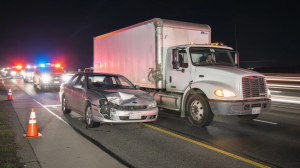
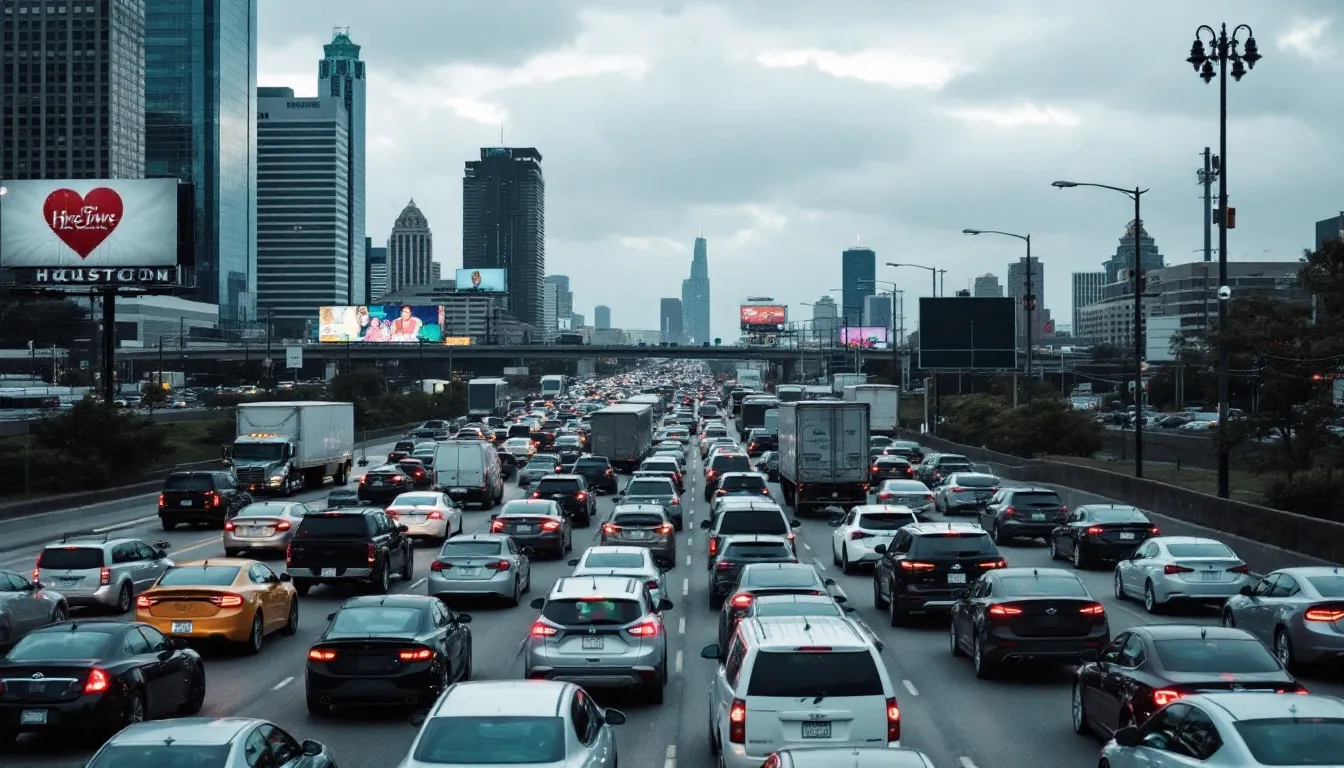
Houston’s major highways experience the highest concentration of serious motor vehicle crashes, particularly during peak traffic hours from 7-9 AM and 4-7 PM. The I-45 Gulf Freeway and I-10 Katy Freeway see frequent multi-vehicle collisions due to high speeds, heavy truck traffic, and sudden congestion changes. Construction zones managed by TxDOT create additional hazards, with work zones accounting for hundreds of crashes annually across the Houston metro area.
Weather-related crashes spike dramatically during Houston’s hurricane season from June through November. Heavy thunderstorms can reduce visibility to near zero within minutes, while flooding from inadequate drainage creates dangerous conditions on major highways. The lessons learned from Hurricane Harvey in 2017 highlighted how quickly normal traffic patterns can become deadly when drivers attempt to navigate flooded roads or evacuation routes.
Houston TranStar data shows that specific highway segments consistently rank among the most dangerous in Texas. The I-45/I-610 interchange, known locally as the “Spaghetti Bowl,” experiences frequent accidents due to complex merging patterns and heavy traffic volumes. Similarly, the I-10/Beltway 8 area sees regular incidents involving both passenger cars and commercial vehicles navigating the busy freight corridors.
Intersection Crashes
Harris County’s most dangerous intersections generate hundreds of crashes annually, with Westheimer Road and Beltway 8 topping the list for serious collisions. The intersection of I-45 and FM 1960 in North Houston also ranks among the most hazardous, particularly for T-bone collisions that often result in serious injuries or fatalities. Downtown Houston intersections see frequent red light running incidents, especially during rush hour when frustrated drivers attempt to beat signal changes.
| Intersection | Annual Crashes | Primary Cause | Injury Rate |
|---|---|---|---|
| Westheimer & Beltway 8 | 150+ | Left turn failures | 35% |
| I-45 & FM 1960 | 120+ | Red light running | 42% |
| Richmond & Beltway 8 | 110+ | Following too closely | 28% |
| Bellaire & Hillcroft | 95+ | Distracted driving | 31% |
| Bissonnet & Gessner | 85+ | Improper lane changes | 26% |
These intersection crashes often involve drivers unfamiliar with Houston’s complex traffic patterns or visitors to major commercial areas. The combination of high-speed arterial roads intersecting with busy shopping and business districts creates scenarios where even minor errors in judgment can result in significant vehicle damage and personal injury.
Parking Lot and Fender Bender Accidents
Houston’s sprawling commercial areas generate thousands of minor accidents annually, particularly in high-traffic zones:
- Galleria area shopping centers: Heavy pedestrian traffic combined with complex parking structures leads to frequent low-speed collisions and backing incidents
- NRG Stadium events: Houston Texans games and other major events create congestion that results in property damage crashes as drivers navigate unfamiliar parking areas
- Medical Center facilities: The world’s largest medical complex sees regular parking structure accidents, often involving stressed visitors unfamiliar with the area’s layout
- Memorial City Mall and other major retail centers: Holiday shopping seasons and weekend traffic spikes contribute to backing collisions and door-ding incidents
While these accidents typically involve minor property damage, they still require proper documentation and can result in insurance claims that affect coverage rates for all parties involved.
What to Do After a Car Accident in Texas
Immediate Steps at the Scene
Texas Transportation Code Section 550.023 requires all drivers involved in crashes to stop immediately, regardless of the severity. Failing to stop after any collision, even a minor fender bender, can result in criminal charges under Texas law. Here’s the step-by-step checklist every Houston driver should follow:
- Stop safely and assess injuries: Move vehicles to a safe place if possible, but don’t leave the scene
- Call for help: Contact Houston Police Department at 832-394-1200 for accidents with injuries or significant damage; Harris County Sheriff’s Office handles incidents on county roads outside city limits
- Check for injuries: Provide first aid if trained, but don’t move seriously injured persons unless they’re in immediate danger
- Exchange information: Texas law requires sharing driver’s license numbers, insurance information, vehicle registration, and contact details with all other parties
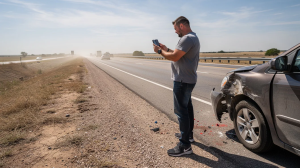
- Document the scene: Take photos before moving vehicles, if safe to do so
- Locate witnesses: Get contact information from anyone who saw the accident happen
When accidents occur on Houston freeways like I-610 Loop or Beltway 8, moving vehicles out of traffic lanes is crucial for preventing secondary crashes. Texas law allows drivers to move vehicles to the shoulder or nearby parking lot as long as they mark the original accident location and take photos first.
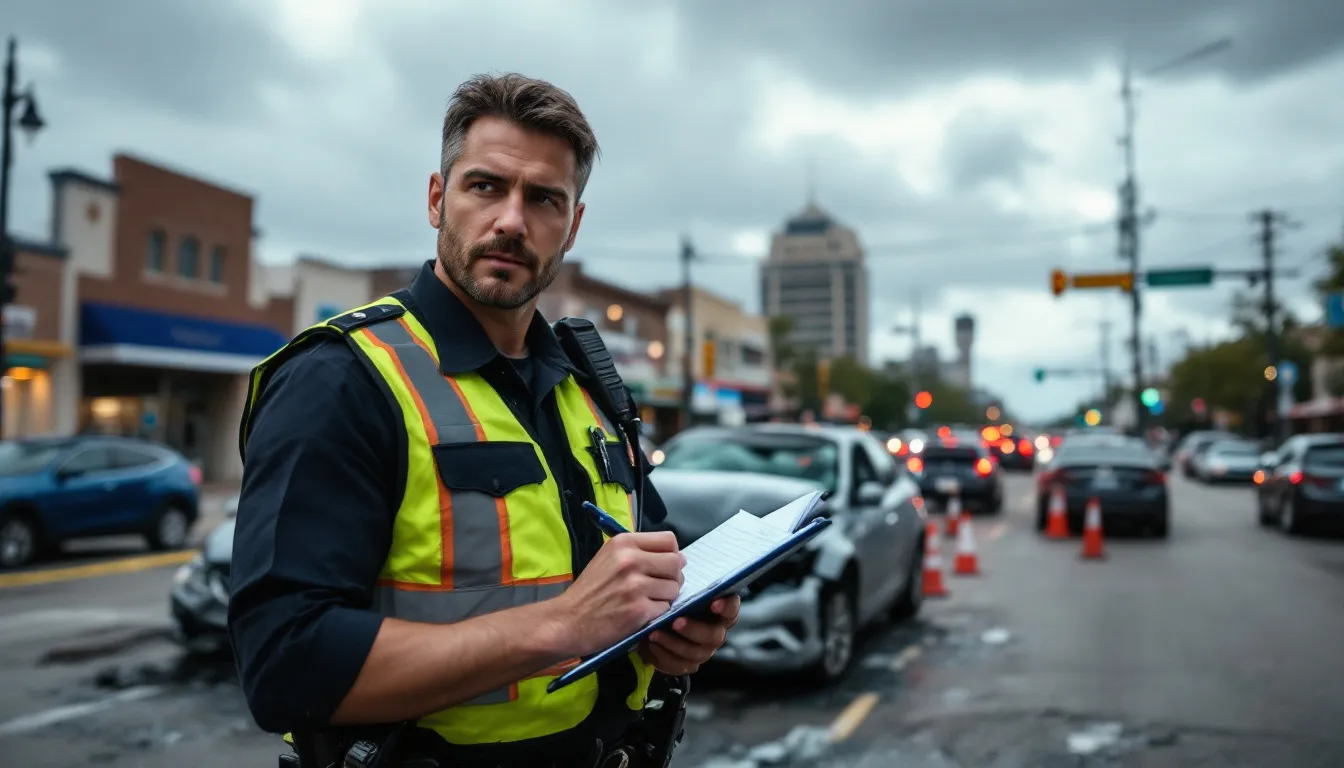
Documentation and Evidence
Proper documentation protects your interests when dealing with insurance companies and potential legal proceedings. Houston’s unique traffic environment requires specific attention to certain details:
Photo documentation should include:
- Wide shots showing vehicle positions on Beltway 8, I-610 Loop, or surface streets
- Close-ups of all vehicle damage from multiple angles
- Street signs, traffic signals, and road conditions
- License plates and inspection stickers of all vehicles involved
- Skid marks or debris patterns that show how the crash occurred
Houston’s red light camera system operates at numerous intersections throughout the city. If your accident occurred at a monitored intersection, contact the Houston Police Department to request footage that might support your claim. This evidence can be crucial in determining fault for intersection collisions.
Witness information becomes vital in busy areas like River Oaks, Montrose, or the Heights where multiple people may have observed the crash. Get full names, phone numbers, and addresses from witnesses, and ask them to provide a brief written statement about what they saw. In Houston’s transient population, witnesses may be visitors who won’t be available later.
Medical documentation should begin immediately, even for seemingly minor injuries. Houston’s trauma centers, including Ben Taub Hospital and Memorial Hermann, can provide emergency care, but follow up with your personal physician within 24-48 hours to document any delayed-onset injuries common in motor vehicle crashes.
Texas Car Accident Laws and Insurance
Texas Fault-Based Insurance System
Texas operates under a fault-based insurance system, meaning the driver determined to be responsible for causing the accident must compensate other parties for their damages. The state requires minimum liability coverage of $30,000 per person for bodily injury, $60,000 total per accident for bodily injury, and $25,000 for property damage. However, these minimums often prove inadequate for serious accidents on Houston’s high-speed highways.
Harris County has one of the highest uninsured motorist rates in Texas, with approximately 25% of drivers lacking proper insurance coverage as of 2024. This statistic makes uninsured motorist coverage particularly important for Houston drivers, as the chances of being hit by an uninsured driver are significantly higher than the state average.
Texas follows comparative negligence rules under the Texas Civil Practice and Remedies Code, which means that even if you’re partially at fault for an accident, you may still recover damages proportional to the other party’s degree of fault. For example, if you’re found 20% responsible for a crash and the other driver is 80% at fault, you can recover 80% of your damages from their insurance company.
The Texas Department of Insurance regulates how insurance companies handle claims and sets standards for claims processing times. Insurers must acknowledge claims within 15 days and begin investigating immediately, though complex cases involving serious injuries or disputed fault may take longer to resolve.
Legal Time Limits and Rights
Texas law establishes a two-year statute of limitations for personal injury claims arising from car accidents, meaning you must file any lawsuit within two years of the crash date or lose your right to seek compensation through the courts. Property damage claims have a shorter timeline, and insurance claims should be filed as soon as possible to avoid complications.
Harris County District Courts handle serious accident cases that cannot be resolved through insurance negotiations. The court system processes thousands of motor vehicle cases annually, with cases involving serious injuries or fatalities receiving priority scheduling. Most personal injury attorneys in the Houston metro area offer free consultations to evaluate the strength of potential claims.
When to contact Houston personal injury attorneys:
- Accidents involving serious injuries requiring hospitalization
- Fatal crashes where family members need to pursue wrongful death claims
- Cases where the other driver was intoxicated or driving recklessly
- Disputes over fault determination by insurance companies
- Accidents involving commercial vehicles or government entities
Several Houston law firms specialize in motor vehicle crash cases and can provide free initial consultations to help accident victims understand their rights. The State Bar of Texas maintains a referral service to help connect accident victims with qualified attorneys in their area.
Preventing Car Accidents in Houston
Weather-Related Precautions
Houston’s unique climate creates driving challenges that many other cities don’t face. The city’s notorious thunderstorms can develop rapidly, turning clear skies into zero-visibility downpours within minutes. During these storms, the safest option is often to pull off the road entirely and wait for conditions to improve, as continuing to drive risks both crashes and flooding.
Hurricane Harvey in 2017 provided crucial lessons about evacuation route safety and flood-prone areas throughout Harris County. The storm demonstrated how quickly normal streets can become impassable, trapping drivers and creating deadly conditions. Current evacuation planning emphasizes using designated hurricane evacuation routes and avoiding areas with known flooding history.
TxDOT’s winter weather preparations address Houston’s rare but dangerous ice storms. When temperatures drop below freezing, Houston’s humid climate can create black ice conditions on bridges and overpasses that catch drivers off guard. The city’s limited snow and ice removal equipment means that even minor winter weather can create hazardous driving conditions for hours or days.
Practical Houston weather driving tips:
- Monitor weather radar apps during thunderstorm season and avoid driving during severe weather warnings
- Keep emergency supplies in your vehicle during hurricane season, including water, flashlights, and phone chargers
- Learn the location of flood-prone intersections and alternate routes in your regular driving areas
- Understand that Houston’s drainage systems can become overwhelmed quickly, creating dangerous conditions even during moderate rainfall
Traffic Technology and Safety
Houston TranStar operates one of the most sophisticated traffic monitoring systems in the United States, providing real-time information about crashes, construction, and congestion throughout the metro area. The system’s network of cameras and sensors can help drivers avoid accident-prone areas and select safer routes during peak traffic hours.
Smart traffic signals on major Houston corridors use adaptive timing to reduce congestion and minimize rear-end collisions at intersections. These systems adjust signal timing based on actual traffic flow, reducing the frustration that leads to aggressive driving behaviors and red light running incidents.
TxDOT maintains several websites providing construction updates and traffic information:
- Drive288.org: Specific information about ongoing construction on State Highway 288
- Houston.TranStar.org: Real-time traffic conditions and incident reports
- DriveTexas.org: Statewide traffic and construction information
HOV lane safety on highways like the I-45 Gulf Freeway requires understanding specific rules about entry and exit points. Illegal HOV lane access contributes to crashes when drivers make sudden lane changes or attempt to cross solid white lines. The lanes operate on different schedules depending on the highway, and violating HOV rules can result in tickets and increased accident risk.

Houston and Texas Accident Statistics
The 2023 Texas Department of Transportation crash data for Harris County reveals sobering statistics about motor vehicle safety in the Houston area. Harris County recorded 327 fatal crashes resulting in 356 deaths, representing a 3% increase from the previous year. The county consistently ranks among the top three in Texas for total crash numbers, largely due to its population density and extensive highway network.
Fatal accident trends on Houston’s major highways since 2020 show some concerning patterns. The COVID-19 pandemic initially reduced traffic volumes, but fatality rates actually increased as drivers took advantage of less congested roads to speed. As traffic returned to normal levels by 2022, both crash numbers and severity began climbing again.
Harris County 2023 Crash Statistics:
- Total crashes: 89,234
- Fatal crashes: 327
- Injury crashes: 24,891
- Property damage only: 64,016
- Alcohol-related fatalities: 98 (28% of total deaths)
- Motorcycle fatalities: 67
- Pedestrian fatalities: 89
Compared to other major Texas cities, Houston’s accident rates reflect both its size and infrastructure challenges. Dallas recorded 231 fatal crashes in 2023, while Austin had 102 and San Antonio reported 156. However, when adjusted for population and vehicle miles traveled, Houston’s rates are comparable to other major metropolitan areas.
The COVID-19 pandemic’s impact on Houston traffic patterns from 2020-2024 created both positive and negative changes. Initial lockdowns reduced overall crash numbers by 35% in April 2020, but fatality rates per crash increased significantly as empty roads encouraged dangerous driving behaviors. The gradual return of normal traffic patterns has been accompanied by increases in aggressive driving incidents and road rage cases.
Trend Analysis 2020-2024:
- 2020: 275 fatalities (pandemic low)
- 2021: 312 fatalities (return increase)
- 2022: 345 fatalities (post-pandemic high)
- 2023: 356 fatalities (continued increase)
- 2024: Projected 340-360 fatalities based on current trends
These statistics highlight the ongoing challenge of improving road safety in a rapidly growing metropolitan area with aging infrastructure and increasing traffic congestion.
Resources for Car Accident Victims in Houston
Houston area residents have access to numerous resources designed to help accident victims navigate the aftermath of motor vehicle crashes. These services range from immediate emergency response to long-term support for serious injury recovery.
Emergency and Medical Resources:
- Harris County Victim Services: 713-755-6444 – Provides crisis intervention, counseling, and assistance navigating legal processes for crime victims, including hit-and-run cases
- Ben Taub Hospital Level I Trauma Center: 1504 Taub Loop – Houston’s primary trauma facility for the most serious crash injuries, operating 24/7 with specialized emergency response teams
- Memorial Hermann Life Flight: Helicopter emergency medical service covering Harris County and surrounding areas, capable of rapid transport from accident scenes to trauma centers
- Houston Fire Department Emergency Medical Services: 911 – First response medical care at accident scenes throughout the city
Law Enforcement and Legal Resources:
- Houston Police Department Vehicular Crimes Division: 713-308-3600 – Investigates serious injury and fatal crashes, handles hit-and-run cases, and processes complex accident reports
- Harris County Sheriff’s Office Traffic Enforcement: 713-755-7628 – Handles accidents on county roads outside Houston city limits, including many suburban areas
- Texas Department of Public Safety: 713-681-1761 – Provides crash reports for accidents investigated by state troopers, typically on major highways
Insurance and Consumer Protection:
- Texas Department of Insurance Consumer Helpline: 1-800-252-3439 – Assists with insurance claim disputes, explains coverage requirements, and investigates complaints against insurance companies
- State Bar of Texas Lawyer Referral Service: 1-800-252-9690 – Connects accident victims with qualified personal injury attorneys who offer free consultations
Transportation and Traffic Information:
- Houston TranStar: 713-881-3000 – Real-time traffic information, construction updates, and incident reports to help drivers avoid accident-prone areas
- Texas Department of Transportation Houston District: 713-802-5000 – Highway construction information, road condition reports, and infrastructure improvement projects
Each of these resources serves a specific function in the comprehensive support network available to Houston accident victims. Understanding when and how to access these services can significantly improve outcomes for those involved in motor vehicle crashes, whether dealing with immediate emergency needs or long-term recovery and legal processes.
Most of these services operate 24/7 or have emergency contact procedures for after-hours assistance. Keeping this contact information readily available in your vehicle or mobile phone can prove invaluable if you’re ever involved in a car accident in the Houston area.