Overview: Why Offshore Rig Disasters Matter
Working on an offshore oil rig ranks among the most dangerous jobs on Earth. Since commercial offshore drilling expanded in the 1960s, hundreds of workers have lost their lives to explosions, capsizings, and catastrophic equipment failures miles from shore. Between 2012 and 2020 alone, the U.S. Bureau of Safety and Environmental Enforcement recorded 4,474 offshore incidents resulting in 1,654 injuries and 23 deaths. The reality is stark: when things go wrong on an offshore platform, they go wrong fast, and escape routes are limited.
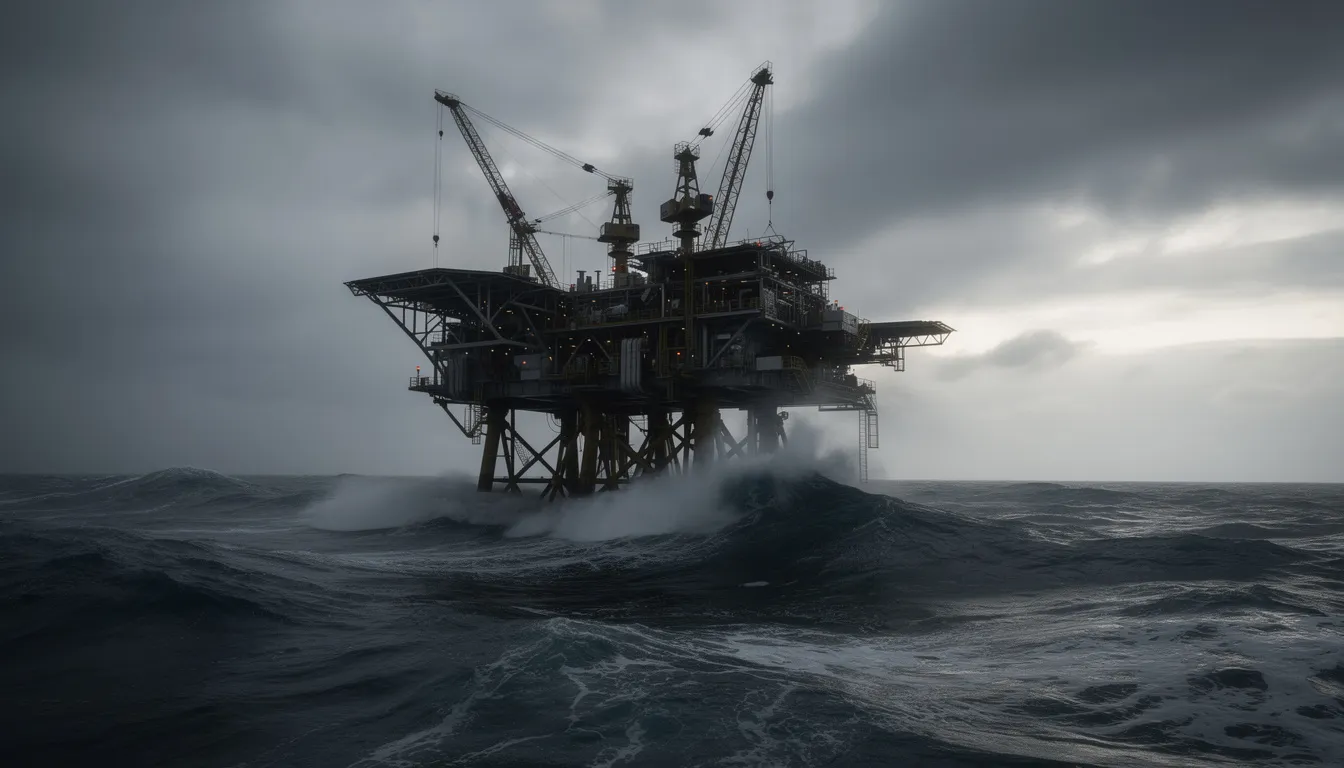
An offshore rig disaster typically involves one or more of the following: a blowout where uncontrolled hydrocarbons surge from the well, an oil rig explosion triggered by ignited gas, structural failures causing a platform to capsize or sink, or collisions between vessels and fixed structures. What makes these events uniquely deadly is the combination of extreme pressures, flammable materials, harsh weather, and isolation from emergency services. A mobile offshore drilling rig operating 100 miles from land cannot call the local fire department. Crew members must rely on onboard systems, training, and nearby vessels for survival.
This article examines specific historical incidents that have shaped our understanding of offshore risks, including the Piper Alpha disaster in the North Sea, the Deepwater Horizon incident in the Gulf of Mexico, the Alexander L. Kielland capsizing off Norway, the Ocean Ranger disaster near Newfoundland, and several others across Brazil, China, Mexico, and India. These events span decades and continents, but they share troubling common threads.
The consequences of rig disasters extend far beyond the immediate tragedy. Lives are lost, families are shattered, and survivors often face life altering injuries that affect them for decades. Environmentally, major spills contaminate coastlines, destroy fisheries, and kill marine life by the thousands. Regulatorily, each catastrophe has forced governments and the oil industry to confront systemic failures, leading to new safety standards, inspection regimes, and design requirements. Understanding this history isn’t just an academic exercise—it’s essential knowledge for anyone connected to offshore oil and gas.
The Deadliest Offshore Rig Disasters in History
The following timeline covers the worst offshore rig disasters ever recorded. Each incident represents a convergence of technical failures, human error, and environmental forces that overwhelmed safety systems. These events didn’t just claim lives—they fundamentally changed how the offshore drilling industry approaches risk.
The disasters are organized chronologically by their occurrence, with each subsection detailing what happened, when and where it occurred, how many people died, and the immediate causes. These weren’t random acts of fate. Each one left behind lessons that, when heeded, have prevented countless future tragedies. When ignored, history has repeated itself.
Piper Alpha – North Sea, 6 July 1988
Piper Alpha remains the worst oil rig disaster in history by death toll. This production platform stood approximately 120 miles northeast of Aberdeen, Scotland, and at its peak handled roughly 10% of all North Sea oil and gas production. On the evening of 6 July 1988, a chain of errors transformed this vital piece of infrastructure into an inferno that killed 167 of the 226 people aboard.
The disaster began with routine maintenance. During the day shift, workers removed a safety valve from Condensate Pump A for servicing, temporarily sealing the opening with a blind flange. The permit documenting this work should have been clearly communicated to the night shift, but a communication error meant the incoming crew didn’t know the pump was out of service. When Condensate Pump B tripped offline unexpectedly, operators in the control room authorized starting Pump A as a backup. Gas immediately escaped from the inadequately sealed opening.
Within seconds, the gas ignited. The initial explosion tore through the platform, rupturing a gas pipe that fed the fire with additional fuel. Tartan and Claymore, two nearby platforms connected to Piper Alpha by pipeline, continued pumping oil and gas into the burning structure because their operators lacked clear authority to shut down without direct orders. The resulting fireballs reached temperatures exceeding 1,000 degrees Celsius. Workers unable to reach lifeboats jumped over 100 feet into the burning sea, where a standby vessel struggled to rescue survivors amid flaming oil slicks.
The fire broke out so rapidly and intensely that it took nearly three weeks to fully extinguish. Of the 61 survivors, many suffered severe burns and trauma. Insured losses exceeded $1.4 billion. The subsequent Cullen Inquiry, led by Lord Cullen, delivered 106 recommendations that reshaped UK offshore safety regulations. The inquiry identified a poor command structure aboard the platform, inadequate training, and fundamental design flaws that placed critical equipment too close together. Piper Alpha produced both oil and gas, but its safety systems were designed primarily for oil production—a fatal oversight.
Alexander L. Kielland – Norwegian North Sea, 27 March 1980
Before Piper Alpha, the Alexander L. Kielland disaster held the grim distinction of being the North Sea’s deadliest offshore incident. This semi submersible platform served as a floating hotel—an accommodation rig housing workers from the nearby Edda production platform in the Ekofisk field. Phillips Petroleum operated the facility in the Norwegian sector.
On the evening of 27 March 1980, severe weather battered the rig with winds exceeding 100 knots and waves reaching 12 meters. At approximately 6:30 PM, one of the six bracings connecting the platform’s five columns failed catastrophically. Investigation later revealed that a fatigue crack had originated from a flawed 6mm weld attaching a hydrophone to the bracing—a non-structural modification that should never have been made without proper engineering review.
When the bracing gave way, the platform tilted roughly 30 degrees within minutes. The sudden angle made launching lifeboats nearly impossible. Many of the liferafts were inaccessible or failed to deploy correctly. Within 20 minutes, the Alexander L. Kielland had capsized completely. Of the 212 crew members aboard, 123 died—most by drowning in the frigid North Sea waters. Only 89 survived, many rescued by nearby vessels that responded heroically despite the brutal conditions.
The Norwegian government’s inquiry concluded that insufficient structural redundancy, poor crew training for ballast failures, and inadequate inspection regimes all contributed to the disaster led by the bracing failure. In response, Norway implemented mandatory structural inspections of welds, enhanced lifeboat launching systems, and required clearer command structures for emergency evacuations. These reforms became templates for offshore safety worldwide.
Ocean Ranger – Off Newfoundland, 14–15 February 1982
The Ocean Ranger was promoted as one of the most advanced mobile offshore drilling units ever built. Operated by ODECO and leased to Mobil Oil, this massive semi-submersible worked on the Hibernia oil field approximately 166 miles east of St. John’s, Newfoundland. On the night of 14 February 1982, a winter storm turned the Ocean Ranger transmitted distress signals into the Atlantic.
Conditions that night were horrific even by North Atlantic standards. Winds exceeded hurricane force, and waves reached heights of 65 feet or more. Sometime around 7 PM, a rogue wave smashed through a porthole in the ballast control room, flooding the compartment with seawater. The electrical panels controlling the ballast system short-circuited, and the operators—who had received insufficient training on the complex ballast system—were unable to restore proper function.
As the crew failed to stabilize the rig, it began listing 10 to 15 degrees. Efforts to correct the ballast imbalance only worsened the situation. Around 1 AM on 15 February, the Ocean Ranger transmitted a final “prepare to abandon rig” message. Shortly afterward, the platform capsized and sank. All 84 crew members perished—the deadliest offshore disaster in North American waters. Rescue efforts by a supply ship and other nearby vessels recovered only bodies.
The Canadian Royal Commission that investigated the Ocean Ranger disaster found that inadequate training was a primary factor. Operators didn’t understand how to manually control the ballast system. Emergency procedures were poorly developed, and the cold-water survival equipment was woefully insufficient. The investigation’s findings led to sweeping reforms: mandatory survival suits for cold-water operations, enhanced ballast control system designs, improved emergency drills, and stricter weather monitoring requirements.
Deepwater Horizon – Gulf of Mexico, 20 April 2010
The Deepwater Horizon incident is the most extensively documented offshore disaster in history and resulted in the largest oil spill ever recorded in U.S. waters. This Transocean-owned, BP-leased semi-submersible drilling rig was completing work on the Macondo well approximately 41 miles off the Louisiana coast when catastrophe struck on 20 April 2010.
Warning signs had accumulated for days. The cement job intended to seal the well had shown problems during testing. Pressure tests that should have confirmed well integrity returned anomalous readings that crew members and supervisors misinterpreted or dismissed. On the evening of 20 April, a massive methane gas bubble surged up through the drill column, overwhelming the blowout preventer—the last line of defense against uncontrolled well flow. The gas ignited on the main deck.
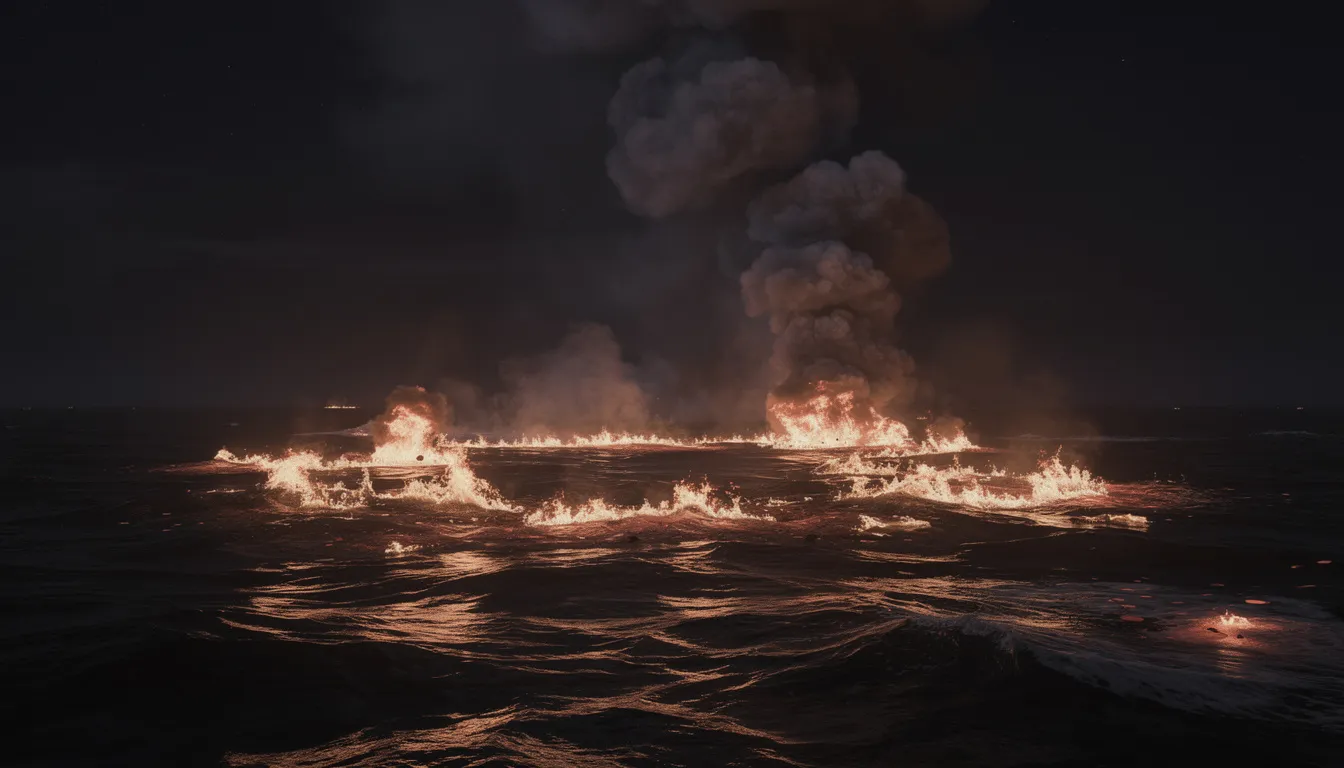
The oil rig exploded in a fireball visible for miles. Of the 126 crew members aboard, 11 were killed instantly or died shortly after from injuries. Another 17 suffered serious injuries, including severe burns. The rig burned for approximately 36 hours before Deepwater Horizon sank on 22 April, leaving the well spewing oil uncontrollably into the Gulf of Mexico. It took 87 days to permanently cap the well. By then, an estimated 4 million barrels of crude oil had contaminated Gulf waters—the largest oil spill in American history.
The financial and environmental consequences were staggering. BP ultimately paid an estimated $65 billion in cleanup costs, fines, and settlements. Oil slicks and tar balls washed up on beaches from Louisiana to Florida. Fisheries closed across vast areas of the Gulf. Wildlife mortality included thousands of sea turtles, dolphins, and seabirds. The disaster led to temporary deepwater drilling moratoriums, creation of the Bureau of Safety and Environmental Enforcement (BSEE), and significantly stricter requirements for blowout preventer testing and well control procedures.
Bohai 2 – Gulf of Bohai, 25 November 1979
The Bohai 2 disaster remains one of the deadliest incidents in offshore drilling history and served as a wake-up call for China’s developing offshore oil industry. This jack-up drilling rig, operated by the Stavanger Drilling Company under contract, was being towed between positions in the Gulf of Bohai on 25 November 1979 when severe weather overwhelmed the vessel.
The storm brought force 10 winds and heavy seas that far exceeded safe towing conditions. Waves washed over the main deck repeatedly, and the rig’s structure—raised on its legs for towing rather than lowered onto the seabed—proved dangerously unstable. Reports indicate that a ventilator pump was shattered by wave action, allowing water to flood into the hull. Within hours, the rig capsized.
Of the 76 rig workers aboard the Bohai 2, only 4 survived. The death toll of 72 made this one of the five deadliest offshore rig disasters ever recorded. Investigation revealed that the crew had received inadequate training in lifesaving equipment and emergency evacuation procedures. Many workers were unable to properly deploy survival gear before the rapid capsizing.
The Bohai 2 disaster forced Chinese authorities to fundamentally reassess offshore drilling operations. New requirements mandated improved crew training, more rigorous weather monitoring during towing operations, and enhanced storm preparedness protocols. The incident demonstrated that raising safety concerns before operations—rather than during emergencies—was the only way to prevent such tragedies.
Mumbai High North – Arabian Sea, 27 July 2005
Mumbai High North was a critical production platform for India’s Oil and Natural Gas Corporation (ONGC), located approximately 160 kilometers off the coast of Mumbai in the Arabian Sea. On 27 July 2005, a medical emergency set in motion a chain of events that would destroy the platform and claim 22 lives.
A cook aboard the platform required emergency evacuation due to a medical condition. The multipurpose support vessel Samudra Suraksha was dispatched to assist with the transfer. However, rough seas made the operation dangerous. As the vessel maneuvered near the platform to lower a crane basket, it struck the structure’s gas export risers. The collision ruptured the risers, releasing natural gas that quickly caught fire.
The gas ignited almost immediately, and flames spread rapidly across the platform. Within approximately two hours, Mumbai High North was completely destroyed. Of the roughly 384 personnel aboard at the time, 22 died in the disaster. Many were able to evacuate, but the speed of the fire’s spread trapped others. The platform, which had contributed significantly to India’s oil production, was a total loss.
The Mumbai High North disaster led to extensive reviews of vessel movement procedures near offshore platforms, medevac planning protocols, and emergency shutdown systems. The incident highlighted how a support vessel attempting a routine rescue operation could inadvertently trigger a catastrophic consequences chain reaction.
DS Seacrest (Scandinavian Seacrest) – Gulf of Thailand, 4 November 1989
The DS Seacrest, also known as the Scandinavian Seacrest, was a drillship operating for Unocal in the Gulf of Thailand when Typhoon Gay struck the region in early November 1989. This storm proved far more powerful than forecasts had predicted, catching the vessel in conditions it could not survive.
On 4 November 1989, the drillship encountered waves reported at up to 40 feet and severe winds that overwhelmed its stability systems. Unlike a semi-submersible or jack-up rig, a drillship relies on its hull design and dynamic positioning to maintain station—neither could withstand the typhoon’s fury. The vessel capsized, and critically, no standby vessel was positioned nearby to provide immediate rescue assistance.
The casualty figures were devastating: of 97 crew members aboard, only 6 survived. More than 90 deaths made this one of Southeast Asia’s worst offshore drilling industry losses. Families of the victims waited for news as search teams combed the area, but rescue efforts recovered few survivors.
The aftermath included legal disputes over the ship’s seaworthiness and whether adequate typhoon preparedness measures had been in place. The disaster raised fundamental questions about weather monitoring capabilities in the region and the requirement for dedicated standby vessels during drilling operations. These lessons would influence regional expectations for emergency support vessel deployment for decades.
Other Major Offshore Incidents Around the World
While the disasters covered above represent the most infamous events in offshore drilling history, numerous other serious incidents have claimed dozens of lives each. Blowouts, collisions, and drillship capsizings have occurred across every major offshore oil producing region—from Brazil’s Campos Basin to Mexico’s Bay of Campeche, from the Gulf of Mexico to the South China Sea. These incidents reveal that offshore risks are truly global and systemic rather than isolated to any single company, country, or era.
Enchova Central Platform – Campos Basin, 16 August 1984
Petrobras’s Enchova Central Platform in Brazil’s Campos Basin experienced a devastating gas blowout on 16 August 1984. The uncontrolled gas release quickly ignited, creating a fire that forced chaotic evacuation procedures as crew members scrambled to escape the burning structure.
The evacuation itself proved deadly. Forty-two workers died, including 36 who perished when a lifeboat’s lowering cables malfunctioned during descent, dropping the craft and its occupants into the sea. Another 6 died after jumping from the platform into the water. The tragedy exposed critical weaknesses in lifeboat design and maintenance that had been overlooked.
Four years later, in 1988, the same platform suffered another blowout. This time, however, improved procedures and equipment enabled a successful evacuation with no loss of life. The contrast between the two events demonstrated that the lessons of 1984 had been learned—at least at Enchova. The disasters led to industry-wide reassessment of lifeboat redundancy and evacuation system reliability.
Usumacinta Jack-Up and Kab-101 – Bay of Campeche, 23 October 2007
On 23 October 2007, the Usumacinta jack-up rig collided with Pemex’s Kab-101 production platform in Mexico’s Bay of Campeche during a severe storm. The collision resulted from a combination of high waves and incomplete securing of the jack-up’s legs, which allowed the hull to drift into the fixed platform.
The impact damaged production equipment on Kab-101, rupturing lines that released oil and gas. The hydrocarbons ignited, creating fires that complicated evacuation efforts. Two lifeboats capsized in the rough seas as injured workers attempted to escape, killing 21 people. One additional crew member was never found, bringing the total death toll to 22.
The incident prompted scrutiny of anchoring procedures, storm protocols, and lifeboat operations throughout Mexico’s offshore sector. The disaster led to recommendations for improved early warning systems and stricter requirements for securing mobile drilling units when storms approach.
C.P. Baker Drilling Barge – Gulf of Mexico, 30 June 1964
The C.P. Baker, also known as the Baker drilling barge, was a submersible drilling barge operating in the Gulf of Mexico when it suffered a catastrophic blowout on 30 June 1964. This early disaster occurred decades before modern safety regulations and blowout prevention technology.
The blowout allowed water and hydrocarbons to surge onto the main deck. The mixture ignited, creating a massive explosion and intense fire that engulfed the entire barge within minutes. The rig exploded so rapidly that many crew members had no time to reach lifeboats or don survival equipment.
Of the 43 crew aboard, 21 or 22 were killed—sources report slightly different figures. The barge sank approximately 30 minutes after the initial blast. This tragedy influenced early U.S. offshore blowout prevention practices and highlighted the critical need for rapid shut-in capabilities and fire-resistant escape routes on drilling vessels.
Glomar Java Sea Drillship – South China Sea, 25 October 1983
The Glomar Java Sea was a drillship operated by Global Marine, conducting drilling operations in the South China Sea when Typhoon Lex struck on 25 October 1983. Weather forecasting and storm tracking capabilities in the region were less sophisticated than today, and the vessel was caught in conditions it could not withstand.
Reported winds exceeded 86 mph, and heavy seas battered the drillship. At some point during the storm, contact with the vessel was lost. When search teams located the wreck, it was clear the ship had capsized and sunk during the typhoon’s passage.
Of the 81 people aboard, 36 bodies were eventually recovered. The remaining 45 were presumed dead, and no survivors were found. The Glomar Java Sea disaster underscored shortcomings in weather avoidance planning, emergency communications, and search-and-rescue coordination for offshore drillships operating in typhoon-prone waters.
Santa Barbara Offshore Blowout – California, 28 January 1969
The Santa Barbara blowout stands apart from other disasters on this list because it caused no worker fatalities—but it fundamentally changed America’s relationship with offshore drilling and environmental protection. On 28 January 1969, Union Oil’s Platform A, located off the coast of Santa Barbara, California, experienced a high-pressure blowout that fractured the seafloor itself.
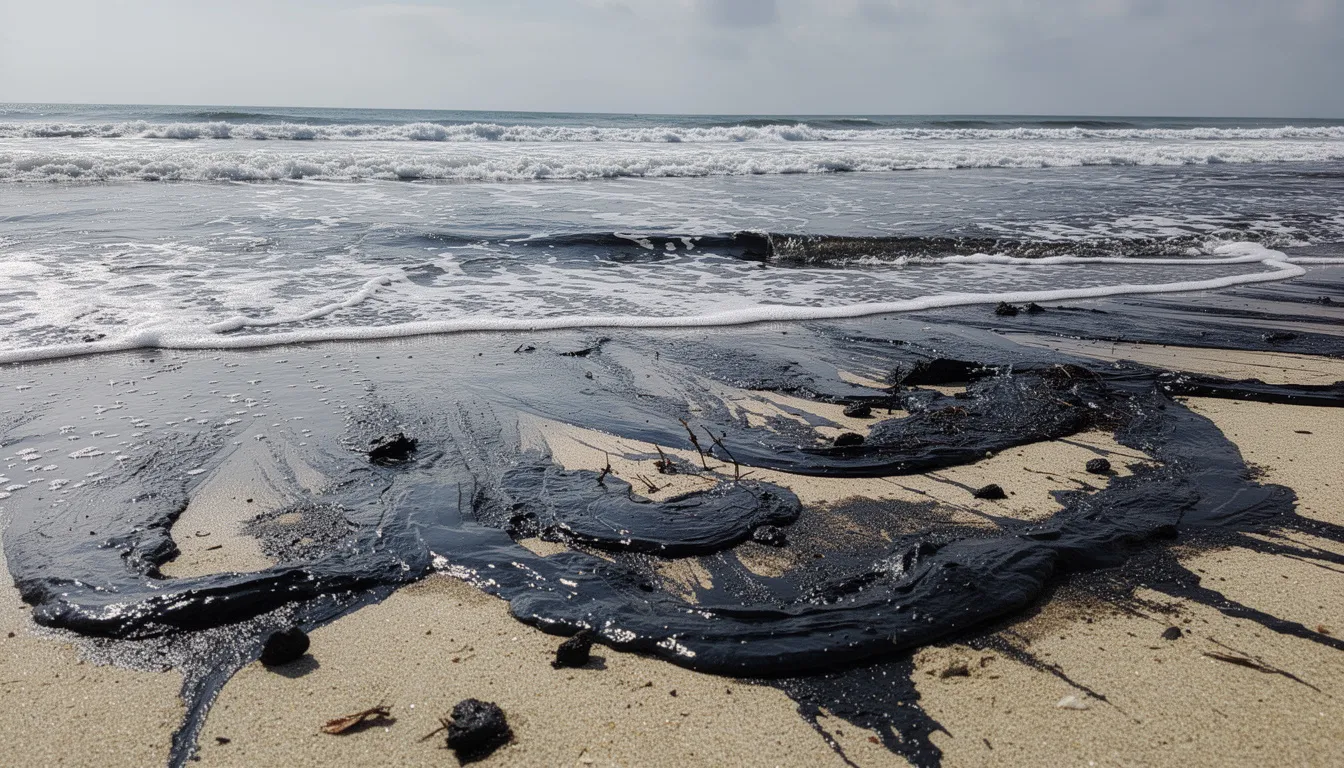
Over several weeks, roughly 3 million gallons of crude oil poured into the Pacific Ocean. The slick blackened miles of pristine California coastline, coating beaches in tar and killing thousands of seabirds and marine life. The images of oil-soaked wildlife broadcast on national television sparked public outrage that transcended previous environmental concerns.
The Santa Barbara spill is widely credited with catalyzing the modern environmental movement. The disaster directly contributed to passage of the National Environmental Policy Act (NEPA) and helped inspire the first Earth Day in 1970. For the offshore drilling industry, Santa Barbara demonstrated that even incidents without immediate human casualties could carry catastrophic consequences that reshaped entire regulatory frameworks.
Common Causes and Risk Factors in Offshore Rig Disasters
Despite occurring across different decades, continents, and types of platforms, the disasters described above share troubling common threads. The same categories of failure appear repeatedly: mechanical and structural deficiencies, overwhelming environmental forces, human error compounded by inadequate safety culture, and design or maintenance shortcomings that create vulnerabilities long before any emergency occurs.
Mechanical and structural failures initiated or worsened many of these tragedies. The fatigue crack in a flawed weld that collapsed Alexander L. Kielland’s bracing had gone undetected through routine inspections. The blowout preventer on Deepwater Horizon—tested and certified—failed to shear the drill pipe when it mattered most. The lifeboat lowering mechanism on Enchova Central dropped 36 workers to their deaths. Industry data suggests that over half of equipment failures stem from wear and tear, emphasizing that maintenance gaps remain a persistent threat even on modern offshore oil rigs.
Environmental forces—particularly extreme weather—have overcome even robust platforms. Ocean Ranger’s porthole shattered under a rogue wave exceeding design limits. Bohai 2 capsized in storm conditions that should have halted towing operations. DS Seacrest foundered in a typhoon that exceeded forecast severity. These events demonstrate that the ocean’s power can exceed any engineer’s calculations, making weather monitoring and conservative operational decisions essential.
Human error and safety culture deficiencies thread through nearly every disaster. The communication error on Piper Alpha that left the night shift unaware of removed safety equipment. The poor command structure aboard Ocean Ranger that prevented effective ballast control response. The dismissed pressure test anomalies on Deepwater Horizon that should have stopped operations. The insufficient training that left Bohai 2 workers unable to deploy survival equipment. These weren’t random mistakes—they reflected systemic issues in training, communication, and organizational priorities that placed production over caution.
Human and Environmental Consequences of Offshore Disasters
The statistics of offshore disasters—167 dead on Piper Alpha, 84 on Ocean Ranger, 72 on Bohai 2, 11 on Deepwater Horizon—can obscure the individual human tragedies behind each number. These were workers with families, communities, and futures that ended suddenly in fire, drowning, or crushing impact. Survivors of rig disasters often face permanent disabilities, severe burns, and psychological trauma that persists for decades. Families lose primary breadwinners, face mounting medical expenses, and struggle with lost wages while navigating complex legal and compensation systems.
The human toll extends beyond those directly aboard the platforms. Communities dependent on offshore workers—from Aberdeen to Louisiana’s Gulf Coast to St. John’s, Newfoundland—have experienced waves of grief following major disasters. Offshore workers who escaped one incident sometimes carry survivor’s guilt and PTSD that affects their ability to return to work or maintain relationships. For many families, the trauma of waiting for news after DS Seacrest or Ocean Ranger—not knowing for days whether loved ones survived—left permanent scars.
Environmental consequences can persist for decades after human casualties are counted. The Deepwater Horizon disaster released approximately 4 million barrels of oil into the Gulf of Mexico over 87 days, contaminating an estimated 68,000 square miles of ocean. Oil slicks washed ashore from Louisiana to Florida. Fisheries closed, devastating fishing communities already struggling economically. Wildlife mortality included tens of thousands of seabirds, nearly 7,000 sea turtles, and over 1,000 marine mammals. Years later, tar balls still occasionally appear on Gulf beaches, and long-term effects on fish populations and ecosystem health continue to be studied.
The Santa Barbara blowout in 1969, though smaller in scale, killed marine life across miles of California coastline and became a touchstone for environmental consciousness. These events demonstrate that offshore oil extraction carries risks not just to workers but to entire ecosystems, fishing industries, and coastal communities whose livelihoods depend on healthy oceans. Oil companies have faced tens of billions of dollars in cleanup costs, fines, and settlements—but money cannot restore lost species or fully remediate contaminated habitats.
How Rig Disasters Have Transformed Offshore Safety and Regulation
Every major offshore disaster has triggered investigations, inquiries, and regulatory reforms. The accumulated lessons of these tragedies—paid for in lives—now form the foundation of modern offshore safety frameworks. Understanding this history reveals both how far the industry has come and how much vigilance remains necessary.
In the North Sea, the Piper Alpha disaster and the resulting Cullen Inquiry fundamentally transformed UK offshore regulation. The inquiry’s 106 recommendations led to the “safety case” regime, requiring operators to demonstrate comprehensive risk assessment and management rather than simply meeting prescriptive rules. Worker involvement in safety decisions increased, platform designs separated critical systems to prevent cascade failures, and permit-to-work procedures became far more rigorous. Norway’s response to Alexander L. Kielland similarly enhanced structural inspection requirements, lifeboat launching systems, and emergency command structures. Today, North Sea operations are among the most heavily regulated in the world—a direct result of the 290 deaths in these two disasters.
In North America, the Deepwater Horizon incident prompted the most significant U.S. offshore regulatory overhaul in decades. The Bureau of Safety and Environmental Enforcement (BSEE) was created to separate safety enforcement from revenue collection. New rules mandated independent third-party verification of blowout preventer systems, stricter well design standards, and enhanced real-time monitoring. Canada’s response to Ocean Ranger had earlier established requirements for cold-water survival suits, improved ballast control training, and design criteria accounting for extreme North Atlantic conditions.
Other nations have similarly learned from tragedy. Brazil implemented enhanced lifeboat maintenance and redundant evacuation systems after the Enchova disasters. Mexico tightened anchoring and storm procedures following Usumacinta. China reformed crew training and towing operation protocols after Bohai 2. India revised vessel approach procedures and emergency shutdown systems after Mumbai High North. Each set of reforms represented knowledge purchased at terrible cost.
Yet challenges remain. Aging infrastructure—some platforms now operate beyond their original design lives—raises concerns about fatigue and corrosion. Deepwater and ultra-deepwater drilling creates pressures and temperatures that push equipment to its limits. Economic pressures to cut costs can erode safety margins established after previous disasters. Climate change is generating more frequent and intense storms, stressing platforms designed for historical weather patterns. Cyber threats to digitally controlled systems represent an emerging risk category that regulations are only beginning to address.
The history of offshore rig disasters demonstrates that safety improvements don’t happen automatically. They require constant vigilance, investment, and willingness to prioritize worker lives over production schedules. When oil companies, regulators, and workers forget the lessons of Piper Alpha, Ocean Ranger, and Deepwater Horizon, they create conditions for history to repeat itself.
Key Takeaways
|
Disaster |
Location |
Year |
Deaths |
Primary Cause |
|---|---|---|---|---|
|
Piper Alpha |
North Sea, UK |
1988 |
167 |
Communication error, gas leak |
|
Alexander L. Kielland |
North Sea, Norway |
1980 |
123 |
Structural failure, fatigue crack |
|
DS Seacrest |
Gulf of Thailand |
1989 |
91+ |
Typhoon, capsizing |
|
Ocean Ranger |
Off Newfoundland |
1982 |
84 |
Rogue wave, ballast control failure |
|
Glomar Java Sea |
South China Sea |
1983 |
81 |
Typhoon, capsizing |
|
Bohai 2 |
Gulf of Bohai, China |
1979 |
72 |
Storm during towing |
|
C.P. Baker |
Gulf of Mexico, USA |
1964 |
21-22 |
Blowout, explosion |
|
Usumacinta/Kab-101 |
Bay of Campeche, Mexico |
2007 |
22 |
Collision, fire |
|
Mumbai High North |
Arabian Sea, India |
2005 |
22 |
Vessel collision, gas ignition |
|
Deepwater Horizon |
Gulf of Mexico, USA |
2010 |
11 |
Blowout, BOP failure |
The offshore drilling industry has made genuine progress since these disasters occurred. Fatality rates have declined, safety systems have improved, and regulatory frameworks have strengthened. But the fundamental reality remains unchanged: offshore work involves extreme hazards that can overwhelm even the best-designed systems when human error, mechanical failure, and environmental forces align.
For offshore workers and their families, understanding this history provides crucial context for advocating for safety improvements, recognizing warning signs, and knowing their rights when employers cut corners. For communities dependent on offshore production, it underscores the importance of robust regulation and industry accountability. For everyone, these disasters serve as reminders that the energy we rely on comes at a cost—and that cost should never include preventable loss of life.