An oil platform explosion occurs when uncontrolled releases of hydrocarbons under extreme pressure ignite on an offshore drilling installation, triggering catastrophic blasts, fires, and often massive oil spills. These incidents are uniquely dangerous because of the remote locations involved, the presence of highly flammable natural gas and crude oil, and the extreme pressures at which drilling operations take place.
Between 2007 and 2018, the United States alone recorded 33 offshore rig explosions. Hundreds of similar incidents have occurred worldwide since commercial offshore drilling began in the mid-20th century. Each disaster carries a heavy toll—loss of human life, environmental devastation, and billions of dollars in economic damage.
Several incidents stand out in the history of offshore disasters. Key examples include Piper Alpha in the North Sea (1988), the Deepwater Horizon explosion in the Gulf of Mexico (2010), Mumbai High North in the Arabian Sea (2005), and the Montara platform disaster in the Timor Sea (2009).
When an oil rig exploded, the consequences frequently extend far beyond the immediate blast zone. Explosions trigger oil spills that contaminate marine ecosystems, devastate coastal communities, and disrupt industries for years or even decades.
Fast Facts: Worst Offshore Disasters
Deadliest incident: Piper Alpha (1988) – 167 deaths
Largest oil spill: Deepwater Horizon (2010) – 4.9 million barrels of oil spilled
Longest uncontrolled blowout: Montara (2009) – 74 days

Deepwater Horizon Oil Platform Explosion (2010)
On April 20, 2010, the Deepwater Horizon oil rig exploded at the Macondo Prospect, approximately 41 miles off the Louisiana coast in the Gulf of Mexico. The mobile offshore drilling rig was owned by the Stavanger Drilling Company subsidiary Transocean and operated under contract to BP, drilling in roughly 5,000 feet of water.
The initial explosion and subsequent fire killed 11 rig workers and injured 17 others. More than 100 crew members had to evacuate the burning platform before Deepwater Horizon sank on April 22, 2010. The sunken rig left behind a ruptured well that would become the source of the largest oil spill in United States history.
The Deepwater Horizon disaster began as a well control problem that rapidly escalated into a catastrophic explosion. A surge of methane gas overwhelmed the drilling mud designed to maintain pressure, shot up the drill pipe, and reached the platform surface. When the gas encountered an ignition source, a massive explosion ripped through the rig.
The blowout preventer—a critical safety valve positioned on the sea floor designed to seal the well in emergencies—failed to activate properly. With no functioning barrier between the reservoir and the ocean, oil flowed uncontrollably into the Gulf of Mexico for 87 days. The Deepwater Horizon spill released an estimated four million barrels (some estimates reach 4.9 million barrels), making it the biggest oil spill in U.S. marine history and one of the most significant oil spill events globally.
Causes and Technical Failures at Deepwater Horizon
The Deepwater Horizon incident resulted from a chain of technical failures and human errors that investigators later called preventable. Here’s the sequence that led to disaster:
-
Flawed cement job: Halliburton performed cementing work to seal the well, but the cement mixture failed to withstand reservoir pressure
-
Misinterpreted pressure tests: On April 20, 2010, BP engineers and rig workers conducted negative pressure tests that showed anomalies, but crew members misread the results as acceptable
-
Methane surge: Natural gas from the reservoir breached the failed cement barrier and traveled up the drill column
-
Overwhelmed mud system: The drilling mud could not counteract the sudden pressure spike from the gas surge
-
BOP failure: The blowout preventer’s blind shear rams failed to cut the drill pipe and seal the well due to dead batteries and mechanical defects
The 2011 U.S. government investigation report cited cost-cutting decisions by BP as major contributors to the disaster. Inadequate risk management, incomplete handovers between shifts, and overconfidence in safety systems all played roles. The Deepwater Horizon rig had faced pressure to complete drilling operations quickly, and this urgency contributed to decisions that raised safety concerns.
Immediate Response and Attempts to Control the Macondo Well
The response to the Deepwater Horizon explosion involved an unprecedented mobilization of resources and multiple attempts to stop the oil flow:
|
Date |
Event |
|---|---|
|
April 20, 2010 |
Explosion occurs; fire broke out on the platform |
|
April 22, 2010 |
Rig capsized and Deepwater Horizon sank |
|
May 2, 2010 |
Containment dome attempt fails |
|
May 26, 2010 |
“Top kill” and “junk shot” attempts fail |
|
June 3, 2010 |
LMRP cap partially captures flow |
|
July 15, 2010 |
Capping stack successfully installed; oil continued to be monitored |
|
September 19, 2010 |
Relief well intercepts Macondo; well declared “effectively dead” |
At its peak, the well released an estimated 60,000 barrels per day into the northern Gulf. After the LMRP cap installation, responders could capture up to 25,000 barrels per day—but more than a third still escaped into the water.
The Coast Guard led the unified command response, which eventually involved over 47,000 people and 7,000 vessels. The BP Gulf response became the largest oil spill cleanup operation in history.

Other Major Offshore Oil Platform Explosions
The Deepwater Horizon disaster is part of a longer and deadlier history of offshore platforms explosions. Each incident offers distinct lessons about what can go wrong—and how the offshore oil industry has struggled to prevent catastrophic failures.
The following cases span from the 1970s to the 2000s and represent some of the most consequential oil rig explosions in history.
Piper Alpha – North Sea, 1988
The Piper Alpha platform, located 120 miles northeast of Aberdeen in the North Sea, exploded on July 6, 1988, in what remains the deadliest offshore oil disaster in history. Of the 226 workers on board, 167 died.
The Piper Alpha disaster began when a condensate pump undergoing maintenance was mistakenly restarted. A miscommunication during shift change meant the night crew didn’t know a critical safety valve had been removed. When the pump activated, gas leakage rapidly filled the module and ignited.
The fire spread with terrifying speed, triggering massive explosions that destroyed the platform’s structure. Nearby oil rigs continued pumping oil and gas through connected pipelines, feeding the inferno even as workers struggled to escape. The ballast control room and command center were quickly overwhelmed.
The fire occurred and burned for 21 days, destroying approximately 10% of the UK’s North Sea oil production capacity at that time. The subsequent Cullen Inquiry led to sweeping safety reforms across the UK offshore drilling industry, including the introduction of safety case regulations that required operators to prove their installations were safe.
Ekofisk Bravo Blowout – North Sea, 1977
On April 22, 1977, the Ekofisk Bravo platform operated by Phillips Petroleum experienced a sudden explosion of pressure in the Norwegian sector of the North Sea. Unlike many offshore disasters, all 112 personnel evacuated safely—a remarkable outcome given the scale of the blowout.
The incident occurred when workers incorrectly installed a downhole safety valve during maintenance operations. This error allowed uncontrolled flow of oil and gas to the surface. Over eight days, an estimated 80,000 to 200,000 barrels of oil spilled into the North Sea before the well was brought under control.
The Ekofisk Bravo blowout prompted Norway to implement stricter regulations on well control procedures and safety devices, establishing the foundation for what would become one of the world’s most rigorous offshore safety regimes.
Alexander L. Kielland Capsize – North Sea, 1980
The Alexander L. Kielland was a semi submersible platform serving as an accommodation rig in the Ekofisk field when it capsized on March 27, 1980. The vessel capsized during a storm, killing 123 of the 212 people on board.
Investigation revealed that a fatigue crack in a bracing weld caused one of the platform’s five legs to fail. Once that leg separated, the rig capsized within 20 minutes. Poor evacuation procedures and failed lifeboat deployment contributed heavily to the death toll—many lifeboats couldn’t be launched due to the platform’s severe list.
The Alexander L. Kielland disaster fundamentally changed design standards for floating offshore platforms and drove major improvements in emergency training and evacuation equipment across the industry.
Enchova Platform Explosions – Campos Basin, Brazil, 1984 & 1988
Petrobras’s Enchova platform off the coast of Brazil suffered two major disasters within four years. On August 16, 1984, a blowout triggered an explosion that killed 42 workers. Many died not from the blast itself but from a failed lifeboat cable that dropped evacuees into the burning sea.
A second major fire in 1988 during gas conversion work destroyed the platform’s topside facilities. Though production eventually resumed on a replacement platform, the Enchova incidents highlighted critical weaknesses in evacuation equipment and emergency system redundancy that the oil industry was slow to address.
Mumbai High North Explosion – Arabian Sea, 2005
On July 27, 2005, the multipurpose vessel MSV Samudra Suraksha collided with India’s Mumbai High North offshore oil rig approximately 160 kilometers off Mumbai. The collision ruptured gas lines, and the resulting gas leak ignited almost immediately.
The explosion and fire killed 22 people and forced the evacuation of more than 350 personnel from nearby offshore platforms. ONGC, India’s state oil company, lost thousands of barrels of oil production per day and several million cubic meters of natural gas daily while rebuilding the damaged facilities.
Montara Platform Disaster – Timor Sea, 2009
On August 21, 2009, the Montara wellhead platform operated by PTTEP Australasia in the Timor Sea experienced an uncontrolled blowout. Unlike Deepwater Horizon’s brief explosion, the Montara blowout continued for 74 days before relief well operations successfully killed the flow with heavy drilling mud on November 1, 2009.
Ironically, a fire on November 1 engulfed the wellhead just as the blowout was being controlled—but by then, all personnel had been evacuated and no deaths occurred. Oil slicks spread across the Timor Sea for months, affecting Australian and Indonesian waters.
The Australian government inquiry found serious safety management failures and inadequate regulatory oversight. These findings led to significant reforms in Australia’s offshore regime, raising safety concerns about the entire regional industry.
Common Causes of Oil Platform Explosions
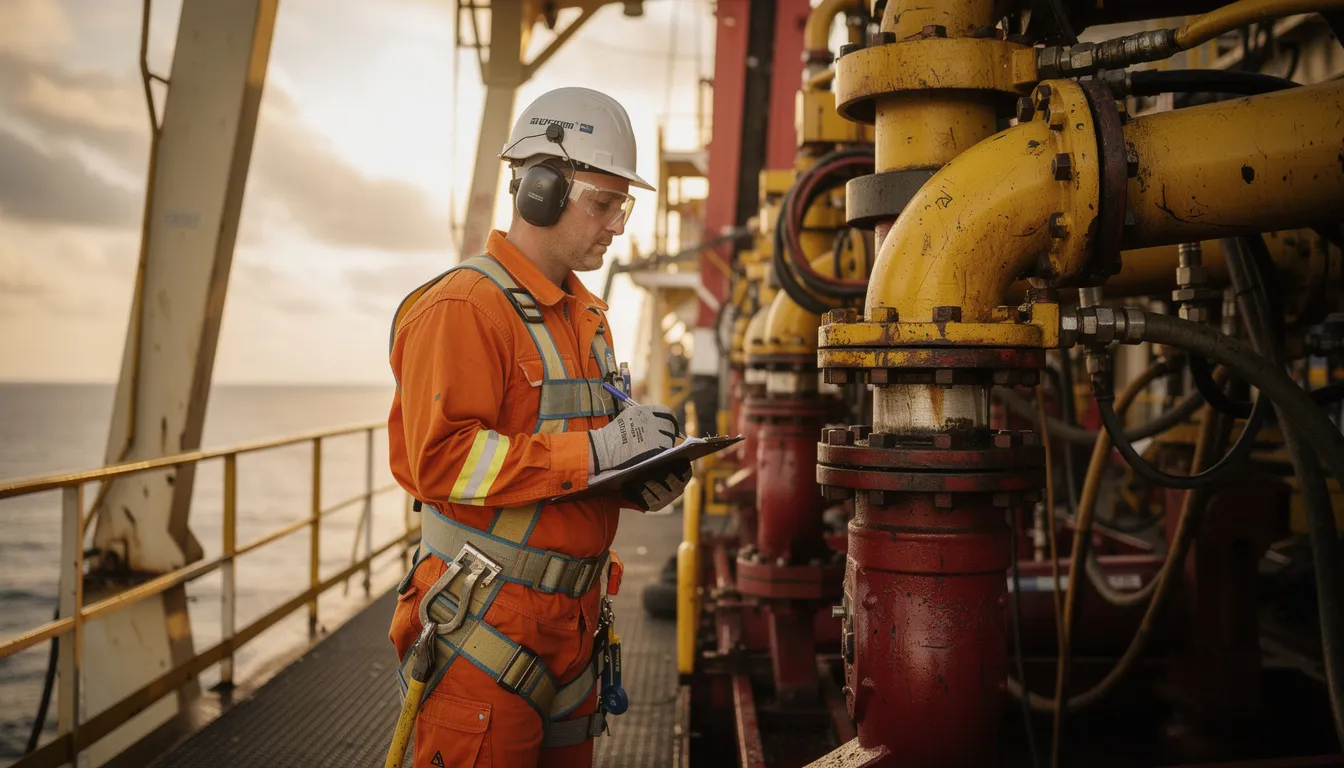
Examining major incidents reveals consistent patterns of failure across decades and continents. While each disaster has unique circumstances, several root causes appear repeatedly.
Well control failures represent the most catastrophic trigger for oil rig explosions. When formation pressure exceeds the hydrostatic pressure provided by drilling mud in the wellbore, a blowout can occur. The Deepwater Horizon disaster exemplified this: methane gas overwhelmed the mud column and reached the surface before the blowout preventer could respond. Similar well control failures caused the Montara and Ekofisk Bravo blowouts.
Gas leaks from high-pressure systems often provide the fuel for explosions. Offshore platforms handle enormous volumes of natural gas at high pressures, and any breach in containment creates extreme danger. At Piper Alpha, a gas leakage from a pump with a removed safety valve filled an enclosed module within minutes.
Human factors and miscommunication contribute to a startling percentage of incidents. Shift change miscommunication caused the Piper Alpha disaster when critical maintenance information wasn’t passed to the incoming crew. At Deepwater Horizon, BP engineers and crew members misinterpreted pressure test results that should have signaled danger. Training deficiencies contributed to lifeboat failures on the Enchova platform and Alexander L. Kielland.
Equipment design and maintenance failures undermine even well-designed safety systems. The Ekofisk Bravo blowout resulted from improper installation of a safety valve. Deepwater Horizon’s blowout preventer had defective components and dead batteries that prevented automatic activation. Fatigue cracks from inadequate inspection caused the Alexander L. Kielland’s structural failure.
External factors including collisions and weather round out the major causes. A vessel collision triggered the Mumbai High North explosion. Storm conditions contributed to the Alexander L. Kielland capsize and complicated evacuation from multiple platforms over the years.
Human, Environmental, and Economic Impacts
The human cost of oil platform explosions is staggering. The deadliest incidents include Piper Alpha (167 deaths in 1988), Alexander L. Kielland (123 deaths in 1980), the Ocean Ranger (84 deaths in 1982), and Deepwater Horizon (11 deaths in 2010).
Beyond immediate fatalities, explosions cause severe injuries including burns, traumatic brain injuries from blast overpressure, and physical trauma from debris. Survivors often experience lasting psychological effects, including PTSD and survivor’s guilt. Families of victims face not only grief but often lengthy legal battles for compensation.
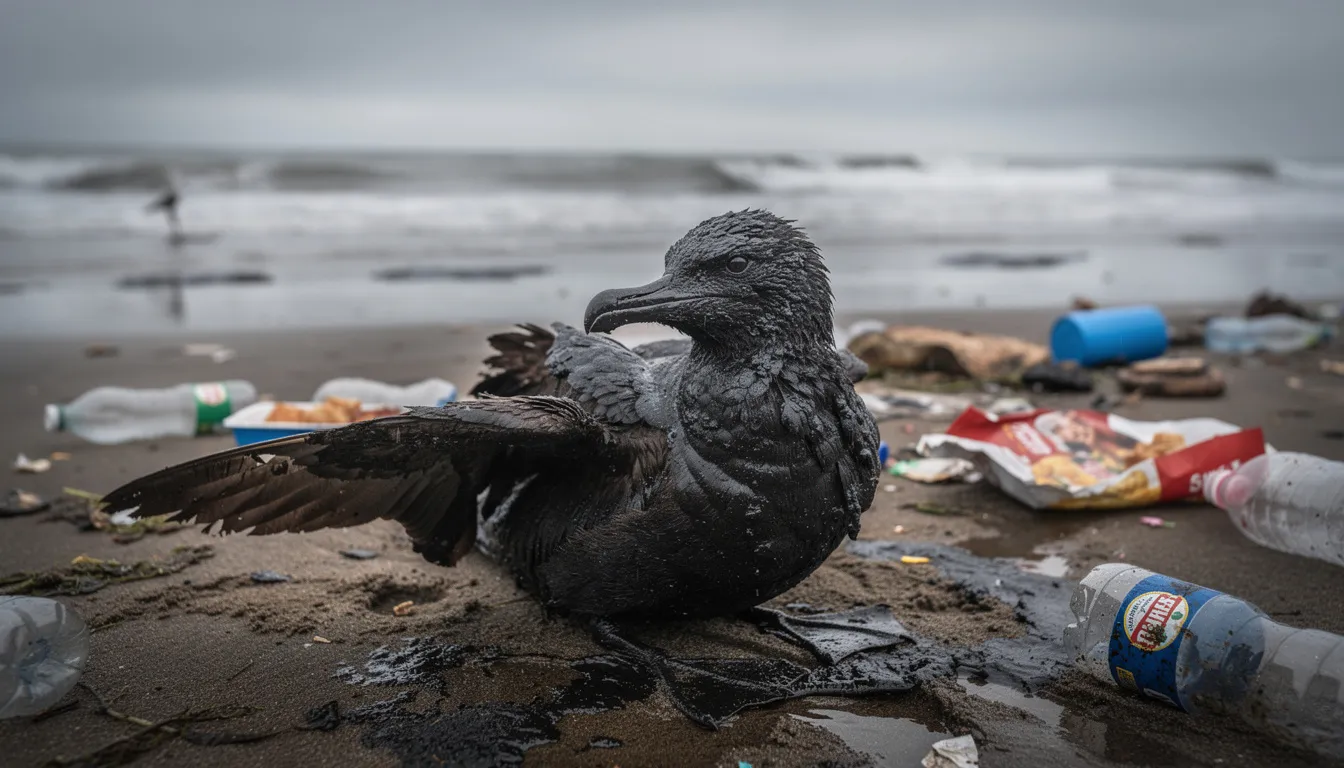
Environmental consequences extend far beyond the explosion site. The Deepwater Horizon oil spill released more than four million barrels of crude oil into the Gulf of Mexico, contaminating over 1,000 miles of Gulf Coast shoreline from Louisiana to Florida. Tar balls continued washing ashore for years. The Mexico oil spill effects spread across federal waters and into the gulf ecosystem, affecting five Gulf states.
Marine life suffered extensively. Scientific studies documented:
-
Mass mortality among sea turtles and dolphins in affected areas
-
Deformities in fish exposed to polycyclic aromatic hydrocarbons (PAHs) from the oil
-
Damage to deep-sea coral communities near the wellhead
-
Long-term reproductive impacts on wildlife populations
The Santa Barbara oil spill of 1969 (approximately 3 million gallons) similarly devastated California’s coastline, while oil slicks from the Montara disaster spread through ecologically sensitive Timor Sea waters.
Economic disruption radiates outward from every major incident. After the Deepwater Horizon explosion, commercial fishing closures affected thousands of Gulf Coast workers. Tourism revenues plummeted across the region. Oil companies faced combined costs exceeding $65 billion in cleanup, fines, and settlements. When Piper Alpha destroyed 10% of UK North Sea production, energy prices and supply chains felt the impact for months.
Safety Reforms, Regulation, and Lessons Learned
Major explosions have consistently triggered regulatory overhauls and technological improvements. The question facing the offshore industry is whether these reforms can prevent future disasters—or merely reduce their frequency.
Post-Piper Alpha reforms transformed UK offshore regulation. The Cullen Inquiry led to the “safety case” regime, requiring operators to demonstrate that their installations could manage major hazard risks. Goal-setting regulation replaced prescriptive rules, pushing companies to prove safety rather than simply check compliance boxes.
After Deepwater Horizon, the United States restructured its offshore regulatory apparatus entirely. The Minerals Management Service (MMS), criticized for conflicts of interest between revenue collection and safety oversight, was split into three separate agencies. The Bureau of Safety and Environmental Enforcement (BSEE) now handles safety inspections, while the Bureau of Ocean Energy Management (BOEM) manages leasing and environmental review.
Technological improvements have addressed some specific failure modes:
|
Area |
Pre-Reform |
Post-Reform Improvements |
|---|---|---|
|
Blowout preventers |
Single control systems |
Redundant acoustic triggers, upgraded shear rams |
|
Well monitoring |
Periodic pressure tests |
Real-time sensors and digital monitoring |
|
Fire/gas detection |
Basic alarms |
Integrated detection systems with automatic responses |
|
Evacuation |
Basic lifeboats |
Totally enclosed survival craft, improved davit systems |
Corporate safety culture has also shifted, at least nominally. Oil companies now emphasize process safety indicators, conduct independent audits, and track leading indicators rather than only recording incidents after they occur.
Ongoing challenges temper optimism about future safety. Many oil rigs in the North Sea and Gulf of Mexico are decades old, with aging infrastructure that’s increasingly difficult to maintain safely. Deepwater and ultra-deepwater drilling operations push technology to its limits. Cost pressures continue to incentivize corner-cutting, and contractor oversight remains inconsistent.
Climate change adds new complications. More intense hurricanes threaten Gulf Coast installations, while rising sea temperatures may affect platform stability. Some projections suggest 20-30% risk reduction by 2030 through advanced technologies like digital twins that simulate blowout scenarios—but extreme weather events could offset these gains.
The lessons from past disasters continue to shape the offshore drilling industry’s future. As energy transitions accelerate, some aging platforms may be decommissioned while others are repurposed for offshore wind installations. The knowledge gained from tragedies like Deepwater Horizon and Piper Alpha will inform safety approaches across whatever offshore energy production looks like in coming decades.
Understanding what went wrong in past oil platform explosions isn’t merely historical curiosity—it’s essential knowledge for preventing future disasters and protecting the workers, communities, and ecosystems that remain vulnerable to offshore drilling risks.