Immediate Answer: What Does “Out of Control” Wind Turbine Mean?
An “out of control wind turbine” is a turbine that cannot be safely stopped due to brake failure, pitch system malfunction, or other critical control system breakdowns. When these safety mechanisms fail, the rotor can accelerate beyond safe operational limits—a condition known as overspeed.
The result can be catastrophic: blades shredding under extreme centrifugal force, towers buckling and toppling, and debris flying hundreds of feet from the base of the structure. Depending on the size of the turbine, blade tip speeds can exceed 200 mph during an uncontrolled rotation, turning composite materials into dangerous projectiles.
At Texas wind farms across the Panhandle, West Texas, and Gulf Coast regions, these incidents pose serious risks to workers performing maintenance, drivers on nearby roads, and residents living within range of potential debris fields. When a turbine began spinning out of control, the consequences can include wrongful death and catastrophic injury claims that change families’ lives forever.
This article is written from the perspective of The Morgan Legal Group, a Texas personal injury and industrial accident law firm, and InjuredCases.com. Our focus is on your legal rights after such failures occur.
If negligence caused a turbine to go out of control, victims may be entitled to compensation for:
- Medical bills and emergency care
- Lost wages and future earning capacity
- Pain and suffering
- Long-term disability and rehabilitation costs
Real-World Examples of Out of Control Wind Turbines
Documented overspeed and brake failures from around the world demonstrate the devastating potential when turbines lose control. While some incidents make dramatic footage that spreads across youtube and news outlets, the underlying truth is consistent: these failures can kill and injure workers, destroy property, and scatter debris across vast areas.
The Hornslet, Denmark Collapse (2008)
On 22 February 2008, a Nordtank NTK 600-180/43 600 kW turbine collapsed in Hornslet, Denmark after its airbrakes failed. The turbine accelerated uncontrollably in high winds, causing the blades to disintegrate under centrifugal force. The tower subsequently collapsed, scattering debris up to 500 meters from the site.
Investigations revealed that worn brake components and inadequate maintenance contributed to the disaster. This case remains a point of reference for understanding how brake failure can cascade into total structural collapse.
The Massachusetts Free-Spinning Turbine
In Massachusetts, a 600 kW turbine that had been locked and out of service for approximately a year began free spinning after strong winds broke its braking mechanism. The uncontrolled rotation forced authorities to close nearby areas and plan a crane-assisted dismantling operation.
This incident illustrates how even turbines taken offline can become dangerous if brakes deteriorate during extended downtime without proper service and inspection.
Fire and Failure Statistics
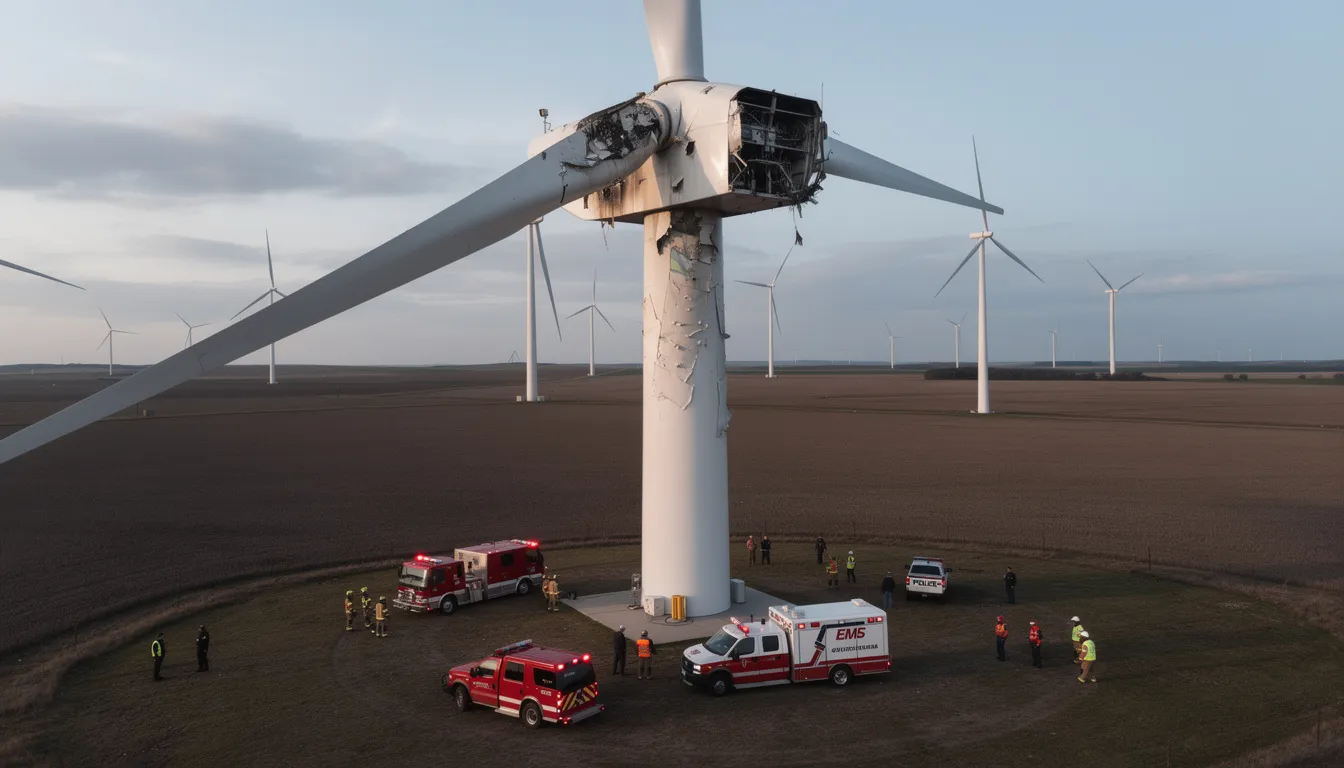
Research suggests approximately 117 wind turbine fires occur worldwide each year out of roughly 200,000 operating turbines. Many of these fires relate to mechanical or electrical failures that escalate when rotors cannot be safely stopped. Once a fire ignites in a nacelle—often fueled by hundreds of liters of lubricating oil and polymer components—there is little that can be done except wait for it to burn out.
Texas-Specific Risks
While high-profile incidents in Denmark or the East Coast generate videos that circulate online, similar risks exist at Texas wind farms. The state’s vast wind energy production infrastructure means thousands of turbines operate across remote areas where workers and nearby communities depend on proper maintenance to stay safe.
How a Wind Turbine Becomes “Out of Control”
Modern wind turbines have multiple safety systems designed to prevent overspeed. An “out of control” event typically means several of these systems have failed simultaneously—or were not properly maintained in the first place.
Aerodynamic Controls
The primary speed control for most turbines is the blade pitch system. By adjusting the angle of each blade, the turbine can reduce lift and slow rotation in high winds. When pitch mechanisms stick, fail, or lose hydraulic pressure, blades remain at high-lift angles that allow the rotor to accelerate dangerously.
Some older turbines use stall regulation instead of active pitch control. These designs are inherently more vulnerable to overspeed if other braking systems fail.
Mechanical Brake Systems
A mechanical brake—usually located on the high-speed shaft between the gearbox and generator—provides emergency stopping capability. This brake is intended to:
- Hold the rotor stationary during maintenance
- Stop the turbine during grid loss or control system failure
- Provide backup protection if aerodynamic controls fail
When mechanical brakes wear out, become contaminated, or lose hydraulic pressure, they cannot perform these critical functions.
Generator and Power Electronics
The generator converts rotational energy into electrical energy production. Under normal conditions, electrical load from the grid helps regulate rotor speed. However, if the generator fails or the turbine loses its grid connection (a condition that can impose torque reversals up to 2.5–4 times nominal load), the rotor may freewheel and accelerate rapidly.
Control System and Sensor Failures
Modern turbines rely on sophisticated SCADA systems and sensors including:
- Anemometers measuring wind speed
- Pitch position sensors
- Rotor speed sensors
- Overspeed protection systems
When these sensors fail or software errors occur, the turbine may not recognize dangerous conditions until it’s too late to stop safely.
Industrial design standards require multiple layers of protection. When a turbine goes out of control, it often indicates serious maintenance lapses, defective components, or improper repair work.
Common Mechanical and Electrical Failures That Lead to Loss of Control
Specific component failures appear repeatedly in investigations of overspeed and out-of-control turbine events. Understanding these failures helps clarify where negligence may have occurred.
Brake Failure
Brake system malfunctions are among the most direct causes of loss of control:
| Brake Failure Type | Potential Cause | Consequence |
|---|---|---|
| Worn brake pads | Skipped inspections, inadequate replacement schedules | Insufficient stopping force |
| Hydraulic system failure | Fluid leaks, contamination, pump failure | Brake cannot engage |
| Contaminated components | Oil, dirt, or debris on friction surfaces | Reduced braking effectiveness |
| Improper adjustment | Incorrect maintenance procedures | Brake slippage under load |
The Hornslet collapse was directly linked to worn airbrake components that should have been identified during routine service.
Blade Pitch System Failures
When pitch mechanisms fail:
- Blades remain at angles that maximize lift rather than reducing it
- Hydraulic leaks can prevent pitch adjustment
- Mechanical linkages can seize in cold weather or from corrosion
- Control signals may not reach pitch motors due to electrical faults
A stuck pitch system in high winds can accelerate a rotor to destruction within minutes.
Gearbox and Main Bearing Issues
Gearboxes and bearings have been called the “Achilles Heel” of wind turbines. These components experience:
- Up to 15,000 heavy load cycles per year
- Transient stresses exceeding 3.1 GPa during grid losses or emergency stops
- Competing lubrication requirements between gears and bearings
When a gearbox fails during overspeed, gear tooth fractures or bearing seizures can cause sudden structural shock, potentially separating the hub and blades from the nacelle.
Generator and Grid-Connection Failures
Loss of electrical load allows the rotor to freewheel. This is particularly dangerous during:
- Storm events when grid connections may fail
- Scheduled maintenance on transmission lines
- Generator internal faults (winding damage, bearing failure), which may result in wind turbine injuries
Without load, there’s nothing to absorb the energy captured by the blades except the mechanical brake—which may already be compromised.
Control System and Sensor Failures
Sensor and software failures can prevent automatic shutdown. For more information about expert legal help in related cases, learn more about us.
- Anemometer icing can cause false low-wind readings
- Software bugs may fail to trigger overspeed protection
- Communication breakdowns between components
- SCADA system errors that mask warning signs
The Role of Inadequate Maintenance
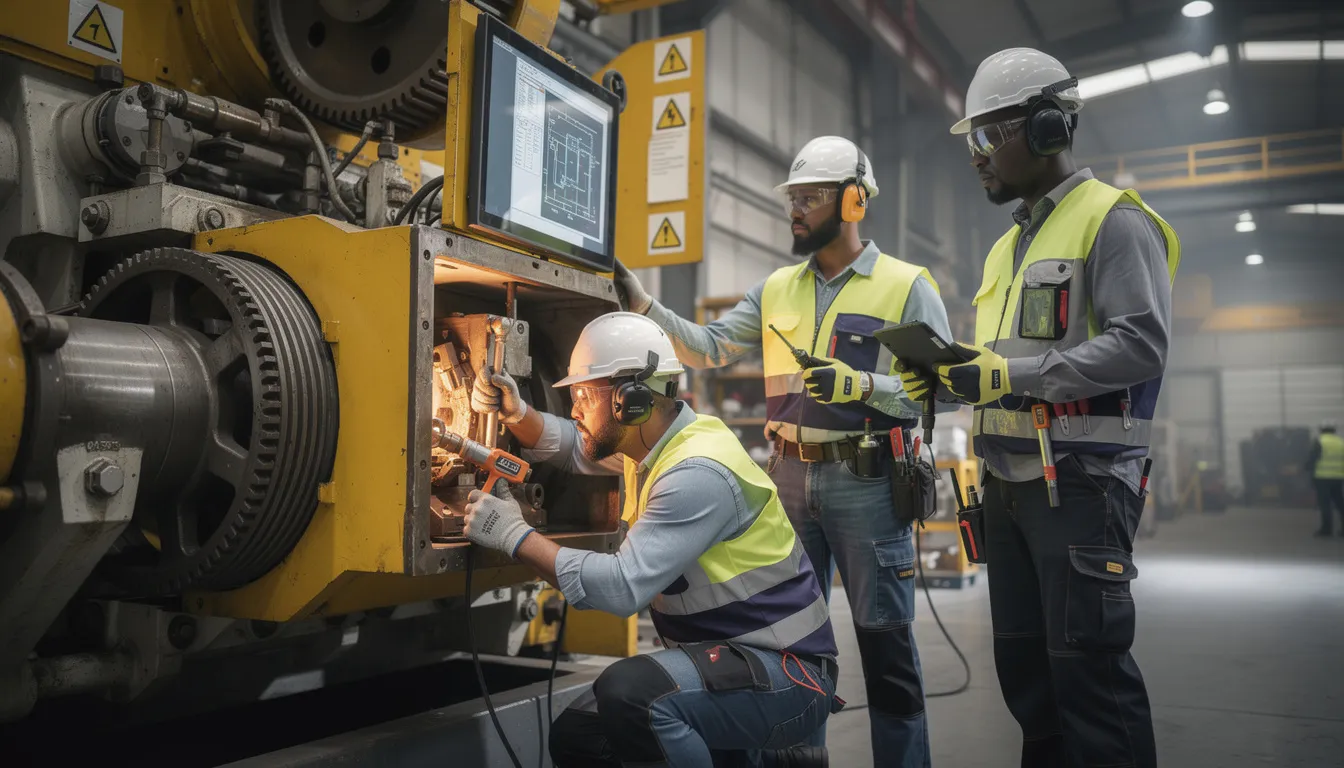
Ultimately, many out-of-control events connect to cost-cutting measures:
- Skipped or delayed inspections
- Use of substandard replacement parts
- Undertrained maintenance personnel
- Pressure to keep turbines online despite known issues
These factors dramatically increase failure likelihood at Texas wind farms where aggressive energy production schedules may override safety considerations.
Consequences of an Out of Control Turbine for Workers and Communities
Beyond financial losses, uncontrolled turbines present serious safety and environmental risks for workers, nearby landowners, and travelers passing through wind farm areas.
Physical Injury Scenarios
Workers face extreme danger during out-of-control events:
- Technicians on towers or in nacelles can be struck by failing components, trapped by fire, or thrown by sudden movements
- Ground crews risk being hit by falling blades, ice, or nacelle components
- Drivers on nearby roads may be struck by debris thrown from the turbine
- Nearby residents can be injured by blade fragments or tower sections
Blade tip speeds exceeding 150–200 mph mean that debris carries enormous force. The air around a failing turbine becomes a danger zone extending hundreds of feet in every direction.
Catastrophic Structural Failures
The most severe outcomes include:
| Failure Type | Description | Debris Spread |
|---|---|---|
| Blade throw | Individual blades or fragments ejected at high speed | Up to 500+ meters |
| Tower collapse | Structural failure causing the entire turbine to fall | Tower height + collapse radius |
| Nacelle fire | Fire consuming lubricants, polymers, and electrical components | Burning debris can fall during fire |
| Hub separation | Hub and blade assembly separating from nacelle | Unpredictable trajectory |
Environmental Impacts
Turbine failures release hazardous materials:
- Burning lubricants and hydraulic fluids
- Composite blade materials releasing toxic smoke
- Oil contaminating surrounding ground and water sources
- Fiberglass and carbon fiber fragments scattered across land
These environmental impacts can affect agriculture, livestock, and residential properties near wind farms.
Operational and Economic Consequences
A destroyed or severely damaged turbine means:
- Multi-month downtime for investigation and repair
- Millions of dollars in lost energy production
- Crane mobilization costs for dismantling damaged structures
- Specialized crews required for cleanup and replacement
These costs ultimately connect to legal claims when negligence contributed to the failure.
Legal Liability After an Out of Control Wind Turbine Incident in Texas
Determining who is legally responsible for an out-of-control turbine incident requires detailed investigation of design, maintenance, and operations at the time of failure.
Potential Defendants
Multiple parties may hold liability:
- Wind farm owners responsible for overall safety policies and contractor oversight
- Operators managing day-to-day turbine operation and maintenance scheduling
- Maintenance contractors performing inspections, repairs, and part replacements
- Component manufacturers if defective brakes, pitch systems, or bearings caused the failure
- Engineering firms involved in faulty repairs, upgrades, or modifications
Proving Negligence
Evidence of negligence may include:
- Ignored or delayed maintenance schedules
- Known brake or pitch problems left unaddressed
- Improper lockout/tagout procedures during service
- Inadequate training for maintenance personnel
- Restarting turbines in high winds after incomplete repairs
- Pressure to continue operations despite warning signs
The Hornslet case demonstrated how restarting a turbine with known brake issues could result in catastrophic consequences.
Types of Claims in Texas
Injured parties may bring several claim types:
- Personal injury claims for medical expenses, lost wages, and pain and suffering
- Wrongful death claims when a worker or bystander is killed
- Premises liability claims against property owners for unsafe conditions
- Products liability claims against manufacturers of defective components
- Workers’ compensation claims with potential third-party liability actions
Available Damages
Compensation may include:
- Emergency and long-term medical care
- Lost wages and loss of future earning capacity
- Pain and suffering
- Disfigurement and permanent disability
- Loss of consortium for family members
- Punitive damages when companies knowingly ignored serious safety defects
Time Limits Apply
Texas has statutes of limitations that restrict how long victims have to file claims. In many personal injury cases, you have two years from the date of injury. Waiting too long can forfeit your right to compensation entirely—making early consultation with a Texas industrial accident lawyer critical.
How The Morgan Legal Group Investigates Out of Control Wind Turbine Accidents
The Morgan Legal Group combines personal injury trial experience with hands-on industrial and wind-energy investigation background, providing a strategic advantage in complex turbine failure cases.
Real-World Investigation Experience
Attorney Clinton Morgan brings over 15 years of experience investigating serious accidents in industrial, oil, gas, and wind environments. This background means our firm understands:
- How wind turbines are designed and operated
- What maintenance records should contain
- Where to look for evidence of negligence
- How to work with technical experts to reconstruct failures
Key Investigative Steps
Our investigation process includes:
- Securing incident reports and SCADA data documenting turbine behavior before and during the failure
- Inspecting the turbine site including debris fields, tower remnants, and surrounding damage
- Obtaining maintenance and brake inspection records to identify skipped or inadequate service
- Analyzing component failure patterns in brakes, blades, gearboxes, and bearings
- Reviewing training records for workers and maintenance personnel
- Interviewing witnesses including co-workers, supervisors, and first responders
Expert Analysis
We work with independent professionals to build strong cases:
- Engineers specializing in wind turbine design and failure analysis
- Metallurgists who can examine failed brake components and gears
- Safety experts familiar with industry standards and regulations
- Accident reconstructionists who can demonstrate failure sequences
Evidence Preservation
Critical evidence can disappear quickly after a turbine failure. Wind farm operators may move to dismantle damaged structures, remove debris, and repair damage to other equipment. Our firm acts quickly to:
- Preserve damaged blades, brake components, and electronic data
- Document the scene through photos and video
- Prevent spoliation of evidence by notifying responsible parties of preservation obligations
Trial Preparation
We prepare each case as if it may go before a jury. This includes developing:
- Visual presentations showing the violence of an out-of-control turbine failure
- Expert testimony explaining technical failures in accessible language
- Evidence demonstrating that the failure was foreseeable and preventable
- Documentation of our client’s injuries, losses, and ongoing needs

What Injured Workers and Families Should Do After a Turbine Failure
If you or someone you love was hurt—or killed—in a wind farm incident involving an uncontrolled turbine, taking the right steps early can protect your legal rights.
Seek Immediate Medical Treatment
Even injuries that seem minor initially can have serious long-term consequences. Make sure:
- All injuries are documented in medical records
- You follow up with specialists as needed
- You keep copies of all medical bills and treatment notes
- You don’t downplay symptoms when speaking with healthcare providers
Preserve Evidence
Document everything you can:
- Photos and videos of the turbine, debris field, and any visible damage
- Safety signage and warning systems at the site
- Personal protective equipment you were using
- Names and contact information for witnesses and co-workers
- Your own written account of what happened while details are fresh
Protect Your Rights
Be cautious about communications after the incident:
- Do not sign documents from the wind farm operator or their insurance company
- Do not give recorded statements without legal counsel present
- Do not accept quick settlement offers before understanding the full extent of your injuries
- Do not post details about the incident on social media
Report Through Official Channels
File required reports through your employer and relevant agencies. However, understand that company-generated reports may not fully capture employer or contractor negligence. Having your own documentation is essential.
Contact a Texas Attorney Promptly
Large energy companies and their insurers have legal teams working to minimize their liability from the moment an incident occurs. You need experienced representation to level the playing field.
Contacting a Texas personal injury and industrial accident lawyer early allows you to:
- Understand your legal options before making decisions
- Preserve critical evidence before it disappears
- Begin building your case while details are fresh
- Protect yourself from tactics designed to limit your recovery
How InjuredCases.com Connects You to the Right Texas Wind Accident Lawyer
InjuredCases.com is a service that connects seriously injured people to vetted personal injury law firms like The Morgan Legal Group. If you’ve been hurt in an industrial or wind-farm accident, this connection can be the first step toward getting the legal help you need.
Focused on High-Impact Cases
InjuredCases.com specializes in cases involving:
- Texas wind-farm and turbine accidents
- Oilfield and industrial equipment failures
- Catastrophic workplace injuries
- Wrongful death claims
This focus means potential clients are matched with attorneys who have relevant experience—not generalists unfamiliar with complex mechanical and industrial claims.
Exclusive and Compliant
Leads through InjuredCases.com are:
- Exclusive – your information goes to one qualified firm
- TCPA-compliant – you requested contact; your information is handled properly
- Delivered in real-time – no delays in connecting you with legal help
- Filtered by case type – ensuring appropriate matching for your specific situation
No Financial Risk
The Morgan Legal Group offers free consultations and typically works on a contingency-fee basis. This means:
- You pay nothing upfront
- Attorney’s fees come only from recovered compensation
- You can get answers about your legal options without financial risk
Send us an email or reach out through InjuredCases.com to start the conversation.
If you or a loved one were injured in a Texas wind turbine incident—whether from brake failure, overspeed, or any other malfunction—don’t wait to understand your options. The Morgan Legal Group has the investigation experience and trial preparation to hold negligent parties accountable.
Contact The Morgan Legal Group through InjuredCases.com today for a free consultation and take the first step toward the compensation you deserve.