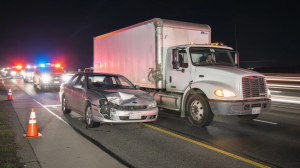
When an 80,000-pound commercial truck collides with a passenger vehicle, the consequences are often catastrophic. Unlike regular car accidents, crashes involving commercial trucks create a complex web of federal regulations, multiple insurance policies, and potentially liable parties that require specialized legal expertise to navigate successfully.
If you or a loved one has been involved in a semi truck accident, understanding your legal rights and options is crucial for securing the compensation you deserve. The trucking industry operates under strict federal oversight, and the companies involved deploy experienced legal teams immediately after accidents to minimize their financial exposure. This makes having an experienced truck accident attorney on your side not just helpful—it’s essential.

This comprehensive guide will walk you through everything you need to know about semi truck accident cases, from understanding what makes these crashes different from regular auto accidents to choosing the right trucking accident attorney for your case.
Why You Need a Semi Truck Accident Attorney
Semi truck accidents involve a complex regulatory landscape that general personal injury attorneys often lack the specialized knowledge to handle effectively. The Federal Motor Carrier Safety Administration (FMCSA) governs commercial trucking through extensive federal regulations covering everything from driver qualifications and hours of service to vehicle maintenance and cargo securement.
Complex Federal Regulations Require Specialized Knowledge
Commercial trucks must comply with hundreds of pages of federal motor carrier safety regulations. These rules cover driver licensing requirements, mandatory rest periods, vehicle inspection protocols, and weight restrictions. An experienced truck accident lawyer understands how violations of these regulations can establish liability in your case.
For example, if a truck driver violated Hours of Service regulations by driving beyond the federally mandated limits, this violation can serve as evidence of negligence. However, identifying and proving these violations requires knowledge of the specific regulatory framework that only specialized truck accident attorneys possess.
Trucking Companies Deploy Legal Teams Immediately
Major trucking companies and their insurance companies maintain teams of experienced lawyers who respond to accident scenes within hours. These legal professionals begin building the company’s defense strategy while victims are still receiving emergency medical treatment. Without an experienced truck accident attorney working on your behalf, you’re at a severe disadvantage from the moment the accident occurs.
Multiple Liable Parties Increase Case Complexity
Unlike typical car accidents involving two drivers, truck accidents often involve multiple potentially liable parties. These can include the truck driver, trucking company, vehicle manufacturer, cargo loading company, and maintenance contractors. Each party may have separate insurance policies and legal representation, creating a complex litigation environment that requires specialized expertise to navigate effectively.
High-Value Insurance Policies Demand Expert Negotiation
Commercial trucks typically carry insurance policies worth $1 million or more, significantly higher than standard auto insurance. Insurance companies protect these high-value policies aggressively, employing sophisticated strategies to minimize payouts. An experienced trucking accident attorney understands these tactics and can counter them effectively to maximize your compensation.
Time-Sensitive Evidence Preservation
Critical evidence in truck accident cases can disappear quickly if not preserved immediately. Electronic logging device (ELD) data, driver logs, maintenance records, and GPS tracking information may be overwritten or destroyed within days of an accident. Truck accident lawyers know how to issue preservation letters and obtain court orders to secure this crucial evidence before it’s lost forever.
What Makes Semi Truck Accidents Different from Car Accidents
The fundamental differences between semi truck accidents and regular car accidents extend far beyond the obvious size disparity. These differences create unique legal challenges that require specialized knowledge and experience to address effectively.
Massive Weight Differential Creates Catastrophic Injuries
A fully loaded semi truck can weigh up to 80,000 pounds, while the average passenger vehicle weighs between 3,000 and 4,000 pounds. This 20-to-1 weight ratio creates a massive energy differential during collisions, resulting in catastrophic injuries occurring three times more frequently in truck crashes compared to regular vehicle accidents.

The physics of these collisions often result in severe injuries including traumatic brain injuries, spinal cord injuries, multiple broken bones, and wrongful death. The severity of injuries in truck accidents typically leads to much higher medical expenses and longer recovery periods, requiring attorneys experienced in valuing these complex damages.
Federal Oversight Through FMCSA Regulations
Commercial trucks operate under strict oversight from the Federal Motor Carrier Safety Administration, which establishes comprehensive safety standards for the trucking industry. These federal regulations cover:
-
Commercial driver licensing and training requirements
-
Mandatory drug and alcohol testing protocols
-
Hours of service limitations to prevent driver fatigue
-
Vehicle inspection and maintenance standards
-
Cargo securement and weight distribution rules
Understanding how to identify violations of these federal regulations and use them to establish liability requires specialized knowledge that general personal injury attorneys typically don’t possess.
Multiple Insurance Policies and Coverage Issues
Commercial trucking operations often involve multiple insurance policies covering different aspects of the business. The trucking company may have one policy, the driver another, and cargo companies separate coverage. Additionally, these policies often contain complex exclusions and coverage limitations that require expert analysis to navigate effectively.
Commercial Driver Licensing Creates Additional Liability Factors
Commercial truck drivers must obtain specialized Commercial Driver’s Licenses (CDL) and undergo regular medical examinations, drug testing, and safety training. Failures in any of these areas can create additional liability for both the driver and trucking company. Truck accident attorneys understand how to investigate these requirements and identify violations that contribute to accident causation.
Who Can Be Held Liable in Semi Truck Accident Cases
One of the most complex aspects of truck accident cases involves identifying all potentially liable parties. Unlike regular auto accidents, trucking accidents can involve multiple defendants, each with varying degrees of responsibility and separate insurance coverage.
Truck Driver Liability
The truck driver can be held liable for various violations and negligent behaviors:
-
Hours of Service Violations: Driving beyond federally mandated limits, falsifying logbooks, or failing to take required rest breaks
-
Traffic Violations: Speeding, following too closely, improper lane changes, or failure to yield
-
Distracted Driving: Cell phone use, eating, GPS navigation, or other activities that divert attention from driving
-
Impaired Driving: Alcohol or drug use, including prescription medications that affect driving ability
-
Inadequate Training: Operating commercial vehicles without proper CDL training or endorsements
Trucking Company Responsibility
Trucking companies face liability under multiple legal theories:
-
Vicarious Liability: Companies are generally responsible for their employees’ actions during work hours
-
Negligent Hiring: Failing to properly screen drivers, check driving records, or verify qualifications
-
Inadequate Training: Not providing sufficient safety training or ongoing education
-
Pressure to Violate Safety Rules: Encouraging drivers to exceed hours of service limits or skip mandatory inspections
-
Poor Maintenance: Failing to properly maintain vehicles or skipping required safety inspections
Truck Manufacturer Liability
Vehicle manufacturers can be held responsible for defective products:
-
Brake System Defects: Faulty brake components that fail to stop the vehicle safely
-
Tire Defects: Blowouts or tread separation causing loss of control
-
Steering System Failures: Defects that prevent proper vehicle control
-
Electronic System Malfunctions: Problems with stability control or other safety systems
Cargo Loading Company Responsibility
Companies responsible for loading truck cargo can face liability for:
-
Improper Weight Distribution: Loading cargo in ways that affect vehicle stability
-
Unsecured Loads: Failing to properly secure cargo, leading to shifting loads or debris on roadways
-
Overweight Violations: Loading trucks beyond legal weight limits
-
Hazardous Material Violations: Improper handling of dangerous cargo
Maintenance Contractor Liability
Third-party maintenance providers may be liable for:
-
Inadequate Inspections: Failing to identify safety hazards during routine maintenance
-
Improper Repairs: Poor workmanship that creates safety hazards
-
Parts Failures: Installing defective or substandard replacement parts
-
Missed Safety Issues: Failing to identify and address brake, tire, or other critical system problems
Government Entity Liability
In some cases, government entities may bear responsibility for:
-
Dangerous Road Conditions: Poorly maintained roadways, inadequate signage, or design defects
-
Construction Zone Negligence: Improper traffic control or inadequate safety measures
-
Inadequate Warning Systems: Missing or poorly maintained warning signs or signals
Types of Compensation Available in Semi Truck Accident Cases
Truck accident victims may be entitled to various forms of compensation, with settlement amounts often ranging from hundreds of thousands to millions of dollars depending on the severity of injuries and degree of liability. Understanding the full scope of available damages is crucial for ensuring maximum recovery.
Economic Damages
Economic damages represent the quantifiable financial losses resulting from the accident:
Medical Expenses: This includes all past and future medical costs related to your injuries, including:
-
Emergency room treatment and hospitalization
-
Surgery and rehabilitation costs
-
Physical therapy and occupational therapy
-
Prescription medications and medical equipment
-
Home healthcare and nursing care
-
Future medical treatment and long-term care needs
Lost Wages: Compensation for income lost due to your inability to work, including:
-
Past lost wages from time off work for treatment and recovery
-
Future lost earning capacity if your injuries prevent you from returning to your previous job
-
Lost benefits such as health insurance, retirement contributions, and vacation time
-
Reduced earning capacity if you must accept lower-paying work due to your injuries
Property Damage: Repair or replacement costs for your vehicle and personal property damaged in the crash.
Non-Economic Damages
Non-economic damages compensate for intangible losses that don’t have a specific dollar value:
Pain and Suffering: Compensation for physical pain, discomfort, and suffering caused by your injuries, both past and future.
Emotional Distress: Mental anguish, depression, anxiety, and post-traumatic stress resulting from the traumatic accident.
Loss of Consortium: Compensation for the impact on relationships with your spouse and family members due to your injuries.
Diminished Quality of Life: Compensation for your reduced ability to enjoy activities and life experiences due to permanent injuries or disabilities.
Punitive Damages
In cases involving gross negligence or willful misconduct, courts may award punitive damages to punish the defendant and deter similar behavior. These damages are typically awarded when:
-
Trucking companies knowingly pressure drivers to violate safety regulations
-
Drivers operate commercial vehicles under the influence of alcohol or drugs
-
Companies deliberately falsify safety records or maintenance logs
-
Repeated violations of federal safety regulations demonstrate willful disregard for public safety
Wrongful Death Damages
When truck accidents result in fatalities, surviving family members may recover:
-
Funeral and burial expenses
-
Lost future earnings the deceased would have provided
-
Loss of companionship, guidance, and support
-
Medical expenses incurred before death
-
Pain and suffering experienced by the deceased before death

How Semi Truck Accident Cases Work
Understanding the legal process for truck accident cases helps set realistic expectations and ensures you’re prepared for each phase of your claim. The process typically involves several distinct phases, with most cases settling out of court through negotiation.
Initial Investigation and Evidence Gathering
The first 30-90 days after your accident are crucial for building a strong case. An experienced truck accident attorney will immediately begin:
Securing Critical Evidence: Your legal team will issue preservation letters to the trucking company, demanding they preserve all relevant records including:
-
Electronic logging device (ELD) data showing driver hours and vehicle operation
-
Driver logs and timesheets
-
Vehicle maintenance records and inspection reports
-
GPS tracking data and route information
-
Driver personnel files and training records
Interviewing Witnesses: Fresh witness testimony is invaluable, as memories fade quickly. Your attorney will locate and interview all witnesses while their recollections are still clear.
Obtaining Official Records: Police reports, emergency medical service records, and any citations issued provide important baseline documentation for your case.
Medical Record Review: Complete medical records from all treating physicians help establish the full extent of your injuries and treatment needs.
Expert Consultation and Case Development
Successful truck accident cases typically require expert testimony to establish liability and demonstrate the full impact of your injuries:
Accident Reconstruction Specialists: These experts analyze the crash scene, vehicle damage, and physical evidence to determine how the accident occurred and who was at fault.
Medical Experts: Physicians and other healthcare professionals provide testimony about your injuries, treatment needs, and prognosis for recovery, which can be crucial when making an accident claim.
Trucking Industry Specialists: Former trucking executives, safety directors, and commercial drivers can testify about industry standards and regulatory violations.
Economic Experts: Economists calculate lost earning capacity and future financial needs based on your specific circumstances and career trajectory.
Demand Letter and Initial Settlement Discussions
Once your attorney has gathered sufficient evidence and your medical condition has stabilized, they’ll prepare a comprehensive demand letter outlining:
-
A detailed description of the accident and how it occurred
-
Documentation of all liable parties and their respective responsibility
-
Complete medical records and expert opinions regarding your injuries
-
Economic analysis of all past and future damages
-
A specific demand for compensation based on the evidence
This formal demand typically triggers serious settlement negotiations with the insurance company and their legal representatives.
Negotiation Phase
Settlement negotiations can last anywhere from several weeks to many months, depending on the complexity of your case and the insurance company’s willingness to negotiate in good faith. During this phase:
-
Your attorney will counter lowball offers with evidence supporting higher compensation
-
Multiple rounds of negotiations may occur as both sides work toward resolution
-
Your legal team may need to obtain additional medical evaluations or expert opinions
-
The insurance company may conduct independent medical examinations or hire their own experts
Litigation and Trial Preparation
If settlement negotiations fail to produce a fair offer, your attorney will file a lawsuit and begin trial preparation. This phase involves:
Discovery Process: Both sides exchange evidence, documents, and witness lists through formal legal procedures including depositions and document requests.
Motion Practice: Your attorney may file various motions to exclude evidence, compel discovery, or resolve legal issues before trial.
Expert Witness Preparation: All expert witnesses must be prepared to testify effectively at trial, often requiring extensive preparation and practice.
Trial Strategy Development: Your legal team will develop a comprehensive strategy for presenting your case to a jury, including opening statements, witness examination, and closing arguments.
While trial preparation is essential for maximum settlement leverage, studies show that clients represented by experienced attorneys receive three to five times more compensation than those who handle cases themselves, whether through settlement or trial verdict.
Common Causes of Semi Truck Accidents
Understanding the most frequent causes of truck accidents helps identify potential liability and strengthens your case. Many truck accidents result from preventable factors that violate federal safety regulations or industry standards.
Driver Fatigue and Hours of Service Violations
Driver fatigue contributes to approximately 13% of fatal truck crashes according to federal safety data. The trucking industry operates under strict Hours of Service regulations that limit driving time to prevent dangerous fatigue, but violations remain common:
Regulatory Limits: Drivers cannot exceed 11 hours of driving after 10 consecutive hours off duty, and cannot work more than 14 hours total in a day.
Logbook Violations: Some drivers falsify electronic or paper logs to hide hours of service violations, creating dangerous situations when exhausted drivers continue operating 80,000-pound vehicles.
Company Pressure: Trucking companies sometimes pressure drivers to meet unrealistic delivery schedules, encouraging them to violate safety regulations.
Inadequate Rest: Even when drivers technically comply with regulations, poor sleep quality or inadequate rest between shifts can still create dangerous fatigue levels.
Distracted Driving
Operating a commercial truck requires constant attention due to the vehicle’s size, weight, and limited maneuverability. In the unfortunate event of a workplace incident, such as a forklift accident, it’s important to know everything to look for when hiring a forklift accident attorney. Common distractions include:
-
Cell phone use for conversations or texting while driving
-
GPS navigation systems and route planning
-
Eating or drinking while operating the vehicle
-
Adjusting radio, climate controls, or other vehicle systems
-
Reading maps, delivery instructions, or paperwork
Federal regulations prohibit commercial drivers from using handheld mobile devices while driving, making violations clear evidence of negligence.
Speeding and Aggressive Driving
Commercial trucks require much longer stopping distances than passenger vehicles, making speed control crucial for safety:
Following Too Closely: Tailgating prevents trucks from stopping safely if traffic conditions change suddenly.
Unsafe Lane Changes: The large blind spots around commercial trucks make lane changes particularly dangerous without proper precautions.
Excessive Speed for Conditions: Even speeds within posted limits can be negligent during adverse weather, heavy traffic, or poor road conditions.
Failure to Yield: Trucks’ limited acceleration makes it particularly important for drivers to yield appropriately at intersections and merge points.

Mechanical Failures
Federal regulations require extensive maintenance and inspection protocols, but failures still occur:
Brake System Defects: Brake failures on 80,000-pound vehicles create catastrophic situations that can involve multiple vehicles.
Tire Blowouts: Poor tire maintenance or defective tires can cause drivers to lose control, particularly at highway speeds.
Steering System Malfunctions: Steering failures prevent drivers from controlling their vehicles and avoiding accidents.
Trailer Detachment: Improper coupling or maintenance can cause trailers to separate from tractors, creating massive hazards.
Improper Cargo Loading
Cargo loading significantly affects vehicle stability and requires strict compliance with federal regulations:
Weight Distribution: Improperly distributed cargo can cause vehicles to become unstable during turns or sudden maneuvers.
Overweight Violations: Exceeding legal weight limits affects braking distance and vehicle control.
Unsecured Loads: Cargo that shifts during transport can cause loss of control or create debris hazards for other vehicles.
Hazardous Material Violations: Improper handling of dangerous goods creates additional risks for catastrophic accidents.
Weather-Related Factors
While weather conditions affect all vehicles, commercial trucks face unique challenges:
Inadequate Speed Adjustment: Drivers who fail to reduce speed sufficiently for wet, icy, or snowy conditions create dangerous situations.
Poor Training: Some drivers lack adequate training for operating large commercial vehicles in adverse weather conditions.
Visibility Issues: Trucks’ height and length create unique visibility challenges during fog, heavy rain, or snow.
Wind Sensitivity: High-profile trailers are particularly susceptible to crosswinds that can cause rollovers or loss of control.
What to Do Immediately After a Semi Truck Accident
The actions you take immediately following a truck accident can significantly impact both your health and your legal case. While your first priority should always be medical attention, there are several important steps to take when possible.
Call 911 for Medical Assistance and Police Response
Never attempt to leave the scene of a truck accident, even if you feel uninjured. Adrenaline and shock can mask serious injuries that become apparent hours or days later. Emergency medical personnel should evaluate all accident victims, and police reports provide crucial documentation for your case.
When speaking with police officers:
-
Stick to factual observations about what happened
-
Avoid speculating about causes or admitting fault
-
Request the report number and information about how to obtain a copy
-
Make sure all vehicles involved are documented in the police report
Document Everything at the Scene
If you’re physically able, comprehensive documentation can prove invaluable for your case:
Vehicle Documentation: Take photos of all vehicles from multiple angles, showing damage, license plates, and any visible defects or cargo issues.
Scene Documentation: Photograph road conditions, weather, traffic signs, skid marks, and debris patterns.
Injury Documentation: If visible, photograph any injuries you sustained, but prioritize medical attention over documentation.
Driver and Company Information: Record the truck driver’s name, license number, and employer information. Note the trucking company name, DOT number, and any identifying information on the vehicle.

Collect Witness Information
Independent witnesses can provide crucial testimony about how the accident occurred:
-
Ask witnesses to remain until police arrive if possible
-
Collect names, phone numbers, and contact information
-
Ask for a brief description of what they observed
-
Note the location where each witness was positioned during the accident
Seek Immediate Medical Attention
Even if you feel fine initially, seek medical evaluation as soon as possible. Many serious injuries, including traumatic brain injuries and internal injuries, may not produce immediate symptoms. Having medical records from shortly after the accident strengthens your case and ensures you receive necessary treatment.
Be honest with medical personnel about all symptoms, including:
-
Any pain or discomfort, no matter how minor it seems
-
Dizziness, confusion, or memory problems
-
Difficulty moving any part of your body
-
Emotional distress or anxiety following the accident
Contact a Semi Truck Accident Attorney Immediately
The most crucial step is contacting an experienced truck accident attorney within 24-48 hours of your accident, before speaking with any insurance adjusters. Insurance companies often contact accident victims quickly, hoping to obtain recorded statements or early settlements before victims understand the full extent of their injuries.
Benefits of early attorney involvement include:
-
Immediate evidence preservation before crucial data is lost
-
Protection from insurance company tactics designed to minimize claims
-
Expert evaluation of your case’s potential value
-
Guidance on medical treatment and documentation needs
Avoid Insurance Company Tactics
Insurance companies employ several strategies to minimize claim values:
Recorded Statements: Adjusters may request recorded statements designed to elicit admissions of fault or minimize injury descriptions.
Quick Settlement Offers: Early lowball offers may seem attractive but rarely reflect the true value of serious injury claims.
Medical Record Authorizations: Broad medical releases allow insurance companies to search for pre-existing conditions to dispute your claims.
Social Media Surveillance: Insurance companies monitor social media accounts looking for evidence to contradict injury claims.
An experienced truck accident attorney can handle all communications with insurance companies, protecting your rights while building the strongest possible case for compensation.
How to Choose the Right Semi Truck Accident Attorney
Selecting the right legal representation can make the difference between a minimal settlement and maximum compensation for your injuries. The specialized nature of truck accident litigation requires specific experience and qualifications that not all personal injury attorneys possess.
Experience with Truck Accident Cases
The most critical factor in attorney selection is demonstrable experience handling truck accident cases specifically. Look for attorneys who:
Specialize in Commercial Vehicle Litigation: General personal injury attorneys may lack the specialized knowledge necessary to handle complex trucking regulations and industry standards.
Handle Similar Cases: Review the attorney’s case results in truck accident cases similar to yours in terms of injury severity and circumstances.
Understand Federal Regulations: Your attorney should have deep knowledge of Federal Motor Carrier Safety Administration regulations, Hours of Service rules, and commercial driver licensing requirements.
Work with Trucking Industry Experts: Successful truck accident cases often require expert testimony from accident reconstructionists, trucking industry specialists, and medical professionals.
Knowledge of Federal Regulations
Truck accident law involves complex federal and state regulations that require specialized expertise:
FMCSA Regulations: Your attorney should understand the comprehensive federal regulations governing commercial trucking operations, including driver qualifications, vehicle maintenance, and cargo securement.
DOT Requirements: Department of Transportation rules cover vehicle inspections, driver medical certifications, and drug and alcohol testing protocols.
Commercial Driver Regulations: CDL requirements, training standards, and licensing restrictions create additional liability considerations in truck accident cases.
Industry Standards: Understanding trucking industry practices and standards helps identify deviations that may constitute negligence.
Trial Experience and Courtroom Skills
While most cases settle out of court, having an attorney with proven trial experience provides crucial leverage in settlement negotiations:
Courtroom Success: Insurance companies offer higher settlements to attorneys with track records of trial victories in similar cases.
Jury Trial Experience: Complex truck accident cases require attorneys comfortable presenting technical evidence and expert testimony to juries.
Litigation Resources: Successful trial preparation requires substantial resources for expert witnesses, accident reconstruction, and comprehensive case development.
Settlement Negotiation: Experienced trial attorneys understand how to value cases accurately and negotiate effectively with insurance companies.
Resources for Comprehensive Investigation
Truck accident cases require extensive investigation and expert analysis that demand significant resources:
Immediate Response Capability: Your attorney should have the resources to begin evidence preservation and investigation immediately after your accident.
Expert Witness Networks: Established relationships with accident reconstruction specialists, medical experts, and industry professionals are essential for building strong cases.
Technology Resources: Modern truck accident investigation requires sophisticated tools for analyzing electronic data, GPS tracking, and vehicle telematics.
Investigation Teams: Complex cases may require private investigators, process servers, and other specialized support staff.
Track Record of Results
Evaluate potential attorneys based on their documented success in truck accident cases:
Settlement History: Look for attorneys with substantial settlements and verdicts in truck accident cases, particularly those involving similar injuries and circumstances.
Client Testimonials: Previous client experiences provide insight into the attorney’s communication style, professionalism, and commitment to client service.
Professional Recognition: Board certification in truck accident law, peer recognition, and professional awards indicate expertise and reputation within the legal community.
Case Results: While past results don’t guarantee future success, they demonstrate the attorney’s ability to achieve favorable outcomes in complex cases.
Professional Credentials and Recognition
Several credentials indicate specialized expertise in truck accident litigation:
Board Certification: The National Board of Trial Advocacy offers board certification in Truck Accident Law, the first specialty certification in this field approved by the American Bar Association.
Professional Memberships: Membership in organizations like the Academy of Truck Accident Attorneys demonstrates commitment to specialized education and professional development.
Continuing Education: Attorneys who regularly attend trucking industry conferences and specialized education programs stay current with evolving regulations and legal strategies.
Peer Recognition: Awards and recognition from legal organizations and bar associations indicate professional excellence and ethical practice.
Attorney Fees and Costs for Semi Truck Accident Cases
Understanding how truck accident attorneys charge for their services helps you make informed decisions about legal representation while ensuring you can access experienced counsel regardless of your financial situation.
Contingency Fee Structure
Most experienced truck accident attorneys work on a contingency fee basis, meaning they only receive payment if they successfully recover compensation for your case. This arrangement offers several advantages:
No Upfront Costs: You don’t need to pay attorney fees before your case begins, making specialized legal representation accessible regardless of your financial situation.
Aligned Interests: Your attorney only gets paid when you do, ensuring they’re motivated to achieve the best possible outcome for your case.
Percentage-Based Fees: Typical contingency fees for truck accident cases range from 33% to 40% of your final settlement or jury verdict.
Risk Mitigation: If your attorney cannot recover compensation, you typically owe no attorney fees, though you may still be responsible for certain case expenses.
Case Expenses and Costs
While attorney fees are contingent on success, truck accident cases involve various expenses that may be advanced by your attorney:
Expert Witness Fees: Accident reconstructionists, medical experts, and trucking industry specialists typically charge substantial fees for their analysis and testimony, making it crucial to consider legal assistance after a car accident to understand your options for recovering such expenses.
Medical Record Costs: Obtaining complete medical records from all treating physicians requires payment of copying fees that can total hundreds or thousands of dollars.
Court Filing Fees: If litigation becomes necessary, court filing fees and other legal costs must be paid throughout the process.
Investigation Costs: Private investigators, process servers, and specialized equipment for evidence analysis create additional expenses.
Deposition Costs: Court reporters and transcription services for deposing witnesses and expert testimony can be significant in complex cases.
Many attorneys advance these costs on behalf of clients, with repayment typically coming from any eventual settlement or verdict.
Free Consultation Benefits
Most reputable truck accident lawyers offer free initial consultations that provide several benefits:
Case Evaluation: Experienced attorneys can assess the strength of your case and provide realistic expectations about potential outcomes.
No Financial Risk: You can explore your legal options without any upfront financial commitment.
Education Opportunity: Learn about the legal process, your rights, and what to expect from pursuing a truck accident claim.
Attorney Assessment: Evaluate whether the attorney has the experience, resources, and communication style you need for your case.
Higher Settlements with Professional Representation
Research consistently shows that truck accident victims represented by experienced attorneys recover significantly more compensation than those who handle cases themselves:
3-5x Greater Recovery: Studies indicate that represented clients typically receive three to five times more compensation than self-represented individuals, even after attorney fees.
Insurance Company Tactics: Professional representation protects you from insurance company tactics designed to minimize claim values.
Comprehensive Case Development: Attorneys identify all potential sources of compensation and liability that inexperienced individuals often miss.
Negotiation Expertise: Experienced attorneys understand how to value cases accurately and negotiate effectively with sophisticated insurance defense teams.

Value-Based Fee Structures
The contingency fee system ensures that your attorney’s compensation aligns with the value they bring to your case:
Larger Cases Justify Higher Percentages: More complex cases requiring extensive resources and expertise may warrant higher contingency percentages.
Settlement vs. Trial: Some attorneys charge different percentages depending on whether cases resolve through settlement or require trial, with trial cases typically commanding higher fees.
Sliding Scale Options: Some attorneys offer sliding scale fees based on case complexity or the amount of recovery achieved.
Fee Negotiation: While fee structures are generally standard, some negotiation may be possible based on case circumstances.
Transparency in Fee Arrangements
Reputable truck accident attorneys maintain transparency about all fee arrangements:
Written Fee Agreements: All fee arrangements should be clearly documented in writing before representation begins.
Expense Explanations: Your attorney should explain what expenses may be incurred and how they’ll be handled.
Regular Updates: You should receive regular updates about case expenses and fee projections throughout representation.
Final Accounting: Upon case resolution, you should receive detailed accounting of all fees and expenses deducted from your recovery.
Timeline and Statute of Limitations for Semi Truck Accident Claims
Understanding the various time constraints and phases involved in truck accident claims helps set realistic expectations and ensures you don’t miss crucial deadlines that could bar your case entirely.
Statute of Limitations Varies by State
The statute of limitations establishes the maximum time period during which you can file a lawsuit for your truck accident injuries. These time limits vary significantly by state:
Two-Year Limitations: Many states impose a two-year deadline from the date of the accident to file a personal injury lawsuit.
Three-Year Limitations: Some jurisdictions provide three years to file truck accident lawsuits, offering more time for case development.
Discovery Rule Exceptions: In some cases involving injuries that aren’t immediately apparent, the limitation period may begin when injuries are discovered rather than when the accident occurred.
Wrongful Death Cases: Different limitation periods may apply to wrongful death claims, sometimes providing less time than personal injury cases.
Government Entity Claims: Special shorter deadlines often apply when suing government entities for road defects or other government negligence.
Missing the statute of limitations deadline typically bars your case permanently, making early legal consultation crucial for protecting your rights.
Investigation Phase: 30-90 Days
The initial investigation period is critical for building a strong foundation for your case:
Evidence Preservation: The first 30 days are crucial for securing electronic data, witness statements, and physical evidence before it’s lost or destroyed.
Medical Stabilization: Your medical condition needs time to stabilize so attorneys can accurately assess the full extent of your injuries and future needs.
Expert Consultation: Accident reconstruction specialists and medical experts need time to thoroughly analyze evidence and develop opinions about liability and damages.
Regulatory Investigation: Understanding federal regulatory violations requires comprehensive review of driver logs, maintenance records, and company policies.
Settlement Negotiations: 6 Months to 2 Years
The negotiation phase timeline depends heavily on case complexity and insurance company cooperation:
Simple Cases: Straightforward cases with clear liability and well-documented injuries may settle within six months.
Complex Cases: Multi-party cases involving disputed liability or severe injuries requiring extensive medical treatment can take 18-24 months to resolve.
Insurance Company Factors: Some insurers negotiate in good faith early in the process, while others delay settlement hoping to reduce claim values.
Medical Treatment Completion: Negotiations typically cannot conclude until your medical treatment is complete and future needs are clearly understood.
Trial Timeline: 2-4 Years if Litigation Required
When settlement negotiations fail, trial preparation and litigation can extend case resolution significantly:
Discovery Process: Formal legal discovery including depositions, document exchange, and expert witness preparation typically takes 12-18 months.
Court Scheduling: Busy court calendars may delay trial dates 6-12 months after cases are ready for trial.
Pre-Trial Motions: Legal motions to resolve evidentiary issues or case components can add several months to the timeline.
Trial Duration: Complex truck accident trials may last several days or weeks, depending on the number of witnesses and complexity of evidence.
Appeals Process: If either party appeals the trial verdict, final resolution can be delayed years longer.
Immediate Action Requirements
Several critical actions must be taken immediately after truck accidents to preserve your legal rights:
Evidence Preservation: Electronic logging device data, GPS tracking, and maintenance records may be overwritten or destroyed within days of accidents.
Witness Interviews: Witness memories fade quickly, making immediate contact essential for preserving accurate testimony.
Medical Documentation: Prompt medical attention creates crucial records linking your injuries to the accident.
Insurance Notifications: Most insurance policies require prompt notification of accidents, though you should consult with an attorney before providing detailed statements.
Benefits of Earlier Legal Involvement
Statistics show that earlier attorney involvement typically leads to better case outcomes:
Evidence Quality: Evidence secured immediately after accidents is typically more complete and reliable than evidence gathered weeks later.
Witness Cooperation: Witnesses contacted promptly after accidents are more likely to cooperate and provide detailed statements.
Medical Documentation: Attorneys can help ensure medical records properly document accident-related injuries and treatment needs.
Insurance Company Interactions: Early attorney involvement prevents insurance company tactics designed to obtain damaging statements or early lowball settlements.
Faster Resolution: Cases where attorneys become involved early typically resolve faster than those where legal representation is delayed.
The combination of strict legal deadlines and the time-sensitive nature of evidence preservation makes immediate legal consultation essential after any serious truck accident. Waiting to seek legal representation can significantly harm your case and potentially bar your claims entirely.
Conclusion
Semi truck accidents represent some of the most complex and devastating motor vehicle crashes on our roads today. The combination of massive vehicle weights, intricate federal regulations, multiple potentially liable parties, and sophisticated insurance defense strategies creates a legal landscape that demands specialized expertise and immediate action.
The evidence is clear: truck accident victims who retain experienced truck accident attorneys achieve significantly better outcomes than those who attempt to handle cases themselves or work with general personal injury lawyers. The specialized knowledge required to navigate federal motor carrier safety regulations, identify all liable parties, and counter aggressive defense tactics simply cannot be obtained through general legal practice.
Time is your most critical asset following a truck accident. Evidence disappears, witness memories fade, and insurance companies begin building their defenses within hours of accidents. The statute of limitations creates absolute deadlines that cannot be extended, while the complexity of these cases requires months or years of careful development to achieve maximum compensation.
If you or a loved one has been injured in a semi truck accident, don’t let the trucking company’s legal team gain an advantage while you struggle with medical treatment and recovery. Contact an experienced truck accident attorney immediately for a free consultation to protect your rights and begin building the strongest possible case for the compensation you deserve.
The difference between having specialized legal representation and facing the trucking industry’s resources alone can literally mean the difference between financial recovery and financial ruin. Your future depends on the actions you take today.