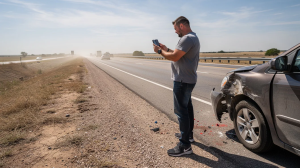
Overview of Texas Crash Reports
A State of Texas crash report is the official document that records what happened during a traffic collision on Texas roadways. Formally known as the Texas Peace Officer’s Crash Report (Form CR-3), this document is created by a law enforcement officer who investigates the scene and captures critical details about the vehicles, drivers, injuries, and circumstances surrounding the crash.
The Texas Department of Transportation (TxDOT) serves as the official custodian of all crash records in the state, as mandated by Texas Transportation Code §550.062 and §550.065. When a motor vehicle crash occurs anywhere on public roadways or the state highway system, and it meets certain thresholds, the investigating agency must submit the completed CR-3 form to TxDOT within 10 days. From there, TxDOT processes and stores the data in the Crash Records Information System (CRIS), making it available to eligible parties.

Most people who need a copy of their crash report will obtain it through TxDOT’s Crash Report Online Purchase System. In some cases, you may be able to request a copy directly from the local government agency that responded to the scene. Here’s why obtaining your crash report matters:
-
Insurance claims: Your insurance company will often request the official document to process property damage and injury claims
-
Fault determination: The officer’s narrative and contributing factors help establish who may be responsible
-
Legal proceedings: Attorneys use crash reports as foundational evidence in personal injury lawsuits
-
Medical documentation: The report can corroborate injury claims and treatment timelines
-
Record keeping: Having an official document protects you if disputes arise months or years later
When a Crash Report Is Required in Texas
Not every fender-bender generates an official State of Texas crash report. Texas Transportation Code §550.062 establishes specific thresholds that determine when a written report must be filed by the investigating officer.
The law requires a crash report when the accident involves injury, death resulting from the collision, or property damaged to the apparent extent of $1,000 or more to any one person’s property. If your crash meets any of these criteria, the law enforcement officer who has the duty investigates the scene must complete and submit a CR-3 form.
Here’s what you need to know about reporting requirements:
-
$1,000 damage threshold: If the estimated damage to any vehicle involved or other property reaches or exceeds $1,000, the crash is reportable
-
Injury or death: Any crash involving bodily harm—from minor injuries to fatalities—requires documentation
-
10-day submission deadline: Texas law enforcement agencies must submit the completed CR-3 to TxDOT within 10 days of the crash date or from completing their investigation
-
Officer responsibility: Drivers do not fill out the official CR-3 form; only a peace officer who investigates the scene completes it
-
Crashes occurring on public roads: The requirement applies to collisions on any public roadways, including city streets, county roads, and the state highway system
-
Private property exceptions: Crashes in private parking lots may or may not be documented, depending on local agency policy and whether injuries occurred
Real-world examples: A multi-vehicle pileup on I-35 in Austin clearly meets the threshold and would generate multiple paginated CR-3 reports. A serious rear-end collision on Loop 610 in Houston with injuries would likewise require documentation. Even a single-vehicle crash on a rural Farm-to-Market road that results in death resulting from the collision mandates a full investigation and report.
Minor bumps in a grocery store parking lot with no injuries and less than $1,000 in damage? Those typically won’t generate an official report—leaving drivers to document the incident themselves for insurance purposes.
Who Can Access a Texas Crash Report (Eligibility Rules)
Crash reports are not public records freely available to the general public. Texas Transportation Code §550.065 establishes strict confidentiality rules that limit access to specific categories of requestors.
The law restricts crash report access to individuals with a “proper interest” in the information—essentially, those who are directly affected by the crash or have a legitimate legal or business need. If you don’t fall into one of the eligible categories, you may only be able to obtain a redacted copy with personal identifying information removed.

Eligible parties typically include:
-
Person involved in the crash: Any driver involved or person directly concerned as a participant in the collision
-
Vehicle owners: If your vehicle was involved but you weren’t driving, you can still request the report
-
Insurance company representatives: Insurers with an insurance policy covering the vehicle or person may access the report to provide claims processing
-
Legal guardians or parents: A legal guardian of a minor driver involved can request on their behalf
-
Authorized representative: An attorney or other agent with proper written authorization from an eligible party
-
Employers of commercial drivers: When a crash involves an employee operating a company vehicle in the regular course of business
-
Government agencies: Law enforcement, prosecutors, and courts for official purposes
-
FCC-licensed media: Television station representatives or other outlets licensed by the Federal Communications Commission may access reports under certain conditions to publish legal notices or for news purposes
-
Parties with established financial responsibility: Those who can demonstrate they have a financial responsibility interest, such as holding an insurance policy or license issued under Transportation Code requirements
Full vs. Redacted Reports
When you request a crash report, you may receive either a full (unredacted) version or a redacted copy, depending on your eligibility:
-
Full/unredacted reports: Available to persons directly concerned in the crash, their authorized representative, insurers, and others with demonstrated proper interest
-
Redacted reports: Remove sensitive personal data like driver license numbers and addresses; may be available to requestors who don’t meet full eligibility criteria
When using TxDOT’s online system, you’ll typically be asked to confirm your eligibility through checkboxes or statements. Be prepared to justify your interest—especially if you’re not an obvious party like the driver involved or vehicle owner.
How to Request a State of Texas Crash Report Online
The fastest and most convenient way to obtain your State of Texas crash report is through TxDOT’s Crash Report Online Purchase System, which is part of the broader CRIS infrastructure. This online system allows eligible requestors to search for, purchase, and download crash reports as PDF files.
Before you begin, gather the following required information:
-
Exact crash date (or as close as you can recall)
-
Approximate time of the crash
-
City or county where the crash occurred (e.g., Harris County, Bexar County, Travis County)
-
Correct spelling of names for any person involved
-
Your driver license or ID number
-
Vehicle identification number (VIN) if searching by vehicle
Search Options
The online system receive searches using multiple data points. You can search by:
-
Name: First and last name of a driver involved or person involved
-
Driver license or ID number: Your Texas DL or ID, or an out-of-state equivalent
-
Vehicle identification number (VIN): Useful when you know the vehicle but not driver details
-
TxDOT Crash ID assigned: If you already have the unique 13-digit crash identifier from a police incident card or insurance correspondence
Timing Expectations
Don’t panic if you can’t find your report immediately after a crash. TxDOT collects crash reports from law enforcement agencies statewide, and processing takes time. Reports typically become available for purchase 10 to 14 days from the crash date. In some cases, delays may extend further if the investigating officer hasn’t yet submitted the CR-3 or if the data is still being indexed.
Step-by-Step Summary
-
Visit TxDOT’s Crash Report Online Purchase System website
-
Select your search method (name, DL number, VIN, or TxDOT Crash ID)
-
Enter the crash date range and location details
-
Review search results and select the correct crash report
-
Confirm your eligibility by selecting the appropriate reason (e.g., “I am a person directly concerned in the crash”)
-
Pay the required fee using a credit card
-
Download your crash report as a PDF file or receive it via email
What If Your Crash Report Is Not Available Online Yet?
If you’ve searched the online purchase system and your crash report isn’t appearing, don’t assume it’s lost. Several common issues can cause delays.
Why reports may be delayed:
-
The law enforcement officer hasn’t yet submitted the CR-3 form to TxDOT
-
TxDOT is still processing and indexing the report in the Crash Records Information System
-
The crash occurred very recently (less than 10-14 business days ago)
-
Data entry errors or misspellings are causing search mismatches
Troubleshooting steps:
-
Wait at least 10 business days from the crash date before assuming the report is missing
-
Double-check the spelling of all names—even minor variations can prevent matches
-
Try searching using different fields (VIN instead of name, for example)
-
Verify the crash date and location are accurate
-
Contact TxDOT’s Crash Records Information System help line at 1-844-274-7457 for status updates
-
Reach out to the investigating agency (the police department or sheriff’s office that responded) to confirm the report was filed
-
Ask for the TxDOT Crash ID if the local agency can provide it, then search using that identifier
For late-2024 and 2025 crashes, processing times may vary due to system updates and workload fluctuations. Patience is often the best first step.
Costs, Formats, and Types of Texas Crash Reports
When purchasing a State of Texas crash report, you’ll need to choose between different copy types based on how you plan to use the document. Understanding these options helps you avoid paying for features you don’t need—or missing certification that a state court or federal court might require.

Uncertified vs. Certified Copies
|
Copy Type |
Description |
Typical Use |
|---|---|---|
|
Regular copy (uncertified) |
Standard reproduction of the CR-3 form |
Personal records, insurance company submissions, attorney review |
|
Certified copy |
Includes TxDOT certification stamp verifying authenticity |
Legal proceeding evidence, court filings, formal disputes |
Current Fee Structure
Based on TxDOT’s published rates, expect the following costs:
-
Regular copy: $6 per crash report
-
Certified copy: $8 per crash report
-
Minimal surcharge: An additional online processing or credit card fee may apply when paying through the online purchase system
Payments are typically accepted via major credit cards. If you need a certified copy for a legal proceeding, the extra $2 is well worth ensuring the document is accepted as an official document by the court.
Delivery Format
When you purchase through TxDOT’s online system, your crash report is typically delivered as a PDF file. You’ll receive download instructions via email after payment is processed. Some local agencies may still offer printed copies at their records counter if you request in person.
Common Use Cases
-
Insurance claims: A regular copy is usually sufficient for your insurance company to process claims
-
Personal injury lawsuits: Attorneys often need certified copies for court filings
-
Fault disputes: Having the official document helps resolve disagreements about what happened
-
Medical records coordination: Crash reports help establish the date and circumstances of injuries
Obtaining a Crash Report by Mail or In Person
While the online purchase system is the primary method for obtaining Texas crash reports, alternative options exist for those who prefer or require different approaches.
Mail Requests
Historically, TxDOT accepted mail requests using the CR-91 form, accompanied by a check or money order. However, procedures have shifted significantly toward electronic submission. As of early 2025, TxDOT is phasing out mailed requests in favor of the electronic CRIS Request system.
Current status:
-
Mail-in requests to TxDOT Crash Data and Analysis may no longer be accepted
-
Written request submissions via mail were discontinued for subpoenas and affidavits as of January 1, 2025
-
Always verify current procedures on TxDOT’s official website before mailing any request
In-Person Requests at Local Agencies
Some local agencies still accommodate in-person or mail requests directly through their records division. This varies by jurisdiction and agency policy.
Options to explore:
-
Contact the city police department’s records section (e.g., Houston Police Department, San Antonio Police Department)
-
Visit a county sheriff’s office records window (e.g., Williamson County Sheriff’s Office, Tarrant County Sheriff’s Office)
-
Call ahead to confirm hours, accepted payment methods, and whether they handle crash report requests or direct you to TxDOT
Local vs. State: Which Agency Should You Contact?
Understanding which agency handled your crash helps you direct your request efficiently. Making a request to the wrong office wastes time and delays your access to the report.
How crashes are typically investigated:
-
City crashes: Crashes within city limits (Dallas, Houston, San Antonio, Austin) are usually investigated by municipal police departments
-
County/rural crashes: Incidents outside city limits often fall to county sheriff’s offices
-
State highways: Texas Department of Public Safety (DPS) troopers frequently handle crashes on major highways and interstate corridors
Key points to remember:
-
Even when a local agency investigates and creates the CR-3, TxDOT ultimately maintains the statewide database
-
Most CR-3 reports are sold through TxDOT’s online system, regardless of which agency investigated
-
Check the investigating agency’s website for a “Crash Reports” or “Records” section
-
If the local site directs you to TxDOT, use the Crash Report Online Purchase System
-
The incident card or business card given at the scene usually identifies the investigating agency
Using the State of Texas Crash Report in Insurance and Legal Claims
Your crash report serves as a foundational document for virtually every step that follows a motor vehicle crash—from filing an insurance claim to pursuing compensation in court. Understanding what the report contains and how it’s used helps you leverage this official document effectively.

What’s Inside a Texas CR-3 Crash Report?
The Texas Peace Officer’s Crash Report is a comprehensive multi-page form capturing detailed crash data:
-
Crash identifiers: TxDOT Crash ID, date, time, and location (county, road name, mile markers)
-
Vehicle information: Make, model, year, VIN, license plate, damage ratings
-
Driver information: Names, driver license numbers, addresses, citations issued
-
Person involved details: Passengers, pedestrians, their ages, injuries, and seat positions
-
Contributing factors: Speeding, distracted driving, failure to yield, weather conditions
-
Diagram: A non-scale field sketch showing vehicle paths, impact points, and the crash sequence
-
Officer’s narrative: The investigating officer’s opinion of how the crash occurred
How Insurance Companies Use Crash Reports
When you submit a claim to your insurance company, they’ll almost certainly request the crash report. Insurers use the report to:
-
Determine fault by reviewing the officer’s narrative and contributing factors
-
Verify the vehicles and drivers involved match policy information
-
Assess property damaged claims against documented damage ratings
-
Evaluate bodily injury claims based on injury classifications (killed, incapacitating, non-incapacitating, possible, none)
-
Identify potential subrogation opportunities against at-fault parties
Crash Reports in Legal Proceedings
For attorneys handling personal injury or wrongful death cases in Texas, the crash report is essential evidence. While the officer’s opinion is not conclusive proof of liability, courts and juries frequently give it significant weight.
How attorneys use crash reports: For more information on the critical errors to avoid when making a claim, see the common mistakes to avoid when making an accident claim as outlined by The Morgan Legal Group.
-
Locate and contact witnesses listed in the report
-
Identify insurance policy information for the at-fault party
-
Support negligence allegations with documented factors (e.g., speeding, running a red light)
-
Establish the crash date and timeline for statute of limitations purposes
-
Use the diagram to reconstruct the accident scene
-
Present the report as evidence in state court or federal court proceedings
What If No Police Crash Report Was Filed?
Not every crash generates an official State of Texas crash report. Minor collisions without injuries and with damage below the $1,000 threshold may not be documented by law enforcement—especially if no officer was ever called to the scene.
Impact on your claim:
When there’s no CR-3 available, your insurance claim relies more heavily on:
-
Photos and videos of the scene, vehicle damage, and injuries
-
Repair estimates from body shops
-
Witness statements from passengers or bystanders
-
Your written statement describing what happened
-
Medical records documenting any injuries
Practical tips when no report exists:
-
Document everything at the scene: take photos from multiple angles, capture license plates, and note road conditions
-
Exchange contact and insurance information with all parties
-
File a claim with your insurance company promptly, even without a police report
-
Save any 911 or dispatch records if emergency services were contacted
-
Consider consulting with an attorney who can help reconstruct the event using available evidence
Bulk Crash Data, Statistics, and Subpoena Requests
Beyond individual crash report requests, TxDOT maintains a statewide automated database that powers safety analysis, research, and planning initiatives across Texas.
Statistical Data and Research
TxDOT’s Traffic Safety Division publishes annual Texas motor vehicle crash statistics and maintains dashboards through the Traffic Safety Data Portal. This crash data helps identify dangerous corridors, inform engineering countermeasures, and track progress toward fatality reduction goals.
Available resources include:
-
Cumulative crash data sets from 2003 through 2024
-
Annual crash statistics reports
-
Interactive visualizations showing crash trends by county, road type, and time period
-
Emphasis area reports targeting specific safety concerns
Types of Data Requests
Different requestors have different needs—and TxDOT has established processes for each:
|
Request Type |
Description |
How to Submit |
|---|---|---|
|
Single crash report |
Individual CR-3 for personal use |
Crash Report Online Purchase System |
|
Bulk crash data |
Lists of Crash IDs or aggregated statistics |
Online Crash Data Request Form |
|
Subpoenas/affidavits |
Formal legal requests for records |
Electronic submission through CRIS Request system |
Subpoena and Affidavit Process
As of August 2024, TxDOT transitioned subpoena and affidavit processes to fully electronic submission. Mail requests for legal document production were no longer accepted after January 1, 2025.
Key points for legal professionals:
-
Submit subpoenas as PDF uploads through the CRIS Request portal
-
Pay the required fee ($8 per report) electronically
-
Receive status updates and downloads via CRIS Request notifications
-
Note that TxDOT holds only the crash report itself—dash cam footage, photos, or officer notes require separate requests directly to the investigating agency
Crash Record Forms for Texas Law Enforcement
Understanding the forms that Texas peace officers use can help you decode the information in your downloaded crash report.
Form CR-3 basics:
-
The Texas Peace Officer’s Crash Report (CR-3) is the standardized form used statewide
-
Instructions are published in the CR-100 manual, with the current version (26.1) revised in April 2023
-
Forms include mandatory fields (marked with asterisks) that must be completed for acceptance
-
Over 60 condition codes exist for light, roadway, and weather factors alone
How data reaches TxDOT:
-
Officers submit data electronically through the CRASH system (Crash Reporting and Analysis for Safer Highways)
-
CRASH features include GPS auto-population, pre-built intersection templates, and touch-screen support for rugged devices
-
Mobile reporting platforms allow on-scene data entry from virtually any location
-
Supplemental reports can be easily added for additional information discovered after initial submission
Retention and availability:
-
TxDOT maintains crash records according to the state retention schedule, typically 10 years plus the current year
-
Records older than the retention period may not be available for purchase, though annual statistical reports persist
-
The Texas Department discontinued the Driver’s Crash Report (Form CR-2) after September 1, 2017, per Government Code provisions from Senate Bill 312
Key Takeaways
Navigating the State of Texas crash report system doesn’t have to be overwhelming. Here’s what matters most:
-
TxDOT is the official custodian of crash records under Texas Transportation Code §550.062
-
Crash reports are required when there’s injury, death, or property damage of $1,000 or more
-
Only eligible parties—those with a proper interest like drivers, owners, insurers, or attorneys—can access unredacted reports
-
The Crash Report Online Purchase System is the fastest way to obtain your CR-3
-
Reports typically become available 10-14 days after the crash date
-
Costs range from $6 for a regular copy to $8 for a certified copy
-
Your crash report is essential evidence for insurance claims and any legal proceeding
Whether you’re filing a claim with your insurance company, preparing for litigation, or simply want an official document of what happened, your State of Texas crash report provides the factual foundation you need. Bookmark TxDOT’s online system, gather your required information, and request your report as soon as it’s available.