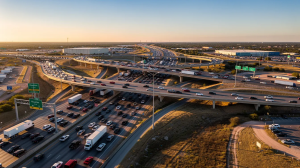
Texas car accident overview
Texas records hundreds of thousands of motor vehicle crashes each year, making it the deadliest state in the nation for traffic incidents. This guide explains how crash reports work in Texas, which agencies maintain them, and how recent incidents highlight ongoing public safety concerns across the state’s roadways.
The Texas Department of Transportation (TxDOT) serves as the official custodian of state crash records, while the Texas DPS and local agencies investigate many serious crashes on highways and county roads. When a deadly crash occurs, these agencies work together to document what happened and provide information to those who need it.
This guide covers both official reporting and record rules along with real-world examples like crashes on SH-121 near Randolph, in Milam County, and on Highway 6 in Sugar Land. Whether you’re a driver involved in a recent wreck, an attorney searching for records, or simply want to understand how Texas handles crash data, you’ll find practical information in the sections below.
Texas crash reports and records
TxDOT maintains the statewide database of motor vehicle crash records for all crashes occurring on public roads and highways in Texas. This centralized system allows the state to track trends, identify dangerous corridors, and provide records to those legally entitled to receive them.
Texas law requires every law enforcement officer who investigates a crash to submit an official written crash report within 10 days when the incident results in injury, death, or apparent property damage of $1,000 or more. This requirement ensures that serious crashes are documented and entered into the state’s traffic safety database.
The official documentation used is the Texas Peace Officer’s Crash Report (Form CR-3). When a police officer or deputy investigates your crash, they complete this form, which then becomes part of TxDOT’s crash records database. The state retains these reports for at least 10 years.
It’s important to note that TxDOT does not investigate crashes itself. The department receives reports from investigating agencies such as Texas DPS, city police departments (including Sugar Land Police), county sheriff’s offices, and others. TxDOT’s role is to maintain the database and provide access to records under specific legal conditions.
Crash reports are confidential under Texas Transportation Code §550.065 and cannot be browsed or freely viewed online by the general public. This privacy protection means you can’t simply search through crash records without demonstrating a legitimate reason for access.
Since January 2019, the older Driver’s Crash Report (Form CR-2, sometimes called the “Blue Form”) is no longer retained or distributed by TxDOT. Drivers who use this form for minor crashes must keep their own copies for insurance purposes.
How to obtain a Texas crash report online
Eligible individuals can purchase copies of Texas Peace Officer’s Crash Reports (CR-3) through TxDOT’s Crash Report Online Purchase System. This is the fastest way to get a copy of an official crash report for an accident you were involved in.
To access the system, visit TxDOT’s official website and navigate to the Crash Report Online Purchase page. You’ll need to search using specific information about the crash, including the crash ID number (if you have it), the date of the incident, and the location where it occurred. The system allows you to narrow down results to find the specific report you need.
Once you locate the correct report, you can complete payment using a credit or debit card. Reports are typically delivered electronically as a PDF sent to your email address shortly after payment is processed. The state charges a small fee for each report, plus an additional online service surcharge for credit card processing.
Under Texas Transportation Code §550.065, the following people can legally obtain an unredacted crash report:
| Eligible Requesters | Description |
|---|---|
| Involved drivers | Anyone who was driving a vehicle in the crash |
| Vehicle owners | Registered owners of vehicles involved |
| Insurance carriers | Companies insuring any party to the crash |
| Attorneys | Legal representatives of involved parties |
| News media | Journalists with a proper interest in a specific crash |
| Employers | Companies whose employees were driving during the crash |
If your request doesn’t clearly fit one of these categories, you may receive a redacted version with personal identifiers removed. In some cases, TxDOT may ask you to describe your specific interest in the crash—for example, if you’re a nearby property owner concerned about recurring wrecks at an intersection.
Keep your emailed download links and receipts after purchasing a report. TxDOT may charge you again if you need to request another copy later, so saving your original download is a good practice.
Eligibility and privacy rules for crash reports
Not everyone can see every detail contained in a Texas crash report. The state balances the public’s interest in traffic safety information against individual privacy protections.
The main categories of people entitled to full, unredacted reports include those directly involved in the crash, their legal representatives, employers of involved drivers (such as trucking companies), insurers handling claims from the incident, and certain government agencies with oversight responsibilities.
Members of the general public and academic researchers typically receive redacted reports when they can obtain them at all. Personal identifiers, addresses, and other sensitive information are removed from these versions to protect the privacy of those involved.
News organizations can request reports when gathering information for a specific story, but they must still follow the requirements of §550.065. Depending on the circumstances, they may receive redacted information in many cases, particularly for ongoing investigations.
Crash reports for incidents under active investigation—such as fatal police chases or recent highway deaths—might have additional limitations or delays before release. Authorities often need time to complete their work before releasing documentation to outside parties.
Crash data, bulk requests, and public statistics
Beyond individual crash reports, TxDOT maintains a comprehensive statewide automated crash database used for safety analysis, transportation planning, and research. This data helps identify dangerous roadway segments and evaluate the effectiveness of safety improvements.
Organizations, researchers, and consultants can submit bulk crash ID or crash data requests through TxDOT’s online Crash Data Request Form. These requests can specify exact dates, counties, roadway segments, or crash types to receive customized datasets for analysis.
The public can explore non-confidential crash trends using TxDOT’s CRIS (Crash Records Information System) Query Tool. This online resource lets users filter crashes by year, county, city, and basic characteristics without needing to request individual reports.
TxDOT publishes annual Texas motor vehicle crash statistics with cumulative data from 2003 through at least 2024. These reports break down crashes by:
- Fatal vs. non-fatal incidents
- Rural vs. urban locations
- Top contributing factors (speeding, distraction, impairment)
- Vehicle types involved
- Time of day and day of week
Cities such as Austin, Sugar Land, and Houston use this data to analyze dangerous corridors like SH-121, Highway 6, and county roads with repeated serious wrecks. For example, if a city notices that a particular intersection has seen multiple head-on collisions over several years, they can use this data to justify redesigning the roadway or adding safety features.
Some detailed data elements are withheld or generalized even in bulk datasets to protect individual privacy. Researchers receive data that allows for trend analysis without exposing personal information about specific crash victims.
Crash reports and additional fees
Most online crash report purchases and data requests include fixed state fees plus potential payment processing surcharges. Understanding these costs upfront prevents surprises when you complete your order.
The standard fee for a Texas crash report (CR-3) is set by statute—commonly $6 for a regular copy and $8 for a certified copy. When purchasing through the online system or using a credit card, expect additional service fees.
| Fee Type | Typical Cost |
|---|---|
| Regular crash report | $6 |
| Certified crash report | $8 |
| Online service surcharge | Varies |
| Credit card processing | Varies |
| Bulk data requests | Custom estimate |
Bulk data requests may be subject to customized cost estimates based on staff time required, volume of records, and the extent of required redactions. Law offices, insurance carriers, and media outlets that routinely order large numbers of reports should budget for these recurring costs.
Subpoenas, affidavits, and formal crash record requests
Some legal cases require obtaining crash records through a subpoena or formal affidavit rather than a routine online purchase. These formal mechanisms provide additional legal authority to access records that might otherwise be restricted.
All subpoena and affidavit requests are still governed by Texas Transportation Code §550.065 and must demonstrate a lawful interest in the records. Simply filing a subpoena doesn’t automatically grant access to every piece of information—the requester must still meet legal requirements.
Beginning in August 2024, TxDOT requires subpoenas and affidavit-based crash record requests to be submitted electronically via the CRIS Request – TxDOT Subpoena and Affidavit Request System. This online portal streamlines the process and provides status updates.
As of January 1, 2025, TxDOT no longer accepts mailed crash record subpoenas or the old CR-91 form. Physical mail requests for crash records are returned to the sender, so attorneys and other professionals must use the electronic system.
TxDOT charges an $8 fee per crash report for subpoena and affidavit processing, along with applicable surcharges. Requesters receive status updates and secure download links by email as their requests are processed.
One important limitation: TxDOT only maintains the written crash reports themselves, not supporting investigative materials. Items such as dash-cam videos, photographs, on-scene measurements, or body-cam recordings must be requested directly from the investigating agency—whether that’s Texas DPS, a city police department, or a county sheriff’s office.
Crashes investigated by Texas DPS may require a separate request or subpoena directed to DPS, even if TxDOT also holds the CR-3 report itself. This is particularly important for serious crashes on state highways where DPS served as the primary investigating agency.
Crash record forms and law enforcement reporting
This section explains, in plain language, how law enforcement agencies document Texas crashes for the state database. Understanding this process helps clarify what information ends up in official records.
The main law enforcement crash reporting form is the Texas Peace Officer’s Crash Report (Form CR-3). This form is used by investigating officers from agencies including TxDOT-contracted units, Texas DPS troopers, city police departments, and county sheriff’s deputies.
Agencies submit reports electronically through approved systems such as CRASH (Crash Report and Analysis for Safer Highways), dedicated submission services, or mobile platforms integrated with in-car computers. This electronic submission ensures reports reach TxDOT’s database quickly after an incident is investigated.
TxDOT retains crash reports for at least 10 years, which means multiple historical versions of CR-3 and its instructions exist for different time periods. The form has evolved over the years to capture additional data fields and reflect changes in roadway safety analysis.
TxDOT groups crash reporting forms and instructions into several sets depending on the year of the crash and updates to coding fields, contributing factors, and roadway attributes. Officers receive training on current form requirements and coding conventions.
Investigative agencies—not private citizens—are responsible for submitting and correcting official CR-3 forms. However, drivers may still complete a Driver’s Crash Report (Blue Form) for certain non-investigated crashes, keeping it for their own records or providing it to insurance companies.
Driver’s Crash Report (Blue Form) and self-reporting
Texas drivers sometimes complete their own crash reports when police do not investigate the scene. This typically happens with minor crashes where emergency crews are not dispatched and both parties exchange information and leave on their own.
The Blue Form is appropriate when a crash involves injury, death, or $1,000 or more in property damage, but no law enforcement officer files a CR-3. A common example would be a minor two-car collision in a parking lot where both drivers are uninjured and vehicles are drivable.
Since 2019, TxDOT no longer accepts, stores, or provides copies of the Blue Form. If you complete this form, keep it with your personal records for insurance claims and documentation purposes. TxDOT cannot retrieve it for you later.
City traffic information pages often remind drivers about when the Blue Form is appropriate and how it differs from a police-investigated crash. If you’re unsure whether your crash requires reporting, contact your local police department or review TxDOT’s guidance online.

Examples of recent Texas car accidents and investigations
This section presents concise real-world examples illustrating how serious Texas crashes occur on highways, county roads, and city streets. Each example shows how agencies respond, investigate, and document incidents.
These examples demonstrate the types of crashes that generate CR-3 reports, scene investigations, and sometimes long-term safety reviews. Understanding how real incidents are handled helps clarify the reporting rules discussed earlier in this article.
The specific crashes described here—on SH-121 near Randolph, in Milam County, and on Highway 6 in Sugar Land—would each generate official documentation and potentially influence future TxDOT crash statistics and safety planning.
SH-121 crash near Randolph involving semi-truck and pickup
A serious collision occurred on State Highway 121 near the 5500 block north of Randolph, Texas, involving a semi-truck and a pickup truck. The wreck prompted an immediate emergency response and required traffic diversion as crews worked the scene.
Fire crews reportedly rescued a man from the wreckage alive, extracting him from the damaged vehicle. Texas DPS took the lead on the investigation, working to determine the cause of the crash on this highway segment.
This type of crash produces an official CR-3 report documenting factors such as road conditions, weather, possible speed or distraction issues, and vehicle damage patterns. The information helps TxDOT analyze whether SH-121 needs additional safety measures in that stretch, such as improved signage or roadway modifications.
At the time of initial reporting, there were no immediate deaths reported in this incident. Authorities had not released further updates on the medical status of those injured or additional information about the circumstances that led to the collision.
Milam County fatal crash after police chases
In Milam County, a 23-year-old driver led officers on separate police chases involving departments including Thrall and Thorndale before ultimately crashing on County Road 464. The incident ended in tragedy and raised questions about pursuit policies and roadway safety.
The vehicle left the roadway, struck a tree near the intersection of County Road 464 and County Road 430, split in half, and caught fire. The driver was pronounced dead at the scene by responding authorities.
Texas DPS serves as the primary investigative agency for this kind of rural fatal crash. Their detailed CR-3 report will include chase timelines, roadway characteristics, contributing factors, and whether law enforcement had terminated active pursuit before the collision occurred.
Fatal police-related crashes receive close scrutiny from multiple stakeholders. These incidents often involve multiple record requests from attorneys, journalists, and oversight bodies. They are frequently cited in public discussions about pursuit policies, emergency response protocols, and roadway safety improvements in rural areas.
Deadly Highway 6 crash in Sugar Land
A deadly two-vehicle collision occurred on Highway 6 near Imperial Boulevard in Sugar Land. According to reports, a vehicle veered across the median from southbound lanes into northbound traffic, resulting in a catastrophic crash.
The crossing vehicle was struck by a pickup truck traveling in the opposite direction. The female driver of the vehicle that crossed the median was pronounced dead at the scene. Three occupants of the pickup were transported to area hospitals for treatment of their injuries.
Sugar Land Police and Fire Department emergency crews responded on a Tuesday evening, securing the scene and beginning their investigation. At the time of initial reporting, investigators had not yet released a definitive cause for why the vehicle veered into the wrong lane.
Officers’ CR-3 reports for this incident will capture critical data including lane departure details, road geometry, lighting conditions, and possible driver factors. This information feeds into TxDOT’s annual statistics on wrong-way and head-on collisions, helping identify patterns and potential countermeasures.
Austin–Travis County traffic incident classifications
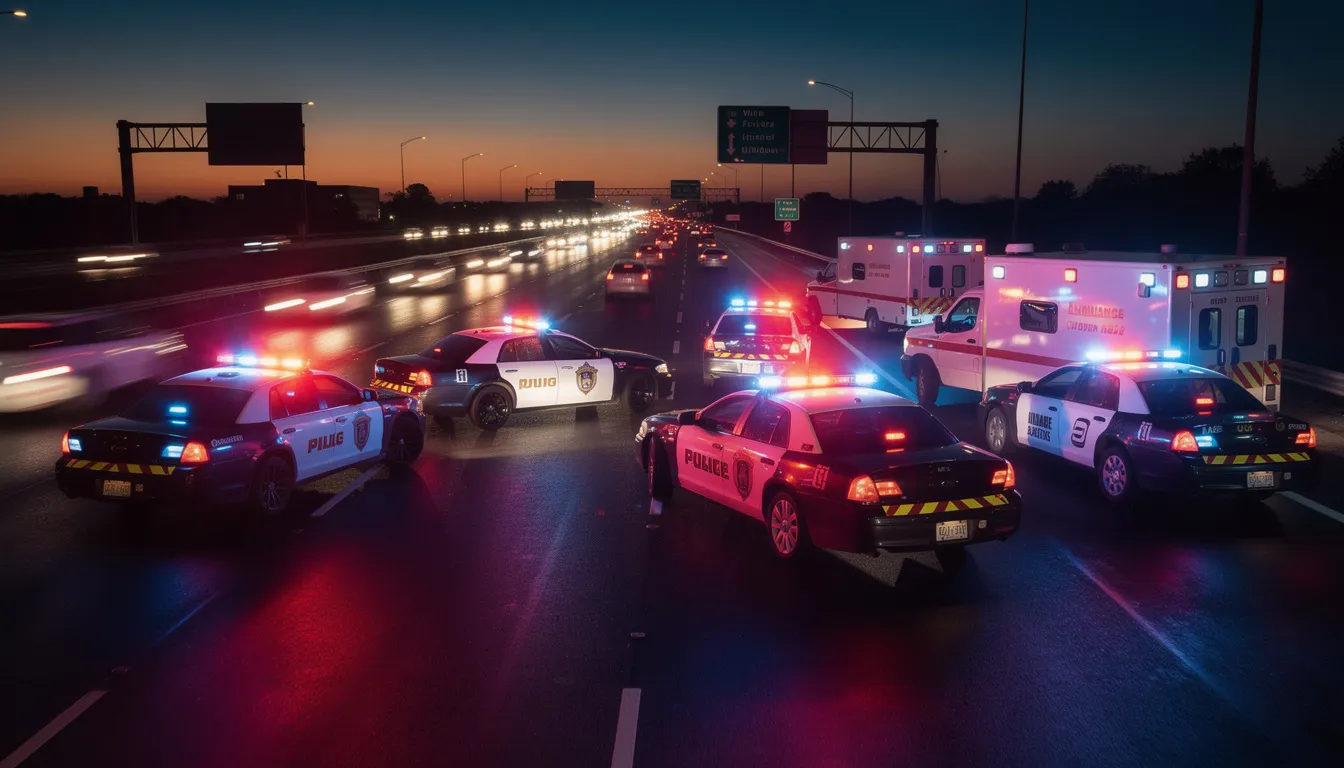
Austin–Travis County maintains an online traffic report page that lists active incidents recorded by Austin Police, Aviation Police, and the Travis County Sheriff’s Office. This resource provides near-real-time information about crashes and traffic disruptions throughout the area.
The page categorizes incidents using specific classifications:
| Classification | Description |
|---|---|
| Crash HS Hot Shot | Serious collisions blocking high-speed roadways or involving life-threatening injuries, rollovers, or head-on crashes |
| Traffic Impediments | Stalled vehicles, debris on the roadway, or signal malfunctions |
| Standard Crash | Typical collisions requiring police response but not blocking major routes |
The site also reminds drivers about the use of the Driver’s Crash Report (Blue Form) when police do not respond but the crash involves at least $1,000 in damage or any level of injury or death.
Data from the Austin–Travis County incident feed and corresponding CR-3 reports ultimately contribute to Austin’s local safety planning efforts and TxDOT’s broader crash database. This connection between real-time incident tracking and long-term data analysis helps identify dangerous intersections and roadway segments that need attention.
What to do after a Texas car accident
This section offers general informational steps for drivers involved in Texas crashes. The information provided here is not legal advice—consult with a qualified attorney if you have specific questions about your situation.
Immediate safety actions:
- Move to a safe location if possible and turn on hazard lights
- Check yourself and others for injuries
- Call 911 for serious crashes—this brings police, fire crews, and EMS to the scene
- Cooperate with responding law enforcement and emergency medical personnel
- Do not leave the scene until authorities say you can
Drivers should exchange names, insurance details, and vehicle information with other parties involved. If it’s safe to do so, photograph the scene, visible damage, road conditions, and any apparent contributing hazards like debris on the roadway or obscured traffic signals.
Texas law requires reporting crashes involving injury, death, or apparent damage of $1,000 or more. This reporting happens either through a law enforcement investigation (which produces a CR-3 report) or, when officers do not respond, by completing a Driver’s Crash Report for your personal records.
Documentation to gather and keep:
- Copies of the crash report (once available)
- Medical records for any injuries
- Repair estimates for vehicle damage
- Photographs from the scene
- Contact information for witnesses
- Insurance correspondence
Contact your insurance company promptly to report the incident. Even if you believe the other driver was at fault, your own insurer needs to know about the crash to protect your interests.
Individuals injured in serious crashes may wish to consult an attorney familiar with Texas Transportation Code and crash reporting rules. An attorney can help you understand deadlines, liability issues, and how to obtain necessary records for your case. This is particularly important if you suffered significant injuries or if the crash involved a commercial truck or resulted in a fatality.
Your safety comes first after any accident. Once everyone is safe and emergency responders have addressed the scene, focus on documentation and following up through proper Texas channels. Understanding the crash reporting system helps you protect your rights and navigate the process ahead.