A traumatic head injury occurs when an external physical force causes brain function impairment. The damage can range from a brief concussion to a life-threatening emergency requiring surgery and months of rehabilitation. This guide covers what happens inside the skull during a traumatic event, the types of brain damage that result, how clinicians diagnose and treat these injuries, and what patients and families can expect during recovery.
Key Takeaways
-
A traumatic brain injury (TBI) results from any sudden blow, jolt to the head, or penetrating force that damages brain tissue. Severity ranges from mild traumatic brain injury (concussion) to severe TBI with coma, permanent disability, or brain death.
-
Common causes include falls, motor vehicle accidents, sports injuries, violence, and explosive blasts in military settings. Symptoms can appear immediately or days after the injury; red flag symptoms for emergency care include worsened headache, repeated vomiting, and confusion.
-
Even a mild TBI is a real brain injury. Persistent symptoms beyond three months warrant reassessment by a specialist. Severe traumatic brain injury demands rapid imaging, neurocritical care, and often surgery to prevent secondary brain injury.
-
Long-term effects can include chronic headaches, cognitive impairments, and emotional changes, but early treatment, multidisciplinary rehabilitation, and family support improve outcomes across all severity levels.
-
This article covers definitions, pathophysiology, injury types (including diffuse axonal injury and shaken baby syndrome), risk factors, diagnosis, treatment, prevention, and common questions about recovery.
Overview of Traumatic Head Injury
Traumatic head injury is sudden damage to the brain caused by an external force to the head or body. Not every head injury results in brain damage; a scalp laceration or minor bump may leave the brain untouched. All head injuries, however, deserve attention because internal damage is not always visible from the outside.
Traumatic brain injury TBI is the subset where measurable damage to the brain occurs. Clinicians classify TBIs as mild, moderate, or severe based on the Glasgow Coma Scale score, duration of lost consciousness, and imaging findings. In the United States in 2020, approximately 214,110 hospitalizations were TBI-related, and by 2023 there were 68,663 TBI-related deaths annually; that equals roughly 586 hospitalizations and 190 deaths per day. Adults 65 and older have the highest TBI death rates, accounting for about 28 percent of all TBI fatalities. People and families navigating these injuries often need practical information on legal options and personal injury claims, which resources like a dedicated personal injury law blog covering brain injury cases can provide.
Falls, motor vehicle crashes, sports injuries, assaults, and combat-related blast exposures are leading causes worldwide. Treatment ranges from home observation and rest for mild head injuries to neurocritical care, surgery, and long-term rehabilitation for severe TBI.
What Is a Traumatic Head Injury and Traumatic Brain Injury?
A head injury is any trauma to the scalp, skull, or brain. A traumatic brain injury is damage to the brain itself caused by an external mechanical force; a blow, a jolt to the head, or a penetrating object like a bullet.
Two broad categories separate most injuries:
-
Closed head injury: The skull stays intact. Common in car crashes, falls, and sports collisions. The brain moves inside the skull, stretching nerve fibers and bruising brain tissue against bone.
-
Penetrating trauma: An object breaks through the skull and enters the brain. A gunshot wound is a typical example. Penetrating injuries can cause TBIs from objects entering the skull and directly destroying brain cells along the wound track.
Within each category, clinicians distinguish between primary brain injury and secondary brain injury. Primary injury is the immediate structural damage at the moment of impact: contusions, skull fractures, bleeding, and axonal injury. Secondary brain injury develops over hours to days as brain swelling, reduced blood flow, low oxygen, infection, and chemical cascades compound the initial injury.
Severity categories follow the Glasgow Coma Scale (GCS):
|
Severity |
GCS Score |
Consciousness |
|---|---|---|
|
Mild TBI / Concussion |
13-15 |
Brief or no loss of consciousness |
|
Moderate TBI |
9-12 |
May lose consciousness for minutes to hours |
|
Severe TBI |
3-8 |
Coma or prolonged unconsciousness |
|
Even a mild injury can lead to persistent post-concussive symptoms. Dismissing a concussion as “just a bump” delays treatment and increases the risk of complications. |
Pathophysiology: How Head Injury Damages the Brain
The brain is a soft organ floating in cerebrospinal fluid within a rigid skull. Rapid acceleration, deceleration, or rotational forces cause brain tissue to slide, twist, and deform against the skull’s inner surface.
Focal injuries produce localized damage. Cerebral contusions (bruises) tend to form in the frontal and temporal lobes, where the skull’s inner surface is rough. Hematomas collect blood in specific compartments: epidural (between skull and dura), subdural (between dura and arachnoid), intracerebral (within brain tissue), or subarachnoid (around the brain surface).
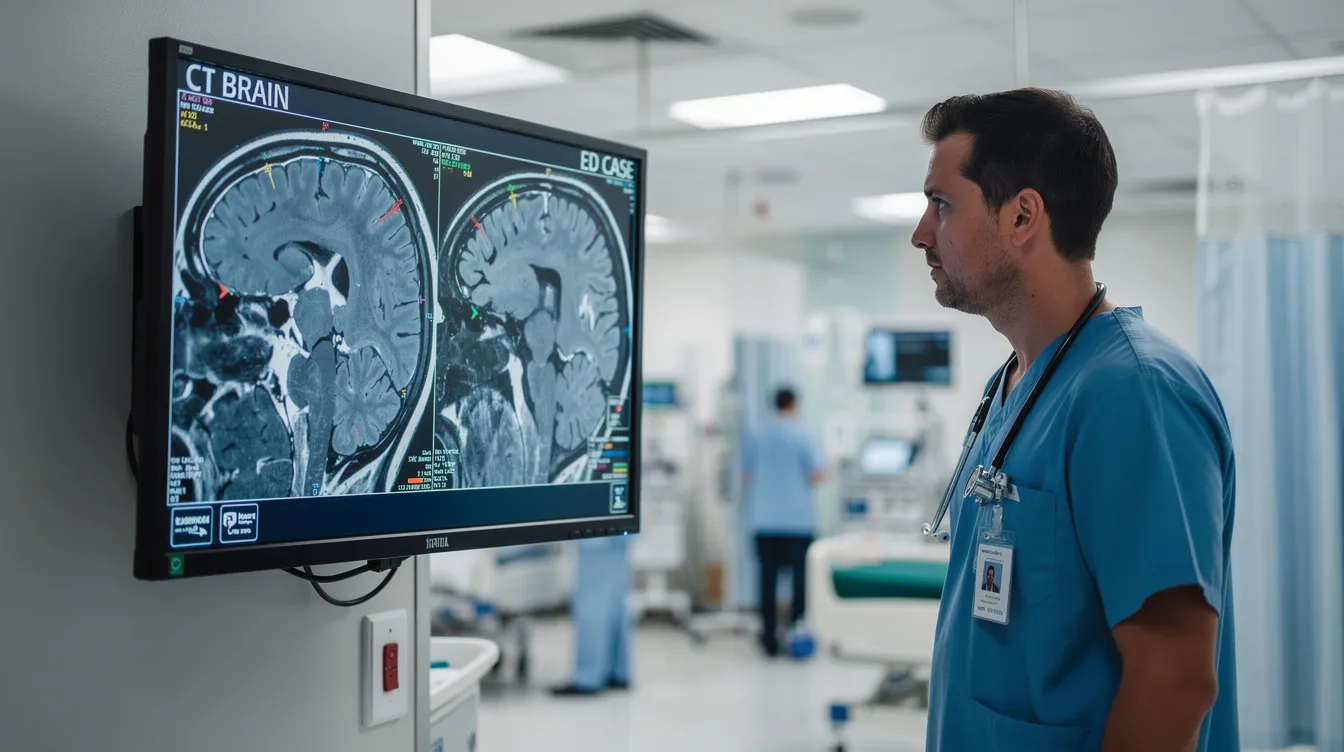
Diffuse injuries spread across wide areas. Diffuse axonal injury (DAI) occurs when rotational or shearing forces stretch and tear axons, the long nerve fibers connecting brain cells. DAI is common in high-speed motor vehicle crashes and can cause coma even when CT scans appear relatively normal. MRI with diffusion-weighted sequences is more sensitive for detecting it.
The coup-contrecoup mechanism explains how the brain hits the skull at the impact site (coup), then rebounds to strike the opposite side (contrecoup), producing contusions in two locations from a single blow.
The Monro-Kellie doctrine describes how the skull’s fixed volume forces brain tissue, blood, and cerebrospinal fluid to compete for space. When bleeding or brain swelling adds volume, intracranial pressure rises, cerebral perfusion pressure drops, and secondary brain injury follows. Uncontrolled increased intracranial pressure can reduce blood flow enough to cause further damage to the brain or even brain death.
Types of Traumatic Brain and Head Injuries
Most serious head injuries involve more than one type of brain damage simultaneously. Below are the main categories.
Mild Traumatic Brain Injury / Concussion
A concussion involves brief confusion, headache, dizziness, and transient amnesia, with a very brief period of lost consciousness or none at all. Common symptoms include headache, dizziness, and confusion. Recovery is typical within a few weeks, but a systematic review of nonathletic adults found that 30 to 50 percent still report at least one symptom at one month. Post-concussion syndrome occurs when symptoms persist beyond the expected recovery window. A second concussion before full recovery carries the risk of severe or permanent damage to the brain.
Diffuse Axonal Injury
DAI results from rotational forces and is graded by location: Grade 1 affects white matter, Grade 2 adds corpus callosum lesions, and Grade 3 involves the brainstem. Patients with Grade 3 DAI often remain in prolonged coma. Even with relatively mild external signs, DAI can produce long-term cognitive disability.
Contusions
These localized areas of bleeding and swelling within brain tissue can damage brain tissue directly and expand over hours. Frontal and temporal lobe contusions are most common because of the skull geometry in those regions.
Hematomas
-
Epidural hematoma: Typically arterial; can cause rapid decline within hours. Often needs emergency surgery.
-
Subdural hematoma: Acute or chronic; bridging veins rupture. More common in older adults and people on blood thinners. Blood clots form between the dura and arachnoid layers.
-
Subarachnoid hemorrhage: Bleeding into the subarachnoid space; can trigger vasospasm and further ischemia.
-
Intracerebral hemorrhage: Bleeding within brain tissue itself; raises intracranial pressure and destroys nerve cells locally.
Skull Fractures
Linear fractures crack the bone without displacement. Depressed fractures push bone fragments into the cranial cavity, risking injury to underlying brain tissue and blood vessel damage. Basilar skull fractures involve the skull base and may cause cerebrospinal fluid leaks, cranial nerve damage, or infection.
Shaken Baby Syndrome / Abusive Head Trauma
Violent shaking of infants causes rapid acceleration and deceleration of the brain inside the skull. Shaken baby syndrome can lead to severe TBIs in infants, producing subdural hematomas, retinal hemorrhages, and diffuse brain injury, often without obvious external signs. This form of child abuse carries mortality rates around 19 to 21 percent in hospitalized infants; over 50 percent of survivors have neurological or visual impairment. Changes in nursing habits, toilet training loss, or other unusual behavior in an infant after unexplained injury should raise suspicion.
Chronic Traumatic Encephalopathy and Post-Traumatic Dementia
Repeated head injuries, particularly in contact sports and military service, are associated with progressive degenerative brain diseases that can appear decades later. CTE involves tauopathy, brain atrophy, and symptoms including memory loss, mood changes, and movement disorders. These neurological disorders remain diagnosed definitively only at autopsy, though research into in-vivo detection is active.
Symptoms and Clinical Presentation
Symptoms depend on whether injuries are diffuse or focal and which brain regions are affected. A person’s symptoms may appear right away or emerge hours to days later.
Mild TBI symptoms: Headache (present in roughly 60 to 70 percent of cases), dizziness (about 50 percent), nausea, confusion, brief amnesia, fatigue, blurred vision, and sensitivity to light and noise. Cognitive symptoms may include confusion, memory problems, and difficulty concentrating.
Moderate to severe TBI red flags: Prolonged loss of consciousness (the person may lose consciousness for minutes or longer), worsening headache, repeated vomiting, seizures, unequal pupils, focal weakness or numbness, speech difficulties, and restlessness or agitation. Moderate-to-severe TBIs may require immediate emergency medical evaluation. Severe TBI can lead to prolonged changes in consciousness, including coma.
Focal injury deficits: Depending on the affected lobe or brainstem structure, a person may show weakness on one side of the body, vision loss, or language problems.
Children and infants: Children may show symptoms like confusion and irritability. Infants may display persistent crying, refusal to eat, lethargy, vomiting, seizures, bulging fontanelle, or altered sleep patterns. They often cannot describe headache or confusion, so caregivers should watch for changes in play, feeding, or alertness. In abusive head trauma cases, presentation may include apnea, lethargy, or failure to thrive.
Any new or worsening neurological symptom after a head injury, especially within the first 24 to 72 hours, requires urgent medical evaluation.
Causes and Risk Factors for Head Injuries
Causes differ by age group, lifestyle, and geography. Falls and road traffic collisions are consistently the leading sources of traumatic head injury worldwide.
Falls: The top cause in children under 5 and adults over 65. Falls from beds, stairs, ladders, or in bathrooms produce injuries ranging from mild TBI to severe subdural hematomas. Falls are a leading cause of TBI in older adults, and this remains true across countries and healthcare systems.
Motor vehicle and motorcycle crashes: Motor vehicle accidents are a frequent cause of TBIs. Motor vehicle crashes generate high-energy blunt force trauma producing closed head injuries and sometimes penetrating injuries. Non-helmeted riders and unrestrained occupants have higher rates of severe head injury, and riders who sustain head trauma may require guidance from a motorcycle accident brain injury lawyer in Houston to address the legal and financial aftermath.
Sports and recreation: Contact sports (American football, rugby, ice hockey), cycling, skiing, and combat sports produce sports injuries, particularly mild TBI and repeated concussions, in adolescents and young adults. Cyclists in busy urban environments may face additional risks and, after a serious crash, benefit from consulting a Houston bicycle accident attorney experienced with brain injury cases. Proper safety equipment reduces sports-related TBIs in children.
Violence and assaults: Gunshot wound injuries, blunt trauma from assaults, and child abuse (including shaken baby syndrome) cause penetrating and severe closed head injuries. Survivors of such traumatic events, or their families, may face complex legal decisions where the support of an ABI brain injury attorney experienced in serious TBI claims can be crucial.
Military and blast injuries: Explosive blasts commonly cause TBIs in military personnel. Blast waves, shrapnel, and secondary impacts create a mix of diffuse and focal brain injuries, with increased risk of both TBI and psychological trauma like PTSD.
Key risk factors include advanced age, male sex (males are nearly three times as likely to die from TBI), alcohol or drug use, prior brain injuries, unsafe work or home environments, lack of seat belts or helmets, and participation in high-impact sports or military combat. In high-risk jobs, understanding how Houston workplace accident lawyers help after serious injuries can be part of planning for both safety and post-accident support.

Diagnosis and Emergency Assessment
Early, accurate diagnosis in the emergency department is essential to identify life-threatening brain injuries and prevent secondary brain injury.
The primary survey follows trauma protocols: airway, breathing, circulation, and cervical spine protection. A focused neurological assessment follows, including a physical examination checking consciousness level, pupil size and reactivity, limb strength, and reflexes. Clinicians assess the patient’s mental status and note whether his or her eyes open spontaneously, to voice, or to pain. For concussions that occur on the job, workers may also need to understand concussion at work compensation and workers’ rights alongside their medical evaluation.
The Glasgow Coma Scale scores three components:
|
Component |
Best Response |
Score Range |
|---|---|---|
|
Eye opening |
Spontaneous |
1-4 |
|
Verbal response |
Oriented conversation |
1-5 |
|
Motor response |
Obeys commands |
1-6 |
|
A total GCS of 13 to 15 indicates mild TBI; 9 to 12 moderate; 8 or below severe. |
||
|
CT scan of the head without contrast is the first-line imaging tool in acute head injury, detecting skull fractures, intracranial bleeding, brain swelling, and midline shift. Magnetic resonance imaging is used later to evaluate diffuse axonal injury, small contusions, or persistent symptoms when CT is normal. Neuropsychological tests help quantify cognitive functioning deficits in the subacute and chronic phases. |
In severe TBI, additional monitoring includes continuous blood pressure and oxygen tracking, invasive intracranial pressure monitoring, and sometimes EEG. For mild head injury, standardized concussion assessment tools (such as SCAT5 in sports) guide decisions about safe discharge versus hospital observation.
Treatment of Mild, Moderate, and Severe Traumatic Brain Injury
Treatment aims to stabilize the patient, prevent secondary brain injury, relieve increased pressure inside the skull, and support the brain’s recovery. Treatment for TBIs often involves multidisciplinary approaches for rehabilitation.
Mild TBI / Concussion: Mild TBI treatment may involve rest and over-the-counter pain relievers. The recommended approach includes an initial period of relative physical and cognitive rest (1 to 2 days), followed by a gradual return to normal activities under medical guidance. Non-sedating analgesics manage headache; sedatives are avoided. Patients receive education on warning signs requiring emergency care.
Moderate to Severe TBI: Immediate treatment for severe TBI focuses on stabilizing vital functions: airway protection, possible intubation and mechanical ventilation, control of blood pressure and oxygen levels, seizure prevention, and careful fluid management to optimize cerebral perfusion pressure. Neurocritical care is essential for patients with severe TBI; specialized units monitor intracranial pressure, brain oxygen levels, and EEG patterns to guide second-by-second treatment decisions.
Neurosurgical interventions: Surgery may be required to repair bleeding vessels in severe TBI. Common emergency procedures include evacuation of epidural or subdural hematomas and decompressive craniectomy to lower intracranial pressure. The RESCUEicp trial demonstrated that secondary decompressive craniectomy for late refractory intracranial pressure elevation (above 25 mmHg for 1 to 12 hours despite medical therapy) reduces mortality. A large frontotemporoparietal flap (at least 12×15 cm) is recommended over a smaller decompression.
Post-acute care: Medications address agitation, spasticity, mood disorders, and sleep problems after TBI. Coordinated follow-up with neurology, rehabilitation, and mental health professionals bridges the gap between acute care and long-term recovery.
Rehabilitation, Recovery, and Long-Term Outcomes
Recovery after a traumatic head injury is variable. It depends on age, injury severity, location of damage to the brain, pre-injury health, and access to rehabilitation services. Recovery from TBI can take weeks, months, or years. Older adults are more likely to have lasting symptoms after TBI.
Recovery from severe TBI often requires long-term rehabilitation. Typical phases after severe injury include coma or reduced responsiveness, post-traumatic amnesia and confusion, then gradual return of awareness, memory, and functional skills, which parallels the structured brain trauma recovery stages described by the Rancho Los Amigos Scale. Patients may need to relearn skills after a moderate to severe TBI, including basic self-care, walking, and communication, all while navigating complex decisions about compensation and legal advocacy where a top brain injury attorney in Dallas or other specialized counsel may be involved.
The brain injury rehabilitation team typically includes, and applies effective strategies for brain injury recovery and rehabilitation, such as multidisciplinary therapies tailored to the individual:
-
Physiatrists and neurologists directing medical care
-
Physical therapists (brain injury physical therapy focused on strength, balance, and coordination after a TBI)
-
An occupational therapist who assists individuals in regaining skills necessary for daily living
-
Speech-language pathologists (speech and language therapy is beneficial for addressing communication difficulties post-TBI)
-
Psychologists and neuropsychologists
-
Social workers and specialized nurses
Rehabilitation programs range from inpatient acute rehab and subacute facilities to day treatment programs and community-based services at a rehabilitation center. Cognitive rehabilitation therapy helps regain normal brain function by retraining attention, memory, and problem-solving skills. Rehabilitation often includes cognitive rehabilitation therapy for TBI patients as a core component.
Brain cells rarely regenerate, but neuroplasticity allows other brain regions to compensate for lost brain function. Meaningful gains can continue for months or years after injury, particularly in younger patients.

Complications and Associated Conditions
Complications from head injuries can appear immediately or develop months to years later, affecting physical, cognitive, and emotional health, and may carry legal and financial consequences discussed in dedicated brain injury resources and legal guides.
Early complications:
-
Persistent post-concussive symptoms (headache, dizziness, cognitive slowing)
-
Intracranial infections after penetrating head injury
-
Hydrocephalus
-
Post-traumatic epilepsy may occur, particularly after more serious TBIs
-
Endocrine problems from pituitary or hypothalamic damage
Altered consciousness: After severe TBI, patients may enter coma, a vegetative state, or a minimally conscious state. Prognosis depends on injury type, duration of unconsciousness, brainstem involvement, and age. In the most devastating cases, sustained loss of all brain function is called brain death.
Physical complications: Cranial nerve injuries affecting vision, hearing, or facial movement; balance disorders; weakness; spasticity; and chronic pain syndromes. Damage to a blood vessel inside the skull can cause delayed hemorrhage days or weeks after the initial injury.
Cognitive and communication issues: Difficulties with attention, learning, memory, problem-solving, language production, and social communication impair work and relationships. Long-term effects of TBIs can include chronic headaches, cognitive impairments, and emotional changes.
Behavioral and emotional changes: Emotional symptoms can include frustration and irritability during recovery. Impulsivity, aggression, mood swings, depression, anxiety, and risk of substance misuse are common TBI symptoms. Counseling and psychiatric care are often necessary components of the nervous system recovery process.
Sleep disturbances are common after traumatic brain injury, including insomnia, excessive daytime sleepiness, and disrupted sleep patterns.
Degenerative risk: Neurological risks from TBIs may elevate chances of developing neurodegenerative diseases. Repeated or severe TBI may raise the risk of Alzheimer’s disease, Parkinson’s disease, CTE, and post-traumatic dementia later in life, though research into absolute risk quantification is ongoing; these long-term effects and related legal considerations are explored in brain injury and dementia legal overviews.
Prevention of Head Injuries and Brain Injuries
Many traumatic head injuries are preventable through safety measures at home, on the road, and in sports and work environments. Concussion prevention starts with awareness and protective gear.
Road safety: Consistent use of seat belts, child car seats and booster seats, motorcycle and bicycle helmets, and avoidance of driving under the influence of alcohol or drugs. Seat belt use alone reduces the risk of fatal TBI in motor vehicle crashes.
Fall prevention in older adults: Remove loose rugs and clutter, install grab bars and handrails, use non-slip mats in bathrooms, and improve lighting. Strength and balance exercises reduce fall risk. Medication review by a physician can identify drugs causing dizziness and sedation. Falls are a leading cause of TBI in older adults, making household modifications particularly important for this population.
Children: Use age-appropriate car seats. Helmets for biking, skating, and sports are essential. Using gates and safety locks can prevent falls in children. Secure stair gates and window locks, and supervise children around playgrounds and high surfaces.
Sports and recreation: Concussion protocols require immediate removal from play after a suspected concussion; no same-day return. Children should not return to play after a head injury until cleared by a medical professional. Coaches should teach safe techniques and enforce rules against dangerous play.
Workplace and military: Hard hats, protective headgear, adherence to safety regulations, and blast protection strategies reduce TBI risk in high-risk occupations and combat zones. When these measures fail and a worker sustains a head injury, Houston workplace accident attorneys focused on injured employees’ rights can help navigate compensation and liability questions.
Public health approaches: Community education campaigns on brain injury prevention, alcohol harm reduction, and enforcement of helmet and seat-belt laws lower population-level risk. Organizations focused on disease control track TBI data and advocate for evidence-based prevention strategies, while legal education resources such as a personal injury and workplace rights blog for Houston accident victims help individuals understand how broader safety policies intersect with their own legal protections.
Living With Traumatic Brain Injury: Support and Resources
Life after a head injury changes daily routines, relationships, and independence. Practical strategies make a measurable difference, and many survivors find inspiration in others’ brain injury resilience and recovery journeys.
Families should keep a diary of symptoms, behaviors, and improvements, and bring questions to follow-up appointments. It is important to reassess ongoing symptoms of TBI with a specialist for proper management; treatment plans need regular adjustment as recovery progresses.
Daily living strategies after TBI include, along with understanding distinctions like the difference between ABI and TBI brain injuries:
-
Establishing consistent routines
-
Using calendars, smartphone reminders, and written checklists
-
Breaking tasks into small steps and limiting multitasking
-
Scheduling rest periods to manage fatigue
Peer support groups and organizations like the Brain Injury Association of America provide education, advocacy, and emotional support. Connecting with others who share similar experiences helps patients and families feel less isolated.
Legal and practical issues often arise: driving evaluations, return-to-work planning, workplace accommodations, and potential eligibility for disability benefits or vocational rehabilitation programs. For injuries caused by accidents or negligence, individuals may benefit from understanding what kind of compensation you can get for a traumatic brain injury, guidance on choosing a Houston head injury attorney and broader brain injury legal resources related to accidents and attorney selection. An occupational therapist can help assess readiness for these transitions, and coordinated brain trauma therapy approaches support long-term functional recovery.
Caregivers face their own burden. Respite care, counseling, and community services are not luxuries; they sustain the caregiver’s ability to provide ongoing support.
Research, Clinical Trials, and Future Directions
Intensive research continues to improve prevention, diagnosis, and treatment of traumatic head injury.
As of mid-2026, a rapid blood test for TBI has been introduced into routine clinical care at UPMC Presbyterian Hospital, using biomarkers validated through the TRACK-TBI program. Proteomic blood-based biomarkers of astrocytic and neuronal injury (GFAP, S100B, NfL, UCH-L1) correlate with intracranial pressure and impaired cerebral autoregulation. These could eventually reduce the need for invasive monitoring. The FDA notes that no device or drug alone diagnoses or treats TBI without clinical assessment, but development of diagnostic tools continues.
Large collaborative databases, including TRACK-TBI, CENTER-TBI, and FITBIR, collect standardized clinical, imaging, and biomarker data across hospitals and countries. These efforts enable outcome prediction models and phenotype discovery that were previously impossible with single-site studies.
Clinical trials are testing neuroprotective drugs, brain-computer interfaces, neuromodulation, and virtual reality-based rehabilitation. Patients and families interested in participating can discuss options with their clinicians and search ClinicalTrials.gov for ongoing TBI studies. Enrollment is always voluntary.
FAQ: Traumatic Head Injury
These questions address common practical concerns that may not be fully covered above.
How do I know if I should go to the emergency department after a head injury?
Emergency care is needed if there is any loss of consciousness longer than a few seconds, repeated vomiting, severe or worsening headache, seizures, confusion, slurred speech, weakness or numbness, unequal pupils, or clear fluid leaking from the nose or ears. If the person cannot be awakened, call emergency services immediately.
Infants, older adults, people on blood thinners, and anyone with a history of brain injuries should be evaluated more cautiously, even for seemingly minor head injuries.
Can I go to sleep after a mild head injury or concussion?
Sleep itself is not harmful after a mild head injury, but the person should first be assessed by a healthcare professional to rule out serious brain injury caused by the impact. A responsible adult should stay with the injured person for the first 12 to 24 hours, waking them periodically to check for worsening symptoms such as confusion, severe headache, repeated vomiting, or difficulty waking.
How long does it take to recover from a mild traumatic brain injury?
Most people with mild TBI or concussion recover within two to four weeks, though some symptoms like fatigue, headaches, or concentration problems can persist longer. A TRACK-TBI study found that at 12 months, about 22 percent of mild TBI patients had not fully returned to their pre-injury functional level. Persistent symptoms beyond about three months (post-concussion syndrome) should prompt reassessment by a clinician experienced in brain injuries.
Is it safe to play sports again after a concussion?
Return to sports should follow a stepwise, medically supervised protocol. The athlete must be symptom-free at rest and during school or work activities before gradually increasing physical exertion. No athlete should return to full-contact play on the same day as a concussion. A second concussion before full recovery from the first injury increases the risk of severe or permanent damage to the brain.
Does every traumatic head injury increase my risk of dementia later in life?
A single mild head injury is unlikely to cause dementia by itself. Moderate and severe TBIs are associated with an increased risk of later-life cognitive decline. Repeated head injuries, such as multiple concussions over years, may further increase the risk of degenerative brain diseases such as Alzheimer’s disease, Parkinson’s disease, or chronic traumatic encephalopathy. Protecting the head and preventing additional injuries remain the most effective steps for long-term brain health.