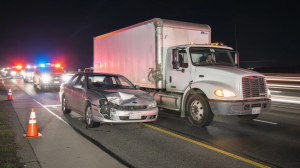
When an 80,000-pound commercial truck collides with a passenger vehicle weighing just 3,400 pounds, the results are often catastrophic. The sheer physics involved in these trucking accidents creates a level of destruction that regular car accidents rarely match. What makes these situations even more challenging for victims is the complex web of federal regulations, multiple liable parties, and aggressive insurance company tactics that follow.
If you’ve been injured in a truck accident, you’re not just dealing with physical recovery – you’re facing a legal landscape that requires specialized knowledge and experience. Commercial truck accidents involve intricate federal safety regulations, multiple insurance policies, and corporate defendants with extensive legal resources. This comprehensive guide will help you understand when you need a truck accident lawyer, what to expect from the legal process, and how to protect your rights after a devastating collision.
When You Need a Truck Accident Lawyer
The Devastating Impact of Commercial Truck Accidents
Commercial trucks can legally weigh up to 80,000 pounds when fully loaded, making them over 23 times heavier than a typical passenger vehicle. This massive weight difference explains why 98% of deaths in car-truck collisions involve the occupants of the smaller vehicle. The severe injuries and property damage that result from these accidents create immediate medical emergencies and long-term financial burdens that victims often struggle to handle alone.
Complex Federal and State Regulations
Unlike regular car accidents, trucking accidents fall under both federal and state jurisdiction. The Federal Motor Carrier Safety Administration (FMCSA) establishes comprehensive rules covering driver hours, vehicle maintenance, cargo loading, and equipment standards. These regulations create a high standard for proving liability and negligence, but they also provide powerful evidence when violations occur.
Understanding how these federal trucking regulations apply to your specific case requires legal expertise that general personal injury lawyers may not possess. An experienced truck accident lawyer knows how to identify regulatory violations and use them to strengthen your truck accident claim.
Multiple Parties and Complex Liability
Truck accident cases often involve multiple parties who may share responsibility for your injuries. While the truck driver might be the most obvious defendant, liability can extend to:
- The trucking company for inadequate training or vehicle maintenance
- Cargo loading companies for improper weight distribution
- Maintenance contractors for faulty repairs or inspections
- Truck manufacturers for defective parts or design flaws
- Government entities responsible for dangerous road conditions
Each potentially liable party brings their own insurance company and legal team to the table. These defendants often have extensive resources and experience defending truck accident claims, making it essential to have equally experienced truck accident attorneys on your side.
Insurance Company Tactics
Commercial trucking companies typically carry insurance policies worth $1 million or more, as required by federal regulations. However, having adequate coverage doesn’t mean insurance companies willingly pay fair settlements. These companies employ teams of adjusters and lawyers specifically trained to minimize payouts to trucking accident victims.
Common insurance company tactics include:
- Pressuring victims to give recorded statements before consulting an attorney
- Offering quick but inadequate settlements before the full extent of injuries is known
- Disputing liability by claiming the truck driver wasn’t at fault
- Challenging the severity of injuries or their connection to the accident
Time Limits for Taking Legal Action
The statute of limitations for filing truck accident claims varies by state but typically ranges from 2 to 3 years. Texas, for example, allows two years from the accident date to file a personal injury lawsuit, while other states may permit three years. However, these deadlines can be shorter for certain types of claims:
- Claims against government entities often require notice within 30 to 90 days
- Wrongful death lawsuit deadlines may differ from personal injury claims
- Evidence preservation becomes critical in the first weeks after accidents
Taking prompt legal action isn’t just about meeting deadlines – it’s about preserving crucial evidence before it’s lost or destroyed.
Types of Truck Accidents We Handle
18-Wheeler and Tractor-Trailer Collisions
These massive vehicles are commonly seen on highways and city streets, where their size and weight create significant hazards during high-speed travel. Tractor trailer accidents often result in multi-vehicle crashes, especially when they occur during heavy traffic conditions.
Delivery Truck Accidents
The rise of e-commerce has dramatically increased delivery truck traffic in urban areas. Major carriers like UPS, FedEx, and Amazon operate thousands of delivery vehicles that navigate crowded city streets, presenting elevated risks to pedestrians, cyclists, and other drivers. These commercial vehicle accidents often occur during tight delivery schedules that may encourage rushed or aggressive driving.
Construction and Dump Truck Crashes
Work zones present unique hazards due to heavy machinery, altered traffic patterns, and construction vehicles entering and exiting active roadways. Dump trucks carrying heavy loads of dirt, gravel, or construction materials pose particular risks when their cargo isn’t properly secured.
Tanker Truck Accidents
Vehicles carrying hazardous materials create additional complications beyond typical truck crashes. Chemical spills, fuel fires, and toxic exposures can affect not only the immediate accident victims but also first responders and nearby residents. These accidents often require specialized cleanup efforts and may result in environmental damage claims.
Logging and Coal Truck Incidents
Rural areas see frequent accidents involving trucks carrying heavy timber or coal loads. These vehicles often travel on narrow, poorly maintained roads where passing opportunities are limited and shoulder space is minimal. The irregular shapes and potential shifting of these loads create unique handling challenges for truck drivers.
Jackknife Accidents
When a truck’s trailer swings out at an acute angle from the cab, it can block multiple lanes of traffic and cause devastating multi-vehicle pileups. Jackknife accidents typically occur when drivers brake suddenly or lose control during turns, often in poor weather conditions.
Rollover Crashes and Tire Blowouts
Commercial trucks have a high center of gravity that makes them prone to rollovers during sharp turns, evasive maneuvers, or high winds. Tire blowouts can cause drivers to lose control suddenly, especially at highway speeds where other vehicles have little time to react.
Common Causes of Commercial Truck Accidents
Driver Fatigue
The FMCSA estimates that fatigue contributes to 13% of all truck crashes. Hours of Service (HOS) violations occur when truck drivers exceed the 11-hour driving limit without taking the required 10-hour rest period. Electronic logging devices (ELDs), mandatory since December 2017, have made it easier to detect these violations, but some drivers still find ways to circumvent the rules.
Fatigue affects reaction time, decision-making ability, and alertness in ways similar to alcohol impairment. A truck driver who has been awake for 18 hours performs similarly to someone with a blood alcohol content of 0.08%.
Distracted Driving
Modern truck cabs contain numerous electronic devices that can divert a driver’s attention from the road. GPS navigation systems, cell phones, dispatch computers, and even eating while driving contribute to distracted driving incidents. The consequences of distraction are magnified when controlling an 80,000-pound vehicle.
Speeding and Aggressive Driving
Tight delivery deadlines create pressure for truck drivers to exceed speed limits or engage in aggressive driving behaviors. The trucking industry’s emphasis on efficiency and on-time delivery can unfortunately incentivize risky driving practices.
Impairment
Alcohol and drug use, including prescription medications that cause drowsiness, significantly reduce a driver’s ability to operate a commercial vehicle safely. The FMCSA requires random drug and alcohol testing for commercial truck drivers, but violations still occur.
Poor Vehicle Maintenance
Commercial trucks require regular maintenance to operate safely. Neglected brakes, worn tires, defective lights, or ignored mechanical issues can lead to catastrophic failures. Trucking companies have a legal responsibility to maintain their fleets according to federal safety standards.
Improper Cargo Loading
Incorrectly loaded or unsecured cargo affects a truck’s handling, braking ability, and stability. Overloaded trucks exceed legal weight limits and put additional stress on braking systems. Improperly balanced loads can cause trucks to tip over during turns or lane changes.
Inadequate Driver Training
Operating a commercial truck requires specialized skills that go beyond what’s needed for passenger vehicles. Inexperienced drivers or those lacking proper training in defensive driving techniques, cargo handling, or adverse weather driving pose significant risks to other road users.
Adverse Weather Conditions
Rain, snow, ice, and fog create challenging conditions for all vehicles, but the effects are amplified for large trucks. Increased stopping distances, reduced visibility, and decreased traction make weather-related truck accidents particularly severe.
Severe Injuries from Truck Accidents
Traumatic Brain Injuries
Head injuries from truck accidents often result in traumatic brain injuries (TBI) that require years of rehabilitation. Unlike broken bones that heal relatively predictably, brain injuries can cause permanent cognitive, motor, and psychological effects. Victims may lose the ability to work, live independently, or maintain relationships as they did before the accident.
Spinal Cord Injuries
Damage to the spinal cord can result in partial or complete paralysis, fundamentally changing a victim’s life forever. Spinal cord injury victims face enormous medical expenses, home modifications, assistive equipment costs, and lost earning capacity that can total millions of dollars over a lifetime.
Multiple Fractures and Crushing Injuries
The force involved in truck collisions often causes multiple bone fractures that require extensive surgeries and months of rehabilitation. Crushing injuries to limbs may result in permanent disability or amputation, affecting a victim’s ability to work and perform daily activities.
Internal Organ Damage
Blunt force trauma from truck accidents can cause life-threatening internal injuries that aren’t immediately apparent. Internal bleeding, organ damage, and other internal injuries require immediate medical attention and often result in lengthy hospital stays.
Severe Burns
Fuel fires and chemical spills in truck accidents can cause severe burns covering large percentages of a victim’s body. Burn injuries typically require multiple surgeries, skin grafts, and years of rehabilitation, often leaving permanent scarring and disfigurement.
Wrongful Death
When truck accidents result in fatalities, surviving family members face not only emotional trauma but also significant financial hardship. Wrongful death cases must account for the victim’s lost earning capacity, the value of household services they provided, and the emotional support lost by surviving family members.
How Truck Accident Lawyers Build Your Case
Comprehensive Accident Investigation
Building a strong truck accident case begins with a thorough investigation of the crash scene. Experienced truck accident attorneys work with accident reconstruction experts to analyze skid marks, vehicle damage patterns, and impact angles to determine exactly how the accident occurred.
Physical evidence deteriorates quickly, making prompt investigation crucial. Trucking companies often dispatch their own investigation teams to accident scenes within hours, making it essential for victims to have equally rapid legal representation.
Electronic Evidence and Driver Logs
Since December 2017, federal regulations have required commercial trucks to use electronic logging devices (ELD) to track driver hours. This electronic data provides objective evidence about whether drivers violated Hours of Service regulations before the accident.
Other electronic evidence includes:
- GPS tracking data showing vehicle location and speed
- Engine control module data recording sudden braking or acceleration
- Cell phone records indicating potential distracted driving
- Dash cam footage from the truck or other vehicles
Maintenance and Inspection Records
Federal regulations require trucking companies to maintain detailed records of vehicle inspections, repairs, and maintenance. These documents can reveal patterns of neglect or attempts to conceal mechanical problems that contributed to the accident.
Experienced truck accident lawyers know how to obtain and analyze these records to identify regulatory violations and evidence of negligence.
Witness Interviews and Expert Testimony
Eyewitness accounts from other drivers, passengers, or bystanders can provide crucial details about how the accident occurred. However, witness memories fade quickly, making prompt interviews essential.
Expert witnesses play a vital role in truck accident cases by helping to explain complex technical issues to judges and juries. These may include:
- Accident reconstruction specialists
- Trucking industry safety experts
- Medical professionals who can explain injury severity and prognosis
- Economic experts who calculate lifetime damages
Federal Regulation Analysis
Truck accident attorneys must thoroughly understand federal trucking regulations to identify violations that contributed to the accident. Key regulatory areas include:
- Hours of Service rules limiting driving time to prevent driver fatigue
- Commercial Driver’s License requirements and testing standards
- Vehicle inspection and maintenance mandates
- Weight limits and cargo securement standards
- Drug and alcohol testing programs
Damages Assessment
Calculating the full extent of damages in truck accident cases requires careful analysis of both current and future costs. This includes:
- Medical expenses: Emergency treatment, surgeries, rehabilitation, ongoing therapy
- Lost wages: Time away from work during recovery
- Lost earning capacity: Reduced ability to earn income due to permanent disabilities
- Pain and suffering: Compensation for physical pain and emotional trauma
- Future medical bills: Anticipated medical care needs over the victim’s lifetime
- Property damage: Vehicle replacement and personal property losses
Compensation Available in Truck Accident Cases
Economic Damages
Economic damages in truck accident cases compensate victims for measurable financial losses. These include all medical expenses related to the accident, from emergency room treatment through long-term rehabilitation. Lost wages cover time away from work during recovery, while lost earning capacity accounts for reduced income potential due to permanent disabilities.
Future medical bills represent a significant component of truck accident settlements, particularly for victims with traumatic brain injuries or spinal cord injuries who will require lifelong care. Economic experts often work with medical professionals to calculate these lifetime costs accurately.
Non-Economic Damages
Non-economic damages compensate victims for losses that don’t have specific dollar amounts attached. Pain and suffering damages account for the physical pain and emotional trauma caused by the accident and resulting injuries. These damages also include loss of enjoyment of life for victims who can no longer participate in activities they previously enjoyed.
For married victims, loss of consortium damages may compensate spouses for the loss of companionship, affection, and intimate relations caused by severe injuries.
Punitive Damages
In cases involving gross negligence or willful misconduct, courts may award punitive damages designed to punish the defendant and deter similar behavior. Examples might include trucking companies that knowingly allowed impaired drivers to operate vehicles or systematically violated safety regulations.
Settlement Values and Case Worth
Truck accident settlements typically exceed those in regular car accidents due to the severity of injuries and higher insurance coverage limits. While simple cases might settle for tens of thousands of dollars, cases involving catastrophic injuries or wrongful death often result in settlements of hundreds of thousands to several million dollars.
Factors affecting case value include:
- Severity and permanence of injuries
- Victim’s age and occupation
- Clear evidence of liability
- Available insurance coverage
- Quality of legal representation
Liable Parties in Truck Accident Cases
Truck Drivers
Individual drivers can be held liable for truck accidents when they operate negligently. This includes violations of traffic laws, driving while fatigued or impaired, distracted driving, or failing to follow proper safety procedures.
However, under the legal doctrine of respondeat superior, trucking companies are typically responsible for their employees’ actions performed within the scope of their employment.
Trucking Companies
Trucking company liability can arise from multiple sources:
- Negligent hiring of drivers with poor safety records
- Inadequate training on safety procedures or vehicle operation
- Failure to properly maintain the vehicle fleet
- Pressuring drivers to violate Hours of Service regulations
- Allowing known safety violations to continue uncorrected
Cargo Companies and Shippers
Companies responsible for loading cargo can be held liable when improper loading contributes to accidents. This includes overloading vehicles beyond legal weight limits, failing to properly secure cargo, or loading materials in a way that affects vehicle stability.
Maintenance Contractors
Third-party companies contracted to maintain trucking fleets can be liable when faulty maintenance or repairs contribute to accidents. This might include failing to properly repair brakes, installing defective parts, or not following manufacturer specifications.
Manufacturers
Truck or component manufacturers may be liable when defective parts contribute to accidents. This could include brake failures, tire defects, steering problems, or other mechanical failures caused by design or manufacturing defects.
Government Entities
State and local governments can sometimes be held liable when dangerous road conditions significantly contribute to truck accidents. This might include inadequate signage, poor road maintenance, or dangerous intersections that create unreasonable hazards for large vehicles.
What to Do After a Truck Accident
Immediate Medical Attention
Your health and safety should be your first priority after any truck accident. Many serious injuries, including traumatic brain injuries and internal bleeding, may not be immediately apparent but can be life-threatening if left untreated. Even if you feel fine immediately after the accident, adrenaline can mask pain and injury symptoms.
Seeking immediate medical attention also creates important medical records that document your injuries and their connection to the accident. Insurance companies often argue that delayed medical treatment indicates injuries weren’t serious or weren’t caused by the accident.
Call 911 and Request Police Response
Always call 911 after a truck accident, even if injuries seem minor. The responding police officer will create an official police report that documents the basic facts of the accident, statements from involved parties, and any citations issued.
This police report becomes crucial evidence in your truck accident case, providing an official record of what happened and potentially supporting your claim that the other driver was at fault.
Document the Accident Scene
If you’re physically able, gather as much evidence as possible at the accident scene:
- Take photos of all vehicles involved, showing damage from multiple angles
- Photograph the accident scene, including skid marks, traffic signs, and road conditions
- Document weather conditions and lighting
- Get pictures of the truck’s license plate, DOT number, and company information
- Take photos of your injuries if they’re visible
This documentation provides valuable evidence that might not be available later, especially since accident scenes are typically cleared quickly to restore traffic flow.
Exchange Information
Obtain the truck driver’s commercial driver’s license information, insurance details, and employer information. Also get contact information for the trucking company and any maintenance or leasing companies involved with the vehicle.
Be polite but limit your conversation with the truck driver and other parties. Avoid discussing fault or making statements about how the accident occurred, as these comments could be used against you later.
Collect Witness Information
Independent witnesses can provide crucial testimony about how the accident occurred. Get contact information from anyone who saw the accident, including other drivers, passengers, pedestrians, or people in nearby businesses.
Ask witnesses to provide a brief written statement about what they observed, if possible. Witness memories fade quickly, so this information becomes less reliable as time passes.
Avoid Insurance Company Statements
Insurance companies for trucking companies often contact accident victims within hours or days of the accident. While you’re generally required to cooperate with your own insurance company, you should avoid giving recorded statements to the truck driver’s insurance company without first consulting a truck accident attorney.
These insurance adjusters are trained to ask questions designed to minimize your claim or get you to admit fault for the accident. Anything you say in these conversations can be used against you later.
Contact an Experienced Truck Accident Lawyer
The complexity of truck accident cases makes early legal representation crucial. Trucking companies often have investigators at accident scenes within hours, working to protect their interests. You need equally prompt and experienced representation to protect your rights.
Most truck accident lawyers offer free consultations and work on a contingency fee basis, meaning you pay nothing unless they recover compensation for your case.
Why You Need Specialized Truck Accident Representation
Complex Federal and State Regulations
Truck accident law involves a intricate web of federal and state regulations that general personal injury lawyers may not fully understand. The Federal Motor Carrier Safety Administration establishes comprehensive rules covering every aspect of commercial trucking operations, from driver qualifications to vehicle maintenance to cargo loading.
Understanding how these regulations apply to your specific case and identifying violations requires specialized knowledge and experience that only comes from handling numerous truck accident cases.
Aggressive Corporate Defense
Trucking companies and their insurance carriers employ experienced legal teams and investigators who specialize in defending truck accident claims. These defendants often have investigators at accident scenes within hours, working to gather evidence that supports their version of events and minimizes their liability.
Without equally experienced and aggressive representation, individual accident victims are at a severe disadvantage when facing these well-funded corporate defendants.
Evidence Preservation and Investigation
Critical evidence in truck accident cases can be lost or destroyed quickly if not properly preserved. Electronic logging device data, maintenance records, driver logs, and physical evidence from the vehicles all require prompt action to secure.
Experienced truck accident attorneys know what evidence to look for and how to obtain it before it’s lost. They also have relationships with expert witnesses and accident reconstruction specialists who can analyze this evidence effectively.
Insurance Company Tactics
Commercial truck insurance policies typically provide $1 million or more in coverage, but insurance companies don’t willingly pay maximum settlements. These companies employ sophisticated tactics to minimize claim values, including:
- Disputing the severity of injuries or their connection to the accident
- Arguing that the victim was partially at fault for the accident
- Challenging the need for ongoing medical treatment
- Offering quick but inadequate settlements before victims understand their full damages
Medical Expertise and Damage Calculation
Truck accident injuries are often severe and complex, requiring ongoing medical treatment and rehabilitation. Accurately calculating the lifetime cost of these injuries requires input from medical experts, rehabilitation specialists, and economic experts.
Experienced truck accident lawyers have relationships with these professionals and understand how to present medical evidence effectively to insurance companies and juries.
Contingency Fee Arrangements
Most reputable truck accident law firms work on a contingency fee basis, meaning victims pay no attorney fees unless the lawyer recovers compensation. This arrangement allows accident victims to obtain high-quality legal representation without upfront costs.
The contingency fee structure also aligns the attorney’s interests with the client’s interests, as the lawyer only gets paid when the client receives compensation.
Questions to Ask Potential Truck Accident Lawyers
Experience with Truck Accident Cases
Ask specifically about the attorney’s experience handling truck accident cases, not just general personal injury cases. Truck accidents involve unique legal issues that require specialized knowledge and experience.
Questions to ask include:
- How many truck accident cases have you handled in the past five years?
- What percentage of your practice involves truck accident cases?
- Have you handled cases similar to mine in terms of injury type and accident circumstances?
Knowledge of Federal Regulations
Since truck accident cases involve complex federal regulations, your attorney should have thorough knowledge of FMCSA rules and how they apply to truck accident litigation.
Ask about their familiarity with:
- Hours of Service regulations
- Electronic logging device requirements
- Commercial driver licensing standards
- Vehicle maintenance and inspection requirements
Track Record of Results
While past results don’t guarantee future outcomes, an attorney’s track record can provide insight into their ability to handle complex truck accident cases effectively.
Ask about:
- Recent settlements and verdicts in truck accident cases
- Average settlement amounts for cases similar to yours
- Their success rate in truck accident litigation
Case Management and Communication
Understanding how your case will be handled and who will be working on it helps set appropriate expectations.
Important questions include:
- Will you personally handle my case or will it be assigned to associates?
- How often will you update me on case progress?
- What is your typical timeline for resolving truck accident cases?
- How do you keep clients informed about important developments?
Fee Structure and Costs
Most truck accident lawyers work on contingency fees, but the specific terms can vary between firms.
Ask about:
- What percentage do you charge as a contingency fee?
- Who pays for case expenses like expert witnesses and court costs?
- What happens to case expenses if the case is unsuccessful?
- Are there any upfront costs or retainer fees?
Resources and Support Staff
Truck accident cases often require significant resources to investigate properly and present effectively.
Questions about resources include:
- Do you have in-house investigators and paralegals?
- What expert witnesses do you typically work with?
- Do you have the financial resources to fund expensive litigation if necessary?
- How many attorneys and support staff would work on my case?
Time Limits for Filing Truck Accident Claims
Statute of Limitations Basics
Every state has a statute of limitations that sets the maximum time allowed to file a personal injury lawsuit after a truck accident. These deadlines typically range from 2 to 3 years from the date of the accident, but the specific time limit varies by state.
For example:
- Texas allows 2 years from the accident date
- California provides 2 years for personal injury claims
- Some states allow 3 years for personal injury lawsuits
- Florida recently changed from 4 years to 2 years for negligence claims
Special Deadlines for Government Claims
When government entities are potentially liable for truck accidents due to dangerous road conditions or inadequate signage, special notice requirements often apply. These claims typically require formal notice to the government entity within 30 to 90 days of the accident.
Missing these short deadlines can permanently bar your claim against government defendants, even if the regular statute of limitations hasn’t expired.
Wrongful Death Time Limits
Wrongful death lawsuits may have different time limits than personal injury claims. Some states provide separate deadlines for wrongful death cases, while others apply the same statute of limitations as personal injury claims.
The deadline for wrongful death claims may run from:
- The date of the accident
- The date of death
- The date the cause of death was discovered
Discovery Rule Exceptions
In some cases, the statute of limitations may be extended under the “discovery rule” if injuries or their connection to the accident weren’t immediately apparent. However, this exception applies only in limited circumstances and typically only extends the deadline by a short period.
Importance of Early Legal Action
While you may have 2-3 years to file a lawsuit, waiting too long to seek legal representation can seriously harm your case. Critical evidence deteriorates or disappears over time, witness memories fade, and trucking companies may have less incentive to settle cases fairly.
Early legal action allows your attorney to:
- Preserve crucial evidence before it’s lost or destroyed
- Conduct witness interviews while memories are fresh
- Obtain electronic data before it’s automatically deleted
- Investigate the accident scene while physical evidence remains
- Put insurance companies on notice that you have experienced representation
Protecting Your Rights
The best way to protect your rights after a truck accident is to consult with an experienced truck accident lawyer as soon as possible after the accident. Most attorneys offer free consultations and can advise you about the specific deadlines that apply to your case.
Even if you’re not ready to file a lawsuit immediately, early consultation allows your attorney to take steps to preserve evidence and protect your legal rights while you focus on recovery.
Contact an Experienced Truck Accident Lawyer Today
The aftermath of a truck accident can feel overwhelming, especially when you’re dealing with serious injuries, mounting medical bills, and pressure from insurance companies. You don’t have to face this challenge alone. Experienced truck accident attorneys understand the complex legal landscape surrounding commercial vehicle accidents and have the resources to fight for the compensation you deserve.
Time is critical in truck accident cases. Evidence disappears, witnesses become harder to locate, and trucking companies have teams working immediately to protect their interests. The sooner you contact a qualified truck accident lawyer, the better positioned you’ll be to build a strong case and recover fair compensation for your injuries.
Free Consultations Available
Most reputable truck accident law firms offer free consultations to evaluate your case and explain your legal options. During this consultation, you can learn about the strength of your case, potential compensation available, and what to expect from the legal process.
These consultations typically involve:
- Review of the accident circumstances and available evidence
- Assessment of your injuries and their impact on your life
- Explanation of applicable laws and regulations
- Discussion of potential liable parties and insurance coverage
- Overview of the legal process and expected timeline
Contingency Fee Representation
Leading truck accident lawyers work on a contingency fee basis, meaning you pay no attorney fees unless they recover compensation for your case. This arrangement allows you to obtain experienced legal representation without upfront costs while you’re dealing with medical expenses and lost income.
Under contingency fee arrangements:
- You pay no attorney fees unless you receive compensation
- Legal fees are typically a percentage of the recovery amount
- Most firms advance case expenses and expert witness costs
- You can focus on recovery while your attorney handles the legal complexities
Nationwide Resources and Experience
The best truck accident law firms have nationwide resources and experience handling cases involving major trucking companies and their insurers. These firms understand federal trucking regulations, have relationships with expert witnesses, and know how to build compelling cases that maximize compensation for their clients.
When choosing legal representation, look for firms with:
- Proven track records of substantial settlements and verdicts
- Experience with cases similar to yours
- Resources to match trucking company legal teams
- Recognition from legal organizations and peer reviews
- Commitment to personalized attention and regular communication
Don’t let trucking companies and their insurance teams take advantage of your situation. Contact an experienced truck accident lawyer today to protect your rights and start building the strongest possible case for your recovery. Your consultation is free, and you have nothing to lose by learning about your legal options.
The road to recovery after a serious truck accident is long and challenging, but you don’t have to travel it alone. Experienced legal representation can make the difference between struggling with ongoing medical bills and lost income or receiving the compensation you need to rebuild your life. Take the first step toward protecting your future by contacting a qualified accident attorney today.