A truck accident can change your life in seconds. Truck crash injuries tend to be catastrophic, medical bills pile up fast, and trucking companies move quickly to protect their own interests. This guide covers what you need to know about working with a truck accident lawyer, from preserving evidence and identifying liable parties to understanding compensation and legal deadlines.
Key Takeaways
Truck accidents, including semi truck accidents, dump truck crashes, and other commercial vehicle accidents, produce injuries far more severe than a typical car accident. An experienced truck accident attorney is often the difference between a lowball settlement and fair compensation for injuries sustained in these collisions.
Truck accident victims usually face enormous medical bills, lost wages, and contact from aggressive insurance companies within days of the crash. Calling an accident lawyer quickly helps preserve physical evidence such as black box data, driver fatigue logs, and dashcam video. In 2019, 5,005 people died in large truck crashes, and occupants of smaller vehicles suffered 72% of those deaths. Commercial trucking cases involve complex federal regulations that most personal injury claims never touch.
What makes a truck accident case different from a regular car accident:
-
Truck accidents can involve multiple liable parties beyond the driver, including trucking companies, shippers, maintenance contractors, and the truck manufacturer.
-
High-limit commercial liability insurance policies (often in the millions) attract heavy defense from insurance companies.
-
A contingency fee structure is common among truck accident lawyers; most reputable law firms offer a free case review and charge no legal fees unless they recover damages for you.
-
Deadlines called “statutes of limitations” typically give injured people around two years from the date of a truck accident to file suit in most states, but claims involving government vehicles can require formal notice within 30 to 90 days.
Why Truck Accidents Are So Devastating
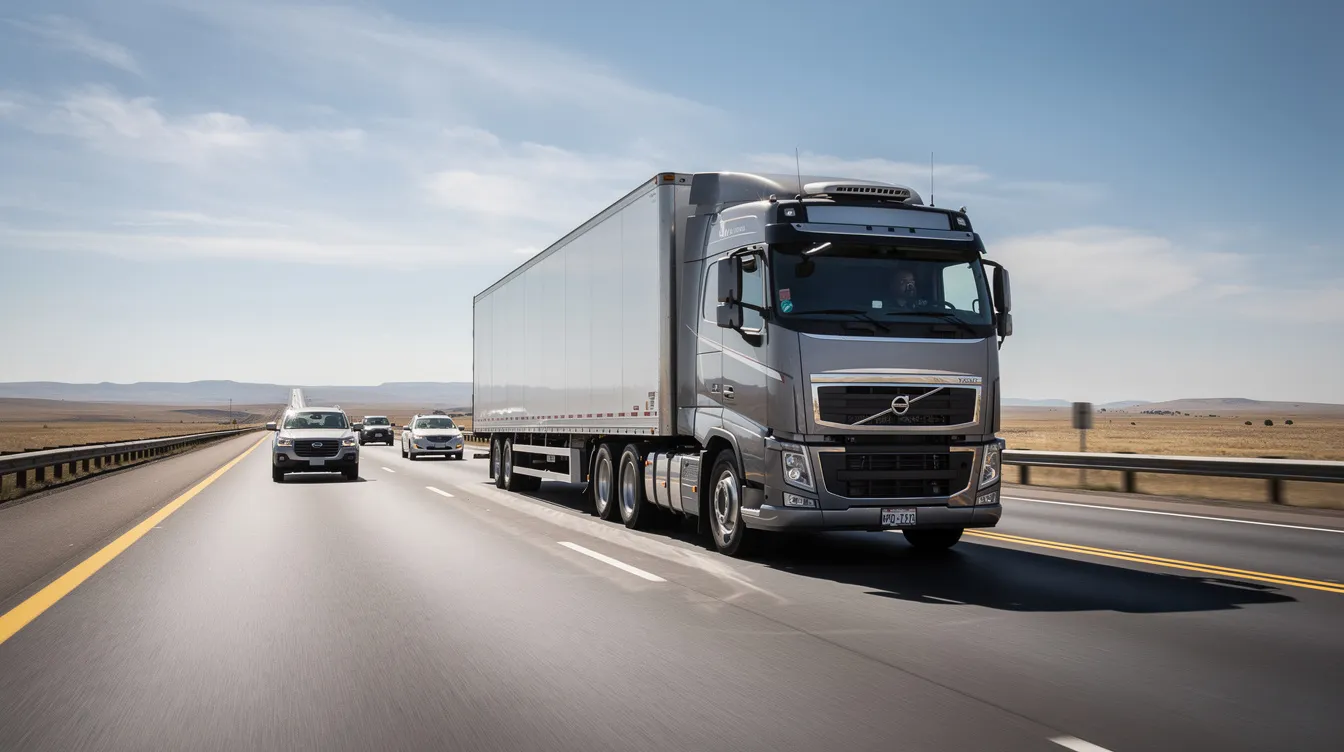
Trucks can weigh up to 80,000 pounds when fully loaded. A typical passenger vehicle weighs around 3,500 pounds. That 20-to-1 weight ratio means the forces in a truck crash are orders of magnitude higher than in a collision between two cars. The smaller vehicle absorbs nearly all of the impact energy.
Commercial trucks, including tractor trailers, garbage trucks, and dump trucks, sit higher off the road and ride on rigid frames designed to protect the truck driver. Occupants of a passenger vehicle face crushing forces and are vulnerable to underride impacts, where the car slides beneath the trailer and the passenger cabin is sheared away.
Trucks require longer stopping distances than passenger vehicles. A loaded truck may require up to 525 feet to stop from 65 mph under ideal conditions; wet or icy roads stretch that number further. Small misjudgments in following distance or braking timing lead to rear-end collisions, jackknife crashes, and rollovers that a passenger car driver has no way to avoid.
In 2019, 5,005 people died in large truck crashes. By 2024, that number climbed to 5,340 deaths, a 58% increase over 2009 levels. Large truck accidents now account for roughly 14% of all U.S. traffic fatalities. The data is consistent: truck accidents often result in more severe injuries than car accidents, including traumatic brain injuries, spinal cord damage, amputations, and internal organ trauma. A truck accident attorney will need to document the long-term financial impact of these injuries to pursue the full value of a claim.
Common Causes of Truck Accidents (Including Driver Fatigue and Distracted Driving)
Most truck accidents are preventable. They trace back to human error, often compounded by violations of Federal Motor Carrier Safety Administration regulations. Understanding the common causes of semi truck accidents and their impact on settlements helps a truck accident lawyer identify where carriers and drivers cut corners.
-
Driver fatigue. Driver fatigue contributes to 87% of truck accidents. Federal Hours-of-Service rules limit property-carrying drivers to 11 hours of driving within a 14-hour on-duty window, followed by 10 consecutive hours off duty. Trucking companies face stricter federal regulations than car drivers, yet pressure to meet delivery schedules still leads to falsified logs. An experienced truck accident attorney will pull electronic logging device data to verify whether the driver was legally allowed to be on the road.
-
Distracted driving. FMCSA bans handheld phone use for commercial motor vehicle operators. Despite this, dispatch tablets, GPS devices, and personal phones remain sources of distraction. Phone records, GPS logs, and dispatch communications often become key evidence in a truck accident case.
-
Speeding and maneuvering errors. Large trucks have blind spots on all four sides. Speeding, following too closely, improper lane changes, and wide-turn errors are common causes. Because trucks travel at high speeds on major highways and need hundreds of feet to stop, even a momentary lapse leads to catastrophic results.
-
Mechanical and loading failures. Brake problems are a leading cause of truck accidents. Tire blowouts, steering defects, overloaded dump trucks, and improperly secured cargo also contribute. These failures may point to negligent maintenance providers, cargo loaders, or trucking companies rather than just the individual truck driver, expanding the list of liable parties.
Types of Truck and Commercial Vehicle Accidents
A truck accident covers a wide range of commercial vehicle accident scenarios. Each configuration brings its own liability questions and evidence challenges.
-
Common crash configurations: rear-end collisions, jackknife and rollover accidents, underride crashes (at the rear or side of a trailer), and wide-turn incidents where trucks swing into oncoming or adjacent lanes.
-
Semi truck accidents on interstates: high-speed impacts involving 18-wheelers and tractor trailers often produce multi-vehicle pileups. Working with an experienced 18-wheeler crash attorney after a semi truck crash at highway speeds can help manage chain-reaction collisions with multiple parties, complicating both investigation and liability.
-
Dump trucks, cement trucks, and garbage trucks: these vehicles operate in neighborhoods, construction zones, and near pedestrians. Risks include debris spills, backing incidents, visibility problems, and proximity to cyclists and parked cars. A defective truck or poorly maintained vehicle adds another layer of potential claims.
-
Bus and other large commercial vehicles: similar specialized rules and investigation techniques apply. A top accident attorney for crashes who handles commercial truck accidents often manages these claims as well, given the overlap in federal regulations and scale of injuries.
Typical Injuries and Long-Term Consequences for Truck Accident Victims
Injuries in truck accident cases tend to be far more severe than those in most car crashes and often require years of medical care.
-
Severe acute injuries: truck accidents can result in traumatic brain injuries, spinal cord injuries (including paralysis), multiple broken bones, internal injuries (common in truck accident victims due to blunt-force impact), burns, and severe lacerations from shattered glass and twisted metal.
-
Long-term consequences: chronic pain, limited mobility, PTSD, depression, cognitive deficits, and the need for wheelchairs, prosthetics, or home modifications. These affect every aspect of daily life and must be valued in the truck accident claim.
-
Expert analysis: truck accident lawyers may work with medical experts and life-care planners to calculate damages, including future medical expenses, lost earning capacity, and the cost of long-term support. Victims with severe injuries may also benefit from specialized car accident attorney guidance when crashes involve both trucks and passenger vehicles. Vocational specialists assess whether the victim can return to prior work or must retrain.
-
Documentation: medical records, imaging studies (CT, MRI), specialist reports, and testimony from a family member about how the crash changed the victim’s daily life are all essential to proving the full impact of injuries sustained in a commercial vehicle accident.
Who Can Be Held Liable in a Truck Accident Case?
Unlike typical car accidents, liability in a truck accident case often spreads across multiple parties beyond the individual driver. Identifying every responsible party is a core part of building a legal claim.
-
Truck driver: claims for negligent driving (speeding, distraction, driver fatigue, impairment, reckless driving) and violations of Hours-of-Service rules. The driver’s personal insurance interacts with the employer’s commercial policy.
-
Trucking company or motor carrier: truck companies can be held liable for driver negligence under respondeat superior (vicarious liability). Direct negligence claims arise from poor hiring practices, inadequate training, unsafe dispatch, and failure to monitor Hours-of-Service compliance. Victims can review detailed truck accident resources and archives to better understand how these company failures create liability. Whether the driver is an employee or independent contractor affects how liability attaches.
-
Cargo shippers and loaders: when unsecured or overloaded cargo causes a semi truck accident or dump truck rollover, the shipper or loading crew may bear responsibility.
-
Manufacturers and maintenance providers: liability can extend to truck manufacturers and maintenance providers when defective brakes, tires, or steering components cause a crash. A defective truck part or a missed inspection shifts blame from the driver to the company that built or serviced the vehicle.
-
Government entities: road defects, poor signage, or a city-owned garbage truck can create government liability. Trucking companies must follow federal safety regulations, but so must public road authorities. Claims against government agencies often carry special deadlines and procedural requirements.
What to Do Immediately After a Truck Accident
If you are physically able to act at the scene, these steps protect both your health and your truck accident claim. Many victims are too badly hurt to do anything beyond waiting for paramedics; if that is your situation, a family member or attorney can handle evidence gathering later.
-
Call 911. Request police and EMS. A formal crash report documents all vehicles, environmental conditions, and potential witnesses. This report becomes a foundational piece of physical evidence.
-
Seek medical attention immediately. Even if injuries seem minor, adrenaline masks symptoms. Early ER or urgent care records link injuries to the crash. Internal injuries are common in truck accident victims and may not produce obvious symptoms for hours.
-
Document the scene. Take photos and video of vehicle damage, skid marks, road conditions, the truck’s license plate, and DOT markings. Get names and phone numbers from witnesses. Document the accident scene with photographs and witness information before people leave.
-
Do not discuss fault. Avoid discussing fault with insurance representatives at the scene. Do not sign anything or give recorded statements to the trucking company’s insurer. Trucking companies often deploy rapid-response teams to minimize liability after an accident; anything you say can be used against you.
-
Contact a truck accident lawyer as soon as possible. Evidence preservation is critical in truck accident cases. A legal team can send preservation letters within hours, demanding that the carrier retain electronic logging data, black box records, maintenance records, and onboard camera footage before it is overwritten or “lost.” Reviewing frequently asked questions about truck accidents can clarify what to preserve and why timing matters. Preserve evidence like the truck’s electronic logging data; some of it is overwritten in as few as 30 days.

How an Experienced Truck Accident Attorney Builds Your Case
A modern truck accident investigation is a coordinated effort. An experienced truck accident attorney manages accident reconstruction, document review, expert testimony, and negotiations with multiple insurers, all while the client focuses on recovery.
-
Evidence preservation: the law firm immediately demands preservation of electronic logging device data, the truck’s event data recorder (black box), driver qualification files, training records, maintenance records, and onboard camera footage. Delays of even a few weeks risk permanent loss.
-
Accident reconstruction: the attorney works with reconstruction experts who analyze impact angles, speeds, braking distances, and road conditions. Some use 3D modeling to present the crash sequence to insurers or a jury in a way that makes fault clear.
-
Damages documentation: the legal team collects medical records, imaging studies, employment and wage history, and testimony from family members about how the truck accident changed the victim’s daily life. Lost wages and future earning capacity are calculated using pay records, tax returns, and vocational expert analysis.
-
Negotiating with insurers: truck accident lawyers handle aggressive insurance companies to protect their clients’ rights. Commercial carriers often have large policy limits but contest every element of the claim. Working with the best Texas truck accident lawyer can be critical when identifying every available policy, including excess or umbrella coverage.
-
Litigation: a truck accident lawyer can file a lawsuit and represent clients in court if necessary. This includes depositions of the truck driver and company representatives, challenges to incomplete or altered records, and trial preparation with expert witnesses. Preparing for trial often pushes insurers toward better settlement offers.
Insurance, Compensation, and the Value of a Truck Accident Case
Commercial trucks carry higher liability insurance coverage than ordinary cars. Trucking companies must carry a minimum of $750,000 in liability insurance under federal rules, and many policies extend into the millions, particularly for carriers hauling hazardous materials. These larger limits create more room for recovery but also attract aggressive defense.
-
Categories of compensation: truck accident victims may recover economic and non-economic damages. Economic damages include past and future medical bills, lost wages, diminished earning capacity, and property damage. Non-economic damages cover pain and suffering, emotional distress, and loss of enjoyment of life. In cases involving gross negligence, such as knowingly sending a fatigued driver onto the road, punitive damages may apply.
-
Policy identification: part of the attorney’s job is to identify every available liability insurance policy. Cases involving multiple parties may have separate coverage for the driver, the trucking company, the trailer owner, and the cargo shipper.
-
What determines value: compensation amounts depend on the severity of injuries sustained, clarity of liability, degree of fault (if any) assigned to the victim, and total insurance coverage discovered. A truck accident lawyer helps secure maximum compensation for injuries by building a thorough damages case.
-
Comparative fault: many states use comparative fault rules. If a victim is found 20% responsible, their recovery is reduced by 20%. Experienced attorneys work to minimize unfair blame shifting by trucking and insurance companies.
-
Verdicts and track records: recent jury verdicts illustrate the range. One fatal underride case produced a $462 million verdict. A Texas case involving a pileup resulted in a $44.1 million verdict with $20 million in punitive damages. No attorney can promise a specific dollar result, but a law firm’s track record with truck accident cases indicates their experience with high-stakes commercial claims.
Deadlines and Legal Time Limits After a Truck Accident
A “statute of limitations” is the legal deadline for filing a truck accident lawsuit. Missing it ends your right to seek compensation, regardless of how strong your case is.
-
Many states give injured people around two years from the date of the truck accident to file a personal injury lawsuit. Wrongful death claims often follow similar timelines, though details vary by jurisdiction.
-
Claims involving government-owned vehicles (city garbage trucks, state DOT trucks) may require formal notice within 30 to 90 days of the crash. Missing this window can bar the claim entirely, making early consultation with an accident lawyer essential.
-
Critical evidence like electronic logging data and onboard camera footage can be overwritten in days or weeks. Waiting to “see how things go” before calling a truck accident attorney risks losing the evidence needed to prove fault.
-
Speaking with a law firm soon after the crash allows the legal team to meet all deadlines, file suit if necessary, conduct timely investigations, and counter insurance company tactics designed to run out the clock.
How to Choose the Right Truck Accident Lawyer or Law Firm
Not every personal injury lawyer handles complex semi truck accidents. Victims should look for specific experience and resources.
-
Ask how many truck accident cases the attorney has handled, especially cases involving semi trucks, dump trucks, or other commercial vehicle accidents. Ask whether they regularly go to trial or settle every case.
-
Review the firm’s track record in truck accident litigation. Look for client reviews, significant settlements or verdicts, and recognition among national trial lawyers. Top tips for choosing the best truck accident lawyers include considering certifications, specialized trucking experience, and proven case results. Past results do not guarantee future outcomes, but they indicate familiarity with the trucking industry and its specialized rules.
-
Communication matters. The lawyer should explain your legal options clearly, provide regular updates, and make you feel heard during recovery. Experienced attorneys know that a truck accident claim is personal, not just a legal process.
-
Top truck accident law firms work closely with accident reconstructionists, medical experts, and trucking industry specialists. These resources are required to challenge large trucking and insurance companies effectively.
-
Most reputable firms offer a free consultation and contingency fee arrangements, allowing victims to compare best law firms without upfront cost. Those in Houston, for example, can follow key tips for hiring a truck accident attorney to evaluate local options.
Costs, Contingency Fees, and Your Free Case Review
Cost should not prevent an injured person from speaking with a truck accident attorney. The contingency fee basis used by most firms removes that barrier.
-
Contingency fee defined: the law firm advances all case costs (investigation, expert fees, court filings) and collects attorney’s fees only as a percentage of any settlement or verdict. That percentage typically ranges from 33% to 40%, depending on whether the case settles or goes to trial.
-
Free case review: during the initial review, the attorney evaluates liability, potential damages, and available insurance coverage, then explains the fee structure in plain language. There is no obligation to hire the firm.
-
No upfront costs: there are usually no hourly fees, no retainers, and no out-of-pocket medical expenses for the legal case while it is pending. If the case is unsuccessful, the client does not owe attorney’s fees under a standard contingency arrangement.
-
Questions to ask: clients should ask about the exact percentage, what happens if the case goes to trial, and how litigation expenses are handled if the result is unsuccessful. Comparing fee arrangements across law firms is both lawful and encouraged.
-
If you or a family member was hurt in a truck accident, contact a qualified law firm for a free case review. Resources like a dedicated truck accident and injury law blog can also help you understand your rights. The consultation costs nothing, and acting quickly protects both your evidence and your right to pursue legal action.
Frequently Asked Questions About Truck Accident Lawyers
Do I really need a truck accident lawyer, or can I handle the claim myself?
Truck accident cases are rarely simple. They involve serious injuries, large commercial insurance policies, and federal and state regulations that most people have never encountered. Trucking companies and their insurers often send investigators to the scene within hours to protect their interests. Having your own experienced truck accident attorney levels the playing field. At minimum, take advantage of a free consultation to understand your legal claim before speaking with any insurance adjuster.
How long does a typical truck accident case take to resolve?
Timelines vary. Straightforward cases with clear liability and limited injuries may settle within several months. Complex semi truck accidents involving catastrophic injuries or disputed fault can take one to two years or more, especially if a truck accident lawsuit and trial are required. A good law firm avoids rushing into a fair settlement before the full scope of medical treatment and long-term needs is understood, even though this lengthens the legal process. Your attorney should update you periodically on progress and expected next steps.
What if I am partially at fault for the truck accident?
You can pursue compensation even if partially at fault for the accident. Many states follow comparative fault rules, meaning your award is reduced by your percentage of responsibility. If you are found 20% at fault, you recover 80% of your damages. Trucking and insurance companies frequently try to exaggerate the victim’s role. An experienced truck accident attorney will counter this strategy with physical evidence, witness testimony, and expert analysis. Do not assume you have no case without consulting a lawyer under your state’s specific fault laws.
What information should I bring to my first meeting with a truck accident attorney?
Bring the police crash report (if available), photos or videos of the scene and vehicles, medical records and medical bills to date, auto insurance information, and any letters or emails from insurance companies. A written timeline of events from the day of the truck accident and a list of all treating doctors help the lawyer quickly assess your situation. If you do not have all documents yet, schedule the free case review anyway; the legal team can help gather missing records.
Will my truck accident case definitely go to trial?
Most truck accident cases settle before trial through negotiations or mediation. Preparing every case as if it will go to trial often produces better settlement offers, because insurers know the attorney is ready to file suit and present the case to a jury. Your lawyer should discuss the pros and cons of any offer, and the decision to accept or decline a settlement always rests with you. Cases involving wrongful death, disputed liability, or multiple parties are more likely to require trial preparation to recover damages fully.