Key Takeaways
-
Truck accident cases are far more complex than a typical car accident because they involve federal regulations, multiple defendants, and commercial insurance policies with limits often starting at $750,000. Choosing a knowledgeable lawyer can significantly impact the outcome of these cases.
-
Injured truck accident victims should contact a dedicated truck accident attorney as soon as possible to preserve critical evidence like electronic logging device data, black box recordings, and maintenance records that can be overwritten or destroyed within days.
-
Most truck accident lawyers work on a contingency fee basis, meaning you pay no upfront costs. The lawyer receives a percentage of the settlement or verdict only if you win.
-
The best trucking accident lawyers have a proven track record in truck accident cases, deep knowledge of trucking industry standards, and strong client reviews that demonstrate consistent results.
-
In this article, you will learn what to do after a truck accident, how liability is determined across multiple parties, what compensation might be available, and how to evaluate and hire the right law firm for your case.
Introduction: Why You Need a Trucking Accident Lawyer After a Serious Crash
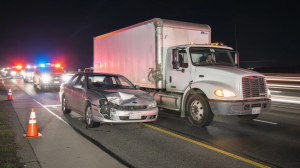
Picture a 2024 afternoon on an interstate highway. A fully loaded tractor-trailer drifts across lanes and slams into a compact sedan at highway speed. The passenger car is crushed. The driver survives but faces a shattered pelvis, traumatic brain injury, and months of surgeries ahead. Within hours, the trucking company dispatches its own investigation team to the scene, and its insurer begins assembling a defense before the victim even leaves the hospital.
This is the reality of a serious truck crash. Unlike routine car accidents, a commercial vehicle accident involves a web of insurance policies, corporate defendants, and federal safety rules that most people have never encountered. Trucking accident lawyers specialize in navigating these legal and regulatory complexities unique to commercial motor vehicle crashes. They understand how to fight back against aggressive corporate legal teams aiming to minimize payouts, and they know that evidence disappears fast.
This article is your guide. Whether you are recovering from truck accident injuries or supporting a family member, you will learn:
-
Why truck accidents demand specialized legal representation
-
How liability works when multiple parties are involved
-
What types of compensation you may be entitled to
-
How to evaluate, interview, and hire the right truck accident attorney

How Truck Accidents Differ From Ordinary Car Accidents
Truck accidents typically cause far more devastating injuries, generate higher medical bills, and involve significantly more legal complexity than a standard car accident. The physics alone tell the story: a fully loaded commercial truck can weigh up to 80,000 pounds, while trucks can weigh 20 to 30 times more than a typical passenger vehicle. That weight disparity turns collisions into catastrophes.
Here are the key differences that separate truck accident cases from car accident cases:
-
Size and stopping distance: A large commercial truck needs roughly 40% more distance to stop than a car traveling at the same speed. Crash energy scales with mass, meaning injuries sustained in large truck collisions are often severe or fatal.
-
Federal oversight: Commercial truck drivers and trucking companies must comply with FMCSA regulations that simply do not apply to regular drivers, including hours-of-service limits, drug testing, and vehicle inspection standards.
-
Multiple at-fault parties: Unlike car accidents where fault typically involves two drivers, truck accident cases often include the truck driver, the motor carrier, maintenance contractors, cargo loaders, and sometimes parts manufacturers.
-
Higher insurance stakes: Trucking companies often have substantial insurance coverage. Federal law requires interstate property carriers to carry a minimum of $750,000 in liability insurance coverage, with limits reaching $1 million to $5 million for hazardous cargo. This motivates insurance companies to fight claims aggressively using experienced defense teams.
-
Specialized evidence: Issues like driver logs and vehicle maintenance are critical in trucking accident cases. Black box data, electronic logging device records, dispatch logs, and company safety policies all require a lawyer who understands trucking industry practices.
Trucking accident claims can involve far more complex insurance arrangements than typical car accidents, and without the right legal team, victims risk being outmaneuvered from day one.
Common Causes of Trucking Accidents You Should Know
Most trucking accidents are preventable. They usually stem from a combination of driver mistakes, company pressure, and safety rule violations. Common trucking accident cases include driver fatigue, improperly loaded cargo, and equipment failures, and the causes of semi truck accidents and their impact on settlements are central issues in many claims.
Driver-Related Causes
-
Fatigue: Fatigue is a leading cause of truck accidents. Drivers who exceed hours-of-service limits or falsify logs operate with dangerously impaired reaction times.
-
Distracted driving: Distracted driving contributes significantly to truck accidents. Phones, GPS units, and in-cab systems pull a truck driver’s attention from the road at the worst possible moments.
-
Speeding and aggressive driving: Tight delivery schedules push drivers to exceed speed limits, follow too closely, or make unsafe lane changes.
-
Impaired driving: Alcohol, illicit drugs, or even certain prescription medications can impair a commercial truck operator, turning a large vehicle into an uncontrolled hazard.
Driver error accounts for 34.7% of fatal truck accidents, making it the single largest contributing factor.
Company-Level Causes
-
Negligent hiring and training: Negligent hiring and training are common claims against trucking companies in accident cases. Carriers that skip background checks or provide inadequate safety training put unqualified drivers behind the wheel.
-
Unrealistic delivery schedules: When companies pressure drivers to meet impossible deadlines, speeding and hours-of-service violations become inevitable.
-
Failure to enforce safety policies: Some carriers have safety programs on paper but never enforce them in practice.
Mechanical and Cargo Causes
-
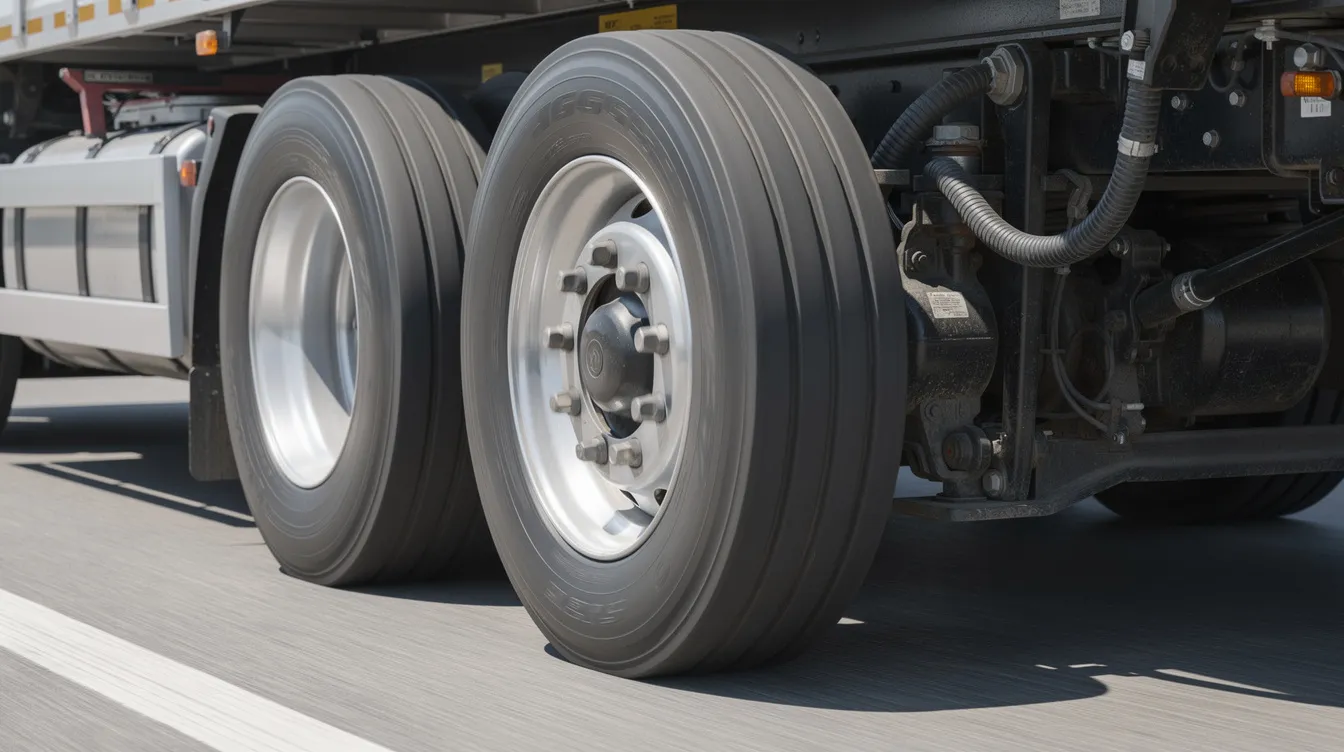
Improper vehicle maintenance: Improper vehicle maintenance leads to many truck accidents. Failed brakes, worn tires, and defective lighting are preventable problems that carriers are legally required to address.
-
Defective truck components: Manufacturers can be liable when a defective truck part, such as a faulty brake system or tire, contributes to a crash.
-
Overloaded or improperly secured cargo: Overloaded trucks are harder to control and cause accidents. Shifting or unsecured freight can destabilize semi truck rigs and tractor trailers, making them jackknife or roll over.
An experienced 18-wheeler crash attorney will investigate each of these possible causes to build a complete picture of negligence in the truck accident case.
Federal Regulations in the Trucking Industry and Why They Matter
The Federal Motor Carrier Safety Administration, commonly known as FMCSA, is the federal agency within the U.S. Department of Transportation that sets nationwide safety rules for commercial trucks and buses. FMCSA regulates commercial truck operations across the country. Trucking accidents are subject to complex federal regulations, and understanding these rules is essential to proving fault.
Key federal and state regulations relevant to truck accident cases include:
-
Hours-of-service (HOS) limits: Under 49 CFR Part 395, drivers must follow strict limits on daily and weekly driving hours, with mandatory rest breaks. Violations are documented through electronic logging device records.
-
Drug and alcohol testing: Carriers must maintain testing programs for drivers, including pre-employment, random, and post-accident testing.
-
Vehicle inspection and maintenance standards: Federal rules require regular brake, tire, and lighting inspections. Maintenance records must be kept and are frequently scrutinized in litigation.
-
Cargo securement and weight limits: Rules govern how freight must be loaded, distributed, and secured to prevent shifting during transit.
Trucking accident lawyers use violations of FMCSA rules to establish negligence. For example, in one Georgia case, ELD data revealed that a driver had been operating for 14 continuous hours, while company paperwork falsified that figure to 11 hours. The driver’s qualification file also showed previous hours-of-service violations that the carrier had documented but ignored. This pattern of regulatory non-compliance became the foundation of a substantial settlement.
In another case, a commercial truck ran a red light at 62 mph, and the carrier’s CSA safety score placed it in the worst five percent nationally for unsafe driving. The combination of regulatory violations and poor safety history made liability nearly impossible to dispute.
These examples illustrate why trucking accident lawyers routinely obtain and analyze ELD data, driver qualification files, maintenance records, and company safety audits to prove state and federal regulations were violated.
Who Can Be Liable in a Truck Accident Case?
Liability in a truck accident rarely stops with just the individual truck driver. Truck accidents often involve multiple liable parties, and identifying every responsible defendant is crucial for recovering full compensation.
Potential defendants in a truck accident claim include:
-
The truck driver: Liable for negligence such as speeding, fatigue, distracted driving, or driving under the influence.
-
The trucking company (motor carrier): Responsible for negligent hiring, inadequate training, pressuring drivers to violate safety rules, or failing to maintain vehicles. Employers are often liable under vicarious liability, meaning they can be held responsible for a driver’s negligent acts committed within the scope of employment.
-
Freight brokers or shippers: If they imposed unsafe delivery schedules or improperly loaded cargo, they may share fault.
-
Maintenance contractors: Third-party companies hired to service the truck can be liable if poor maintenance contributed to the crash.
-
Parts manufacturers: If a defective truck component like brakes, tires, or steering caused or worsened the accident.
-
Government entities: In rare cases, a municipality or state agency may be liable for hazardous road conditions, poor signage, or defective road design.
Texas law allows suing multiple parties in a truck accident case, and most other states follow similar principles. Even when independent contractors or leased vehicles are involved, a skilled attorney can pierce through complex ownership and leasing arrangements to hold the right parties accountable, and resources like truck accident legal guides and case archives can help victims understand these complexities.
What to Do Immediately After a Truck Accident
If you have been involved in a truck crash, you are likely in shock. That is normal. Your immediate priorities are safety and medical attention.
Here is a step-by-step guide:
-
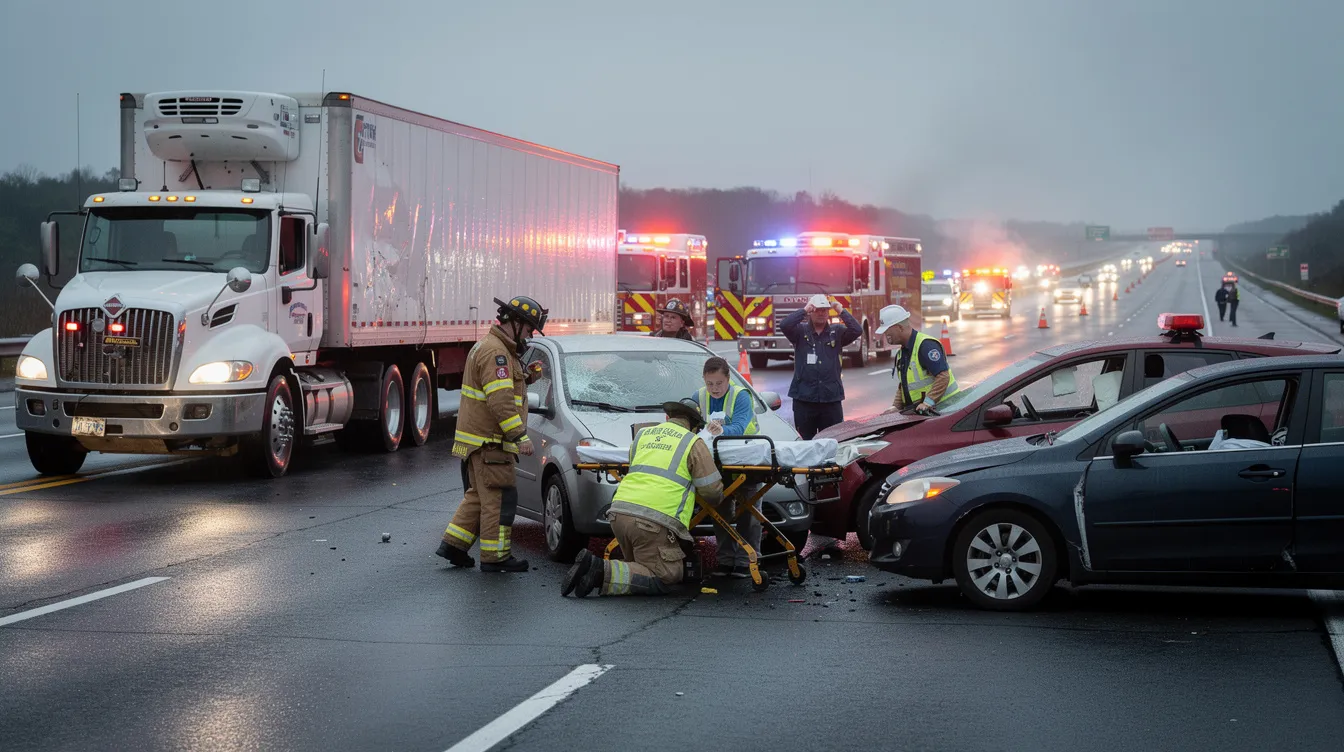
Call 911. Report the accident and request emergency medical services. A police report will be generated, which becomes an important piece of evidence.
-
Accept medical evaluation. Even if you feel okay, seek medical attention. Many serious injuries, including internal bleeding and traumatic brain injuries, do not produce immediate symptoms.
-
Move to safety. If you can safely exit the vehicle and move away from traffic, do so.
-
Do not admit fault. Cooperate with law enforcement, but do not apologize or make statements that could be interpreted as accepting blame.
-
Collect evidence (if safe). Take photos of all vehicles, the roadway, skid marks, debris, and any visible injuries. Get contact and insurance details from all drivers. Note the truck’s company name, USDOT number, and license plate. Get names and phone numbers of witnesses.
-
Do not give recorded statements. An insurance adjuster from the trucking company’s insurer may contact you quickly. Do not provide any recorded statement before speaking with a truck accident lawyer. Trucking accident lawyers can manage communications with aggressive insurance companies on your behalf, and truck accident FAQs for Texas victims often stress how critical this early legal guidance can be.
-
Contact a truck accident attorney immediately. Rapid-response teams are often deployed by trucking companies to secure evidence after an accident. Your law firm needs to send preservation letters right away so that ELD data, dash cam footage, and maintenance records are not lost or destroyed.
How Truck Accident Lawyers Investigate and Build Your Case
Within days of being hired, a trucking accident lawyer’s legal team moves quickly to secure the evidence that will make or break your case. Preservation of electronic data from trucks is crucial in trucking accident litigation because data can be overwritten or deleted within weeks. Truck accident cases can require extensive evidence collection, and a thorough investigation is what separates strong claims from weak ones.
Key investigative steps include:
-
Sending spoliation (preservation) letters to the trucking company, its insurer, and any other relevant parties, demanding that ELD data, ECM (black box) data, dash cam footage, maintenance records, and driver qualification files be preserved.
-
Obtaining the police report and crash documentation from law enforcement agencies.
-
Photographing and documenting the scene and vehicles, including damage patterns, road conditions, and signage.
-
Hiring accident reconstruction experts who analyze skid marks, vehicle positions, speed data from the black box, braking patterns, and the overall sequence of events.
-
Engaging medical experts who can document injury mechanisms, prognosis, and long-term care needs. Trucking accident cases often require accident reconstructionists and medical experts to build a persuasive case.
-
Reviewing internal company documents during discovery, including safety audits, dispatch logs, GPS data, fuel receipts, hiring records, and training materials.
Lawyers compare driver logs, fuel receipts, GPS records, and dispatch notes to uncover hours-of-service violations or falsified documents. A thorough investigation like this allows your attorney to build an airtight case while you focus on healing and recovery, and working with a top accident attorney for comprehensive legal support can further protect your interests.
Types of Compensation Available to Truck Accident Victims
Serious injuries from truck accidents can require long-term medical care and substantial compensation. A successful truck accident case is designed to address every financial and non-financial loss you have suffered.
Economic Damages
-
Emergency room visits, hospitalizations, and surgeries
-
Rehabilitation and physical therapy
-
Future medical expenses for ongoing treatment
-
Medical bills for prescriptions, medical devices, and home care
-
Lost wages from time away from work
-
Reduced earning capacity if injuries prevent returning to previous employment
-
Property damage to your vehicle and personal belongings
-
Out-of-pocket expenses related to the accident
Calculating damages in trucking accidents includes assessing medical expenses and lost wages, along with every other verifiable financial loss.
Non-Economic Damages
-
Pain and suffering, both physical and emotional
-
Emotional distress and mental health impacts like PTSD or anxiety
-
Loss of enjoyment of life
-
Disfigurement or permanent scarring
-
Loss of consortium for a spouse or family member
Pain and suffering damages are also recoverable in truck accidents, and they often represent a significant portion of the total award.
Punitive Damages
In cases involving extreme misconduct, such as drunk driving, intentional logbook falsification, or a pattern of repeated safety violations, courts may award punitive damages designed to punish the defendant and deter similar behavior.
Settlement values vary widely. According to aggregated data from multiple law firms, the median truck accident settlement is around $30,000, while the average reaches approximately $100,000 to $110,000. Severe and catastrophic injury cases, including wrongful death claims, regularly result in multi-million-dollar recoveries. A truck accident attorney can estimate case value after reviewing the specific facts, medical records, and liability evidence, similar to how a car crash attorney advises on post-accident compensation.
How to Choose the Right Truck Accident Attorney
Not every personal injury lawyer has the experience or resources to handle complex truck accident cases effectively. Choosing a lawyer specializing in commercial vehicle accidents gives you a significant advantage in navigating the regulatory, technical, and insurance challenges these cases present.
Key qualities to look for, which align with many top tips for choosing the best truck accident lawyers, include:
-
Specialization in truck accident law: Choose a personal injury law firm that focuses on large vehicle accidents and commercial vehicle accident litigation, not just general car accident cases.
-
A proven track record of high-value settlements and verdicts: Look for a lawyer with a proven track record that includes results in cases involving federal regulations, multiple parties, and catastrophic injuries.
-
Trial readiness: Trucking accident lawyers should have knowledge of federal regulations and trial readiness. Insurance companies respect attorneys who are prepared to go to court.
-
Published results and client reviews: The best law firms publish detailed past case results and client reviews showing consistent, positive outcomes and strong communication.
-
Credentials: Check state bar association records to verify a lawyer’s standing. Look for professional recognition such as membership in national trial lawyers associations or trucking litigation groups.
-
Transparency and respect: A strong firm will clearly explain its legal strategy during the consultation, be transparent about fees, and treat you like a person, not a file number.
Trucking accident lawyers should also demonstrate standards of professional conduct that put your interests first throughout the case, especially when you are looking for the best Texas truck accident lawyer to protect your rights.
Key Questions to Ask During Your First Consultation
Most trucking accident attorneys offer a free consultation. Treat this meeting as a two-way interview. Ask about their experience with truck accident cases during consultations to gauge whether they are the right fit.
Here is a practical checklist that mirrors many of the tips for hiring a truck accident attorney in Houston:
Experience questions:
-
How many truck accident cases have you personally handled in the last few years?
-
What were the results in cases similar to mine?
-
Have you handled cases involving dump trucks, garbage trucks, semi truck rigs, or tractor trailers specifically?
Resources and strategy questions:
-
What experts will you use in my truck accident case?
-
How quickly can your legal team start the investigation?
-
How do you handle evidence preservation for ELD data and black box records?
Communication questions:
-
How often will I receive updates on my case?
-
Will I mainly speak with you, another attorney, or support staff?
Fee questions:
-
What percentage do you charge on a contingency basis?
-
Who pays case expenses like expert witnesses if we do not win?
-
Are there any costs I might owe regardless of the outcome?
Understanding Fees and Costs in Truck Accident Cases
Most truck accident lawyers work on a contingency fee basis. This means you pay no upfront attorney’s fees. The law firm advances its time and often case expenses, then receives an agreed percentage of any settlement or verdict. If there is no financial recovery, you typically owe nothing for attorney’s fees.
Common additional costs beyond the contingency percentage include:
-
Court filing fees
-
Medical records and medical bills retrieval charges
-
Deposition and transcript costs
-
Expert witness fees for accident reconstruction or medical testimony
-
Travel and investigation expenses
Transparency matters. Before signing a retainer agreement, make sure it clearly explains:
-
The exact contingency fee percentage
-
Whether costs are deducted before or after the attorney’s fees
-
How funds are disbursed at the end of the case
-
What happens to costs if the case is not successful
Reputable trucking accident lawyers will review the fee structure in detail during the initial consultation and welcome questions. If a firm is evasive about fees, consider it a warning sign. You can also consult legal blogs on choosing Houston injury lawyers to better understand what transparent representation should look like.
The Legal Process: From Claim to Settlement or Trial
Most truck accident cases follow a predictable path, though every case has its own timeline depending on injury severity, liability disputes, and the willingness of defendants to negotiate.
Pre-Suit Stage
Your attorney conducts the investigation, gathers evidence, establishes liability, and calculates damages. Once the case is built, the law firm sends demand letters to the responsible parties’ insurers, documenting injuries, losses, and the legal basis for the claim.
Filing a Lawsuit
If the insurer does not offer a fair settlement, your attorney files a complaint in court and serves the defendants. The case then enters discovery, which may involve written interrogatories, document exchanges, and depositions of drivers, company representatives, maintenance staff, and expert witnesses.
Settlement Negotiations and Mediation
Many truck accident cases resolve through negotiated settlements once the defense sees strong evidence and assesses the risk of going to trial. Mediation, where a neutral third party facilitates discussion, is another common resolution method. Experienced attorneys often use the pressure of a credible trial threat to secure fair compensation.
Trial
If a fair settlement cannot be reached, the case proceeds to trial. Your attorney presents evidence, questions witnesses, and asks the jury to award compensation based on the proven losses. The legal process at trial can be complex, but a prepared legal team ensures your story is told effectively.
Deadlines and Statutes of Limitations in Truck Accident Cases
Every state imposes strict deadlines, known as statutes of limitations, on how long accident victims have to file a lawsuit. A truck accident lawsuit must be filed before the statute of limitations expires, or the claim is permanently barred, regardless of how strong the evidence might be.
Key points about deadlines:
-
Most states set the statute of limitations for personal injury claims at two or three years from the date of the crash. In New Jersey, you have two years to file a lawsuit.
-
Wrongful death claims may have different deadlines than personal injury cases.
-
Claims involving government entities, such as accidents caused by unsafe road conditions, often require filing a notice of claim within a much shorter timeframe, sometimes as little as 60 to 90 days.
-
Property damage claims may have their own separate deadlines.
Do not try to calculate your own deadline. Consult a truck accident attorney as soon as possible after the incident to identify all applicable deadlines in your jurisdiction. Early legal advice protects your right to seek compensation.
Using Client Reviews and Track Record to Evaluate a Law Firm
Online client reviews and published case results offer practical insight into how a truck accident law firm treats clients and performs in serious cases. They can reveal what no marketing brochure will tell you.
When evaluating a firm:
-
Check third-party review platforms and the firm’s own website. Look for patterns of praise or consistent complaints about communication, professionalism, and outcomes.
-
A proven track record should include examples of high-value truck accident settlements and verdicts, especially in cases where federal regulations and multiple parties were involved.
-
Read beyond star ratings. Look for detailed stories that mention responsiveness, clear explanations of the legal system, and support through medical and financial challenges.
-
Pay attention to whether reviewers describe feeling wrongfully injured and then well-represented, or whether they describe feeling ignored and uninformed.
While no attorney can guarantee a result, a history of strong outcomes and positive client reviews is one of the most practical ways to evaluate a trucking accident lawyer. Look for firms that the best law firms in your area consider peers, not just self-proclaimed leaders.
Red Flags When Choosing a Truck Accident Lawyer
Choosing the wrong attorney can delay your financial recovery and reduce the value of your truck accident case. Watch for these warning signs:
-
Guaranteed results: Any lawyer who promises a specific dollar amount or guaranteed win before reviewing your case is not being honest. Personal injury cases depend on facts, evidence, and circumstances.
-
High-pressure tactics: If a firm pressures you to sign a contract immediately during the free consultation, walk away.
-
Vague experience claims: If the attorney cannot describe specific truck accident cases they have handled and is reluctant to discuss their track record, they may lack the expertise you need.
-
Poor communication: Difficulty reaching the attorney, receiving vague or dismissive answers, or feeling rushed during the initial consultation are signs of how you will be treated throughout the case.
-
No investigation plan: Firms that treat your case like a simple car accident, with no mention of experts, no discussion of ELD or black box data, and no investigation strategy, lack the resources for a serious trucking case.
You are entitled to consult with more than one law firm. Take the time to feel comfortable, respected, and clearly informed before making your decision.

Frequently Asked Questions About Trucking Accident Lawyers
How soon after a truck accident should I contact an attorney?
Contact a truck accident attorney as soon as you are medically stable, ideally within days of the crash. Critical evidence like electronic logging device data, dash cam video, and maintenance records can be lost or overwritten within 30 days. Early involvement allows the law firm to send preservation letters, coordinate independent inspections, and prevent insurance companies from exploiting your lack of representation. The sooner your attorney starts, the stronger your case will be.
Will hiring a truck accident lawyer make the case take longer?
Complex truck accident cases can take months or even years, with or without a lawyer, due to serious injuries and large insurance policies. An experienced trucking accident attorney often streamlines the legal process by organizing evidence, managing deadlines, and negotiating efficiently. This can actually reduce delays caused by disputes, missing documentation, or miscommunication with insurers. Without a lawyer, you risk making costly mistakes that extend the timeline.
Can I still bring a claim if I was partly at fault for the truck accident?
In many states, truck accident victims can still recover damages even if they share some responsibility for the crash. This is known as comparative negligence. Your compensation may be reduced by your percentage of fault. For example, if you are found 20% at fault, your recovery is reduced by 20%. However, fault allocation rules vary by state, and some states bar recovery entirely if you are 50% or more at fault. A truck accident lawyer can analyze the facts and explain how local comparative or contributory negligence laws apply to your situation.
Do I have to go to court if I hire a truck accident lawyer?
Most truck accident cases settle out of court through negotiations or mediation once both sides review the evidence and assess the risk of trial. A capable truck accident attorney prepares every case as if it might go to trial. This preparation often leads to better settlement offers because the defense knows you have an attorney ready to present a strong case to a jury. Going to trial is always an option if a fair settlement is not offered.
How is a truck accident case different if a loved one was killed?
Fatal truck accidents are typically pursued as wrongful death claims, which may be filed by a personal representative or specific family members depending on state law. Damages in wrongful death truck accident cases can include funeral and burial expenses, loss of financial support, loss of companionship, and emotional suffering unique to surviving family members. These cases carry their own procedural requirements and deadlines, making it essential to consult with experienced attorneys who have handled wrongful death claims involving large trucks and commercial vehicles.