Key Takeaways
-
Modern wind turbines can exceed 300 feet (90 m) in height, exposing wind turbine workers to falls, electrical hazards, and severe weather conditions at elevation.
-
Robust fall protection, ladder safety systems, and strict lockout/tagout procedures are non-negotiable safety protocols for all wind turbine maintenance and inspection tasks.
-
Proper training through programs like GWO Working at Heights and OSHA courses, combined with regular safety drills, dramatically reduces incident rates on both onshore and offshore wind farms.
-
Detailed pre-task risk assessments, weather monitoring for high winds and lightning, and confined space controls are essential for daily work planning.
-
A safety-first culture backed by accurate inspection records, quality equipment, and continuous improvement protects workers and keeps wind energy assets productive for decades.
Introduction: Why Wind Turbine Safety Matters in 2026
The wind energy industry now operates hundreds of thousands of grid-connected turbines worldwide, with over 72,000 utility-scale units in the U.S. alone. This growth creates a substantial workforce facing specialized risks unique to this renewable energy sector.
Wind turbines are often located in remote, hard-to-access areas where emergency response is slow and self-reliance becomes critical. Wind turbine safety focuses on mitigating high-voltage risks, falling hazards, and machinery malfunction through safety procedures and PPE. Industry standards from OSHA, HSE, IEC/EN, and GWO training provide frameworks, but site-specific safety protocols must build on these rules. This article walks through practical safety measures for technicians, supervisors, and operators managing onshore and offshore wind farms.
Understanding the Risk Landscape Around Modern Wind Turbines
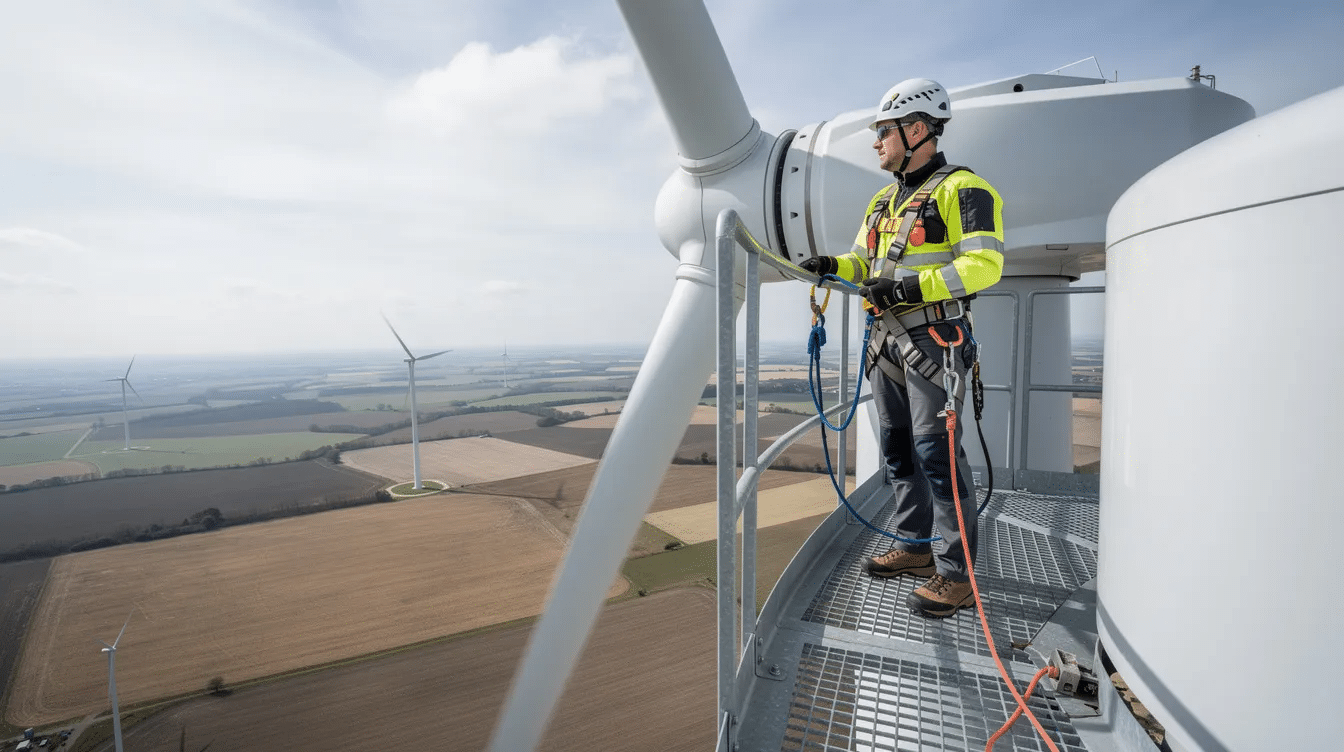
Modern wind turbines range from 2–6 MW onshore to 15 MW offshore, with hub heights of 80–120 meters shaping primary hazards. Wind turbine workers face unique risks due to the height of the turbines, which can exceed 300 feet, and the harsh weather conditions often present at these sites, reflecting the broader risks of working on a wind farm.
Physical risks include:
-
Long vertical climbs inside towers
-
Exposure to high winds on nacelle roofs
-
Moving components in the nacelle and hub
-
Risk of dropped objects to people below
Environmental challenges compound these dangers. Sudden weather changes bring fog, lightning, and ice. High-velocity storm winds can cause blade detachment or tower collapse. Blade icing in freezing climates can create projectile hazards, which are mitigated using cold-weather packages. These events form part of the broader picture of wind turbine accident types and statistics. Rotating rotor blades also pose collision risks to migratory birds and local bat populations-pre-construction ecological surveys help avoid sensitive habitats when siting turbines.
Systemic risks matter too: solo work, remote locations hours from hospitals, and limited evacuation routes inside narrow tower structures. Understanding these combined risks is the foundation for designing effective safety protocols and emergency plans.
Core Safety Protocols for Wind Turbine Workers
Written, enforceable safety procedures are as vital as physical equipment on any turbine site. Every job should start with a Job Hazard Analysis outlining task steps, hazards, and controls specific to that turbine and weather conditions.
Standard permits used on wind farms include:
-
Work at height permits
-
Electrical work permits
-
Confined space permits
Technicians follow strict Lockout/Tagout (LOTO) procedures to prevent electrocution during repairs, reducing many of the common wind turbine injuries associated with energized equipment. High-voltage systems require strict LOTO and insulation testing to prevent electrical hazards. Regulatory bodies like OSHA enforce protocols to protect technicians from hazards in wind turbine maintenance.
Communication protocols include pre-task briefings, radio checks between tower and ground, and clear stop-work authority for any worker identifying an unsafe condition.
Fall Protection and Ladder Safety on Wind Turbines
Falls remain one of the leading causes of serious incidents in wind turbine maintenance. Technicians face risks from heights while servicing turbines, necessitating the use of fall arrest systems and tethered tools and following robust climbing safety tips for wind farms.
Common tower access setups include fixed vertical ladders with rail or cable ladder safety systems, internal rest platforms, and hatches into the nacelle and hub. OSHA requires that fixed ladders over 24 feet include a Personal Fall Arrest System (PFAS) or a ladder safety system to ensure worker safety during climbs.
The 100% tie-off rule mandates that technicians remain continuously anchored when working at heights-from the moment a worker leaves the ground until they return to a safe surface. Safety gear must include fall protection systems such as harnesses, lanyards, and anchor points essential for working at heights.
Wind turbine technicians must maintain three points of contact while climbing. Pre-climb inspections of ladders, shuttle devices, and climb-assist systems reduce fatigue on 80–100 meter climbs and help mitigate injury risks encountered on wind turbine farms.
Pre-Climb Planning and Weather Hold Criteria
Before any climb, supervisors and technicians should review site-specific weather data including wind speed at hub height, lightning risk, temperature, and ice forecasts.
Conditions triggering weather holds:
-
Sustained high winds above 12–15 m/s for external work
-
Nearby lightning activity
-
Heavy rain, snow, or ice accumulation
Turbines use onboard anemometers to monitor wind speeds and engage mechanical braking systems when winds exceed cut-out speeds. Monitoring weather forecasts and having well-defined evacuation plans are essential to prevent accidents during adverse weather events. Workers must verify rescue equipment, descent devices, and communication gear before climbing, with clear roles assigned for potential rescues.
Training, Certification, and Competence for Wind Turbine Maintenance
Proper training and certification of all workers involved in wind energy operations is essential to ensure they understand turbine components, emergency protocols, and hazard recognition.
The Global Wind Organization (GWO) standardizes training across the wind industry, requiring refresher training every 24 months to keep workers current and competent in safety practices. GWO Basic Safety Training covers Working at Heights, First Aid, Fire Awareness, and Manual Handling. Certification programs offered by OSHA ensure workers possess necessary skills to navigate challenges effectively.
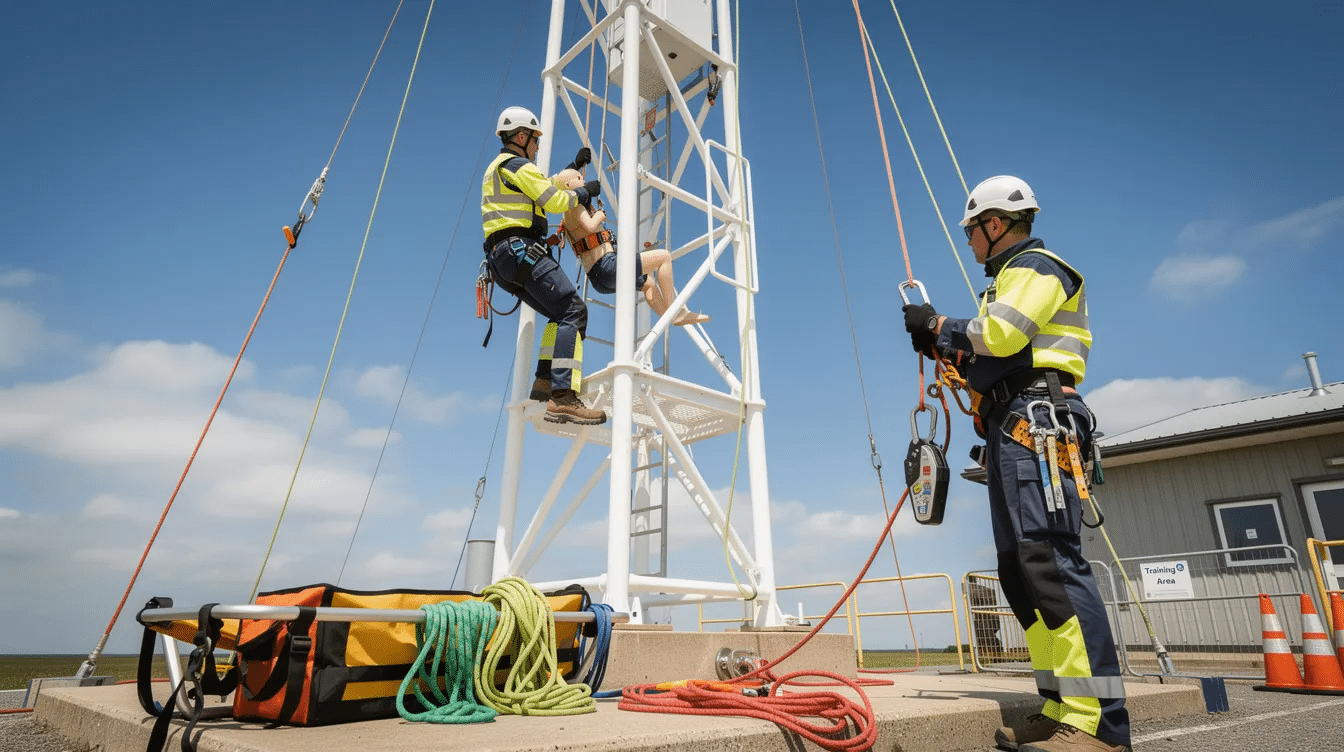
Hands-on training programs help wind energy workers familiarize themselves with real-world scenarios, reducing anxiety and boosting confidence for high-altitude tasks. Competence means combining classroom training, supervised on-the-job experience, and periodic skills assessments-not just holding a certificate.
Specialized Skills: Electrical, Mechanical, and Rescue Competencies
Wind turbine technicians need additional qualifications for high-voltage work, hydraulic systems, and control systems beyond general safety courses. The American National Standards Institute and American Society of Safety Professionals provide safety guidelines under the Z359 Fall Protection Code, including standards for descent controllers and climbing ladder fall arrest systems.
At least some crew members on each shift should be trained in advanced rescue techniques, including constant-rate descent device use and casualty handling inside the tower. Offshore wind farms may require extra certifications in sea survival, vessel transfer, and helicopter hoist rescue.
Safe Work Practices in the Tower, Nacelle, and Hub
The internal layout of a typical utility-scale turbine includes tower sections with ladders, internal platforms, a nacelle housing the gearbox and generator, and the hub connecting to rotor blades. These spaces often meet definitions of confined or restricted spaces with limited exits, noisy machinery, and potential for high temperatures.
Routine maintenance includes checking for blade cracks and verifying the integrity of bearings. Strict adherence to LOTO before working on rotating components, pitch systems, yaw drives, or electrical cabinets is mandatory. Tool tethering and dropped-object controls protect workers lower in the tower or on the ground.
Confined Space and Fire Safety Considerations
Certain nacelles or hubs may be classified as permit-required confined spaces, requiring atmospheric testing, attendants at entry points, and documented entry permits.
Nacelle fires can be caused by mechanical friction and flammable lubricants, as highlighted by incidents at sites like Buffalo Gap wind farm and its safety challenges. Wind turbines are built with automated fire suppression systems and lightning protection mechanisms to enhance safety. During the build phase, wind turbine installation risks for construction workers require equally robust planning. Sites should have defined fire response plans including fire detection, appropriate extinguishers, evacuation routes from tower to ground, and coordination with local fire services.
Emergency equipment such as first aid kits, fire extinguishers, and rescue gear must be readily available, and technicians should be trained on proper use.
Weather Conditions, High Winds, and Environmental Hazards
Weather conditions can significantly impact the safety of wind turbine operations. High winds destabilize climbers, increase tool loss risk, and complicate rescue operations on nacelle roofs.
Mechanical failures such as blade icing and ice shedding pose significant risks during operation, necessitating proper maintenance and safety protocols. Wind turbines utilize automatic shutdowns and heating technologies to mitigate ice shedding risks. Environmental safety measures like cold-weather packages and lightning protection against severe storms are installed in turbines.
Heat, sun, and lightning create summer hazards including dehydration and heat stress inside towers. Clear evacuation procedures are critical-technicians should know the quickest and safest routes off the turbine in emergencies. Operators should integrate modern weather monitoring systems, hub-height anemometers, and real-time weather forecasts into daily work planning.
Equipment, Inspection, and Documentation for Long-Term Safety
Reliable safety depends on equipment quality and rigorous inspection across each turbine’s lifetime. Personal protective equipment for wind energy workers includes helmets with chin straps, safety glasses, gloves, steel-toed boots, and flame-resistant clothing. Wind turbine maintenance requires specialized safety gear designed for various weather conditions, including comprehensive personal protective equipment for work at wind farms.
Inspection requirements: | Equipment Type | Pre-Use Check | Formal Inspection | |—————-|—————|——————-| | Harnesses/Lanyards | Visual inspection each use | Annual by competent person | | SRLs/Anchor Points | Functional check each use | Per manufacturer schedule | | Lifting Systems | Load rating verification | Before each lift operation |
Any equipment involved in a fall or showing damage must be removed from service immediately. Accurate records covering equipment inspections, training, and incident reports support regulatory compliance and data-driven safety improvements. According to UK industry data, the Total Recordable Incident Rate dropped to 0.27 in 2024 despite 17% more hours worked-evidence that systematic documentation drives improvement.
Building a Safety-First Culture on Wind Farms
Strong safety performance depends on culture as much as rules and hardware. Leaders should consistently prioritize safety over short-term production targets, reinforcing that work can be stopped when conditions become unsafe.
Establishing comprehensive emergency response plans that cover various scenarios is essential for wind turbine operations. Regular drills ensure all personnel are familiar with their roles during an emergency, reducing panic in real situations. Near-miss and hazard reporting systems allow technicians to flag issues without fear of reprisal.
Regular safety meetings, toolbox talks, and cross-team sharing of lessons learned improve performance across wind farms. Attending to mental and physical well-being-managing fatigue from long shifts, rotation schedules, and remote work stress-reduces human-factor errors that lead to accidents.
FAQ: Common Questions About Wind Turbine Safety
Are wind turbines safe for the communities living nearby?
Modern siting guidelines require setback distances from homes and roads to reduce risks from rare events like blade failure or ice throw. Beyond worker safety, communities also weigh health risks of living near wind turbines. Wind turbines can lead to noise complaints and shadow flicker effects in residential areas, requiring adherence to setback ordinances. However, noise and electromagnetic fields are generally well below regulatory thresholds and haven’t been linked to direct health damage in major reviews. Advanced engineering, strict regulatory standards, and spatial planning manage these safety risks effectively.
What qualifications do I need to work safely on wind turbines?
Employers typically look for technical trade skills in mechanical, electrical, or mechatronics combined with industry-recognized safety training such as GWO Basic Safety Training. Physical fitness, comfort with heights, and a clean safety record matter significantly. The Small Wind Certification Council, UL, and other entities provide accredited third-party verification for safety and performance standards.
How often should fall protection equipment be inspected on wind farms?
Workers should conduct visual and functional inspections of harnesses, lanyards, and SRLs before each use, checking webbing, stitching, connectors, and labels. Most manufacturers and regulations require documented inspection at least annually by a competent person-more frequently in harsh environments like offshore sites.
Can maintenance be carried out on wind turbines during high winds or storms?
Each wind farm has defined wind speed, lightning, and visibility limits. Certain tasks, especially external work on nacelle roofs or blades, are prohibited above those thresholds. While some internal inspections may continue in moderate winds, work typically suspends when conditions compromise safe access, evacuation, or rescue.
What are the main differences between onshore and offshore wind turbine safety?
Offshore work adds marine risks including vessel transfers, sea state challenges, and cold water immersion, requiring extra training in sea survival. Equipment offshore must be more corrosion-resistant, and helicopter or vessel-based rescue plans replace typical ground ambulance responses. Despite these differences, core principles-fall protection, electrical safety, proper training, and strong safety culture-remain the same.