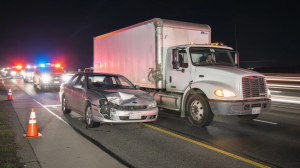
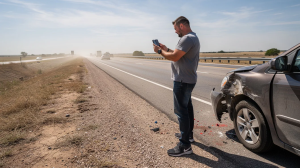
Being in a car accident in Houston can leave you shaken, confused, and unsure of what to do next. The steps you take in those first minutes, hours, and days directly affect your safety, your insurance claim, and your ability to recover fair compensation. This guide walks you through every critical step from the crash scene to contacting a Houston car accident lawyer who can protect your rights.
Key Takeaways
-
Call 911 immediately if anyone is injured or traffic is blocked, and move to a safe location when possible. Texas law requires reporting crashes involving injury, death, or property damage likely exceeding $1,000.
-
Get medical help right away, even if you feel fine. Adrenaline can mask pain, and delayed symptoms can hurt both your health and your injury claim.
-
Document everything at the accident scene: photos, witness phone numbers, the other driver’s insurance details, and a written account of what happened.
-
Request the official crash report from the Houston Police Department or TxDOT within ten days, as it serves as key evidence for insurers and attorneys.
-
Speak with a Houston car accident lawyer early. InjuredCases.com connects injured people with experienced Houston car accident lawyers for a free consultation with no upfront fees, helping you avoid costly mistakes and pursue maximum compensation.
Understanding What Happens Right After a Car Accident in Houston
Car accidents are a daily reality on Houston roads. High-speed corridors like I-10, I-45, US-59, and Beltway 8 see rear-end collisions during rush hour, intersection crashes near busy crossings, and hit and run incidents that leave victims scrambling for answers. Knowing what to do when an accident occurs can mean the difference between a strong claim and a missed opportunity.
Texas is an at-fault state, which means the driver whose negligence caused the crash bears financial responsibility. What you say, what you document, and how quickly you act at the scene all influence who is held liable and how much you can recover. This guide will walk you through each step, from the moment of impact to contacting a personal injury lawyer and pursuing legal action, building on other resources that outline the essential steps to take after a car accident.
Step 1: Call 911 and Get to Safety
Safety and emergency response come before anything else after a car accident in Houston.
Call 911 immediately if anyone is injured, traffic is blocked, or any vehicle is not safely drivable. This is especially important on high-speed roads around Houston, TX, where secondary collisions are a real danger. When you call, give the dispatcher your exact location, the number of vehicles involved, and whether anyone appears hurt.
While waiting for responders:
-
Turn on your hazard lights and set out flares or reflective triangles if you have them.
-
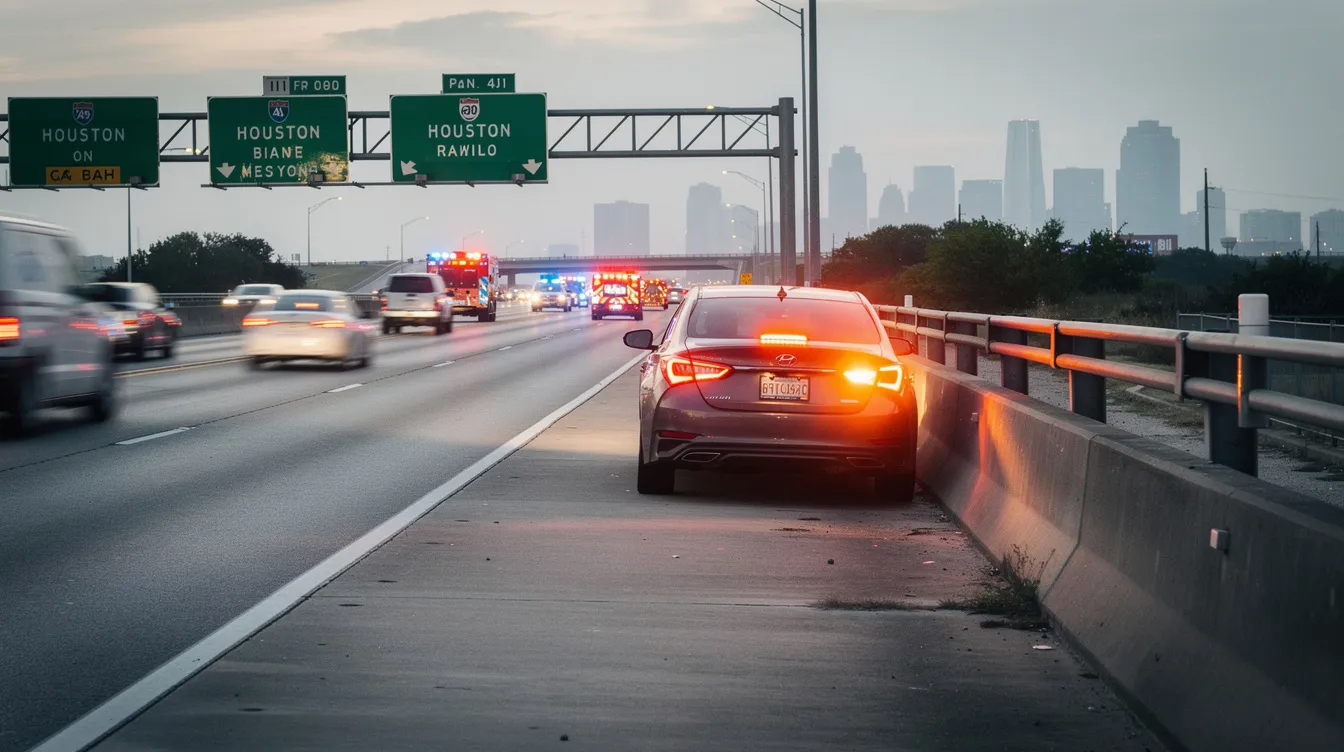
Texas law expects you to move your vehicle to a safe location if it is drivable. Pull to the shoulder or a nearby parking lot when it is safe and legal to do so.
-
If a vehicle cannot be moved, exit carefully and wait behind a barrier or guardrail, far from traffic lanes, particularly on freeways and major intersections.
Remaining at the scene is legally required in Texas for crashes involving injury, death, or property damage. Leaving can turn the situation into a hit and run offense with serious criminal consequences.
Step 2: Check for Injuries and Request Medical Help
Many serious injuries, such as concussion, internal bleeding, or whiplash, may not be obvious right away after a car accident. Adrenaline can mask pain, making you believe you are fine when you are not.
Check yourself and passengers for injuries after a car accident. Look for visible signs like bleeding, swelling, broken bones, or loss of consciousness. Tell the 911 operator exactly what you observe so they can send the appropriate level of medical help.
Do not move someone with suspected neck, back, or head injuries unless they are in immediate danger from fire or oncoming traffic.
Houston has two adult Level I trauma centers: Memorial Hermann-Texas Medical Center (Red Duke Trauma Institute) and Ben Taub Hospital. The Red Duke Trauma Institute alone sees approximately 8,282 adult trauma cases per year, making these facilities among the most experienced in the country for treating car accident injuries. EMS will choose the most appropriate facility based on injury severity.
Seek medical attention promptly after an accident to document any injuries. Requesting medical evaluation at the scene creates an early medical record that links your injuries directly to the crash, which becomes essential evidence for a Houston personal injury claim.
Step 3: When Are You Legally Required to Call the Police in Houston?
Texas law requires reporting certain car accidents, and within Houston city limits, calling 911 or the Houston Police Department non-emergency line is the proper way to document the crash.
You are legally required to report a crash when:
-
Any person is injured or killed.
-
Property damage likely exceeds $1,000.
-
A vehicle cannot be safely driven from the scene.
Call police after any crash involving injury or damage. Hit and run crashes, drunk driving incidents, or collisions involving uninsured drivers should always be reported to police immediately, whether through HPD or Harris County law enforcement.
Even in apparently “minor” car accidents, calling police is usually wise because an official police report helps clarify fault and protects against later disputes. Texas law requires documenting the accident for claims involving significant damage.
If officers do not respond to the scene, drivers may need to submit a written crash report to the Texas Department of Transportation within ten days when the legal thresholds are met, as required under Texas Transportation Code Chapter 550.
Step 4: How to Interact With Police Officers at the Scene
Your statements to HPD or other responding officers will often end up in the crash report used by insurers and lawyers. How you handle this conversation matters.
Stay calm, be respectful, and cooperate. Provide your driver’s license, registration, and proof of insurance when asked.
Describe what happened in simple, factual terms without guessing, blaming, or accepting fault. Avoid admitting fault or making speculative statements at the scene. Phrases like “I’m sorry, it was my fault” can be used against you later by the other driver’s insurance company.
If you do not remember specific details or did not see something, it is perfectly acceptable to say “I’m not sure” rather than speculating.
Before officers leave, ask how to obtain the HPD crash report or the Texas Peace Officer’s Crash Report. Write down the officer’s name, badge number, and the incident or case number. This information will be incredibly helpful later.
Step 5: Exchange Information With the Other Driver
Texas law requires drivers involved in car accidents to exchange information and render aid when possible.
Here is exactly what to collect from the other driver:
-
Full name, phone number, and address
-
Driver’s license number
-
License plate number
-
Insurance company name and policy number
-
Vehicle make, model, and color
Taking photos of the other driver’s license and insurance card is often quicker and more accurate than handwritten notes, but confirm the spelling of names to avoid errors.
Keep the conversation brief and factual. Do not argue, accuse, or apologize. Avoid discussing injuries, medical history, or how much insurance coverage anyone has. The goal is to exchange information, not to debate fault.
In a hit and run accident, do not pursue the fleeing driver. Instead, get the vehicle description and license plate number if possible and relay it to police.
Step 6: Gather Evidence and Document the Scene
Photos, videos, and notes from the scene can be critical evidence in Houston car accident cases. Documentation of injuries and damage is crucial for insurance claims, and the best time to collect it is right now.
Take photos of each vehicle from multiple angles, capturing:
-
All visible vehicle damage and final positions after the collision
-
Skid marks, debris, and deployed airbags
-
The broader scene: traffic lights, stop signs, lane markings, construction zones, and weather conditions
-
Nearby businesses that might have surveillance cameras
-
Close-ups of visible injuries, torn clothing, and broken personal items like glasses or child car seats
Use your phone’s notes app to record the date, time, and exact location. For example: “I-45 southbound near Exit 50 in Houston, TX, 3:15 PM, raining.” Write a brief description of what you remember while details are still fresh.

Step 7: Get Witness Names and Contact Information
Neutral witnesses often play a key role in disputed Houston car accident cases, especially at busy intersections and freeway ramps.
Politely ask bystanders who saw the crash for their name, phone number, and email address before they leave the scene. If a witness is comfortable, ask for a brief written note or a short recorded statement on the spot, focusing on what they personally saw and heard.
Independent witness statements can help sway disputed claims. A witness can confirm who ran a red light, who was speeding, or whether a driver was distracted by a phone at the time of the accident.
Share the contact information with both the responding police officer and, later, the Houston car accident lawyer handling your claim. Witnesses sometimes forget details over time, so capturing their account early is a critical step.
Step 8: What to Do If the Other Driver Leaves (Hit and Run)
A hit and run occurs when a driver causes a crash and leaves the scene without stopping to exchange information or help the injured person. These incidents are unfortunately common in the Houston area.
If the other driver flees, prioritize your safety. Never chase the fleeing driver. Instead, gather as much detail as you can:
-
Color, make, model, and license plates of the vehicle
-
Direction of travel
-
Any distinguishing features (bumper stickers, damage, commercial markings)
Call 911 immediately and report that it is a hit and run. Speak with witnesses who may have also seen the vehicle or taken photos. Nearby gas stations, traffic cameras, and business surveillance systems around Houston intersections may capture valuable evidence that a lawyer can help obtain.
If the at fault driver cannot be identified, your own uninsured motorist coverage often becomes crucial for recovering medical expenses and other losses in Houston hit and run cases.
Step 9: Obtain the Official Crash Report in Houston
The Texas Peace Officer’s Crash Report, known as the CR-3, is a key document for insurance companies and Houston car accident lawyers. Police reports help establish liability in legal disputes and contain the officer’s observations, diagrams, and preliminary fault assessment.
If HPD or another agency investigated the crash, the report is usually available within about seven to ten days. You can request a Texas Peace Officer’s Crash Report through TxDOT using their Crash Report Online Purchase System. You can also obtain a police report using the H.B. 2633 form.
To locate the report, you will need:
-
Date of accident
-
Location in Houston
-
Names of drivers
-
Case or incident number provided by the officer
Some crash report copies can also be requested by mail or in person, and a small fee is typically charged.
An experienced Houston car accident lawyer can obtain and review the crash report, identify errors or omissions, and seek corrections when appropriate. Errors in crash reports happen, and they can significantly affect fault determinations.
Step 10: Get a Thorough Medical Evaluation After the Accident
Even if you walk away from a Houston car accident feeling relatively okay, symptoms may appear hours or days after an accident. Headaches, back pain, numbness, neck problems, and cognitive difficulties can surface well after the initial adrenaline wears off.
Get medical care even if you feel fine initially. Visit an emergency room, urgent care center, or your own doctor as soon as possible, ideally the same day or within 24–48 hours of the crash.
When you see a provider:
-
Be honest and detailed about all symptoms, even minor ones.
-
Mention explicitly that you were in a car accident in Houston on a specific date.
-
Follow up consistently with specialists such as orthopedists, neurologists, physical therapists, or chiropractors as recommended.
Prompt medical care creates a record linking injuries to the crash. Ignoring minor injuries can complicate future claims because insurers may argue the injury was pre-existing or unrelated. Medical records are crucial for personal injury claims and serve as the foundation for proving damages like medical bills, future medical treatment, and pain and suffering.
Keep copies of every medical record, prescription, and bill. These documents will be used to demonstrate the full scope of your losses.

Step 11: Notify Your Insurance Company
Most auto insurance policies require timely notice of any car accident, even when you were not at fault. Notify your insurance company as soon as possible after an accident. Failing to report promptly could jeopardize your own insurance coverage.
When you call your insurer or use their mobile app, provide basic facts only:
-
Date, time, and location in Houston
-
Vehicles involved and basic description of what happened
-
Whether police and EMS responded
Do not guess about the extent of injuries or fault. Avoid providing a recorded statement to the other driver’s insurance company before speaking with a car accident lawyer. Insurers are trained to look for statements they can use to reduce or deny your claim.
Report the crash to your insurance company promptly, but keep records of all communications and documents related to the accident. Provide the claim number, adjuster name, and insurer contact details to your attorney once you decide to hire one.
Coverages such as collision, medical payments, personal injury protection (PIP), or uninsured/underinsured motorist insurance coverage can sometimes help right away with medical bills and car repairs while fault is being determined.
Step 12: Common Mistakes to Avoid After a Car Accident in Houston
Well-meaning people often make small mistakes that can seriously reduce the value of a Houston car accident claim. Knowing what to avoid is just as important as knowing what to do.
Common mistakes include:
-
Leaving the scene too soon before gathering evidence or exchanging information with other parties.
-
Not calling police, which means no official crash report to support your version of events.
-
Failing to seek prompt medical care, giving insurers room to argue injuries are unrelated to the crash.
-
Apologizing or saying “it was my fault” at the scene, which can be treated as an admission.
-
Signing insurance documents or releases without legal review.
-
Posting about the accident on social media. Insurance companies and defense lawyers actively monitor posts. Photos showing you at a barbecue or the gym can be used to undermine claims of pain and suffering.
-
Accepting a quick settlement from an insurance provider before understanding the full extent of injuries and losses.
Be cautious about agreeing to settlements before understanding your rights. A quick, low offer from the other driver’s insurance company rarely accounts for future medical treatment, lost income, or the full impact of your injuries. Avoiding these mistakes helps preserve evidence and strengthens your ability to recover full compensation.
Step 13: Understanding Texas Fault and Comparative Negligence Rules
Texas uses a modified comparative negligence system that directly affects how much you can recover after a car accident in Houston.
Here is how it works under Texas Civil Practice & Remedies Code § 33.001:
-
If you are 51% or more at fault, you are completely barred from recovering any damages.
-
If you are 50% or less at fault, you can still recover, but your compensation is reduced by your percentage of fault.
Example: If total damages are $100,000 and you are found 20% at fault, you can recover $80,000. If found 51% at fault, you recover nothing.
Insurance companies frequently try to increase the percentage of fault assigned to injured drivers in order to lower payouts. They may use your own statements, social media posts, or gaps in medical records to build a case for disputed fault. This is a key reason to have a Houston car accident lawyer reviewing the evidence and pushing back on unfair fault assignments, especially when you are deciding whether you need a car accident attorney in Houston in the first place.
Evidence collected at the scene, witness statements, crash reports, and expert analysis all play an important role in how fault is ultimately decided.
Step 14: Types of Compensation Available After a Houston Car Accident
Injured people in Houston may be entitled to several categories of damages in a personal injury claim.
Economic damages (quantifiable losses):
|
Category |
Examples |
|---|---|
|
Medical expenses |
Emergency room, surgery, therapy, medication, future medical care |
|
Lost wages |
Time missed from work during recovery |
|
Loss of earning capacity |
Reduced ability to earn in the future |
|
Property damage |
Car repair or total loss fair market value |
|
Other out-of-pocket costs |
Towing, storage, rental car, travel to appointments |
|
Non-economic damages (subjective losses): |
-
Pain and suffering
-
Mental anguish
-
Loss of enjoyment of life
-
Disfigurement or physical impairment
In rare cases involving extreme recklessness, such as drunk driving at high speed on I-10, punitive or exemplary damages may be available to punish the wrongdoer and deter similar behavior.
A Houston personal injury lawyer can help evaluate all current and future losses instead of focusing only on immediate medical bills. Many people underestimate the long-term cost of serious injuries like traumatic brain injuries or internal injuries that require ongoing medical care, and educational resources such as a dedicated personal injury law blog for Houston cases can provide additional context about how these claims are handled.
Step 15: Why You Should Speak With a Houston Car Accident Lawyer Early
The earlier a Houston car accident lawyer is involved, the easier it is to secure evidence, contact witnesses, and control communication with insurers. Resources explaining why you need to find a car accident lawyer emphasize that waiting too long can mean lost evidence, faded witness memories, and missed deadlines.
Here is what a car accident lawyer does for your case:
-
Investigates the crash and identifies all liable parties, including the at fault driver, employers, or vehicle manufacturers.
-
Obtains and analyzes the crash report, spotting errors or missing information that could affect fault.
-
Coordinates medical documentation so that the full scope of injuries is properly recorded.
-
Calculates the full case value, accounting for future medical treatment, lost income, and non-economic damages.
-
Handles insurance adjusters, pushing back against lowball offers and unfair fault assignments.
-
Prepares a car accident lawsuit if negotiations fail, including filing in Harris County court.
A lawyer can negotiate fair settlements with insurers, and legal representation can help gather evidence for your claim. A lawyer ensures all legal steps are completed correctly, so nothing falls through the cracks. Hiring a lawyer can maximize compensation for your injuries compared to handling the claims process alone, even if you are initially wondering whether you can settle a Houston car accident case without an attorney.
Texas generally has a two-year statute of limitations from the date of the accident to file a personal injury lawsuit, and starting late can be risky. Many Houston car accident lawyers, including those reached through InjuredCases.com, offer a free consultation and work on a contingency fee basis, meaning no fee unless money is recovered.
Step 16: How InjuredCases.com Connects You With a Houston Car Accident Lawyer
InjuredCases.com connects injured people with Texas personal injury attorneys focused on motor vehicle accidents, including crashes on Houston’s busiest roads.
By submitting basic case details online or by phone, you can be quickly matched with a Houston car accident lawyer familiar with local courts, insurance adjusters, and the legal process specific to Harris County and surrounding areas.
The attorneys in the network typically offer a free consultation to review the facts, answer questions, and outline potential next steps. Cases are handled on a contingency-fee basis, meaning no upfront costs to the injured person. Attorneys work on a contingency fee basis, meaning no upfront costs, and the attorney is paid a percentage of the recovery only if money is obtained.
InjuredCases.com focuses on qualified, exclusive personal injury leads so that the lawyer can provide more personalized attention to each Houston car accident case rather than juggling hundreds of generic inquiries.
Step 17: What to Expect During Your Free Consultation
A first call or meeting with a Houston car accident lawyer is confidential and low-pressure. The purpose is to understand your situation and explain your options.
The lawyer will typically ask for:
-
Date and location of the accident in Houston
-
How the crash happened
-
Police crash report details (case number, responding agency)
-
Injuries sustained and medical treatment received so far
-
Insurance information for all involved parties
Come prepared with photos, witness names, medical records, and any claim correspondence you already have. The more detail you provide, the better the attorney can assess your case.
During the consultation, the attorney will explain your legal options, potential timelines, and how fees and case costs work under the contingency-fee arrangement. This is also your chance to ask questions, gauge the lawyer’s experience with personal injury cases and car accidents, and decide whether the lawyer is a good fit for you.
Step 18: Special Issues in Houston Car Accidents (Commercial Vehicles and Industrial Areas)
Some car accidents in Houston involve 18-wheelers, delivery trucks, or vehicles operating in and around industrial sites and refineries. The Houston area’s concentration of petrochemical facilities and distribution hubs means commercial vehicle collisions are more common here than in most cities.
Crashes involving a commercial vehicle often include multiple parties: the driver, the employer, the maintenance company, and sometimes parts suppliers. Insurance policies on commercial trucks are typically much larger, but so is the complexity.
Investigating these accidents may require reviewing:
-
Electronic logging devices (ELDs) and driver hours-of-service records
-
Truck maintenance records and DOT inspection history
-
Company safety policies and training documentation
-
Industrial safety standards applicable to the area
Attorneys with real-world safety and investigation experience, such as those at The Morgan Legal Group who bring over 15 years of hands-on accident investigation in industrial, oil, gas, and wind-energy environments, can bring valuable insight into these complex claims, and resources on finding the best industrial accident attorney in Houston and key questions to ask an industrial accident attorney can help you evaluate that experience.
If your car accident in Houston involved a truck or occurred near an industrial facility, seek a truck accident attorney in Houston with that specific background.

Step 19: Dealing With Property Damage and Rental Cars
Handling vehicle damage is often the first practical concern after a Houston car accident. The at fault driver’s insurance company is generally responsible for paying for repairs or the fair market value of a totaled vehicle, but disputes over value are common.
Options for getting back on the road include:
-
Using your own collision coverage (minus your deductible) and seeking reimbursement later from the at-fault insurer.
-
Filing a property damage claim directly with the other driver’s insurance company.
-
Requesting rental car or loss-of-use compensation while your vehicle is being repaired.
Get written repair estimates from reputable Houston body shops and keep every receipt for towing and storage fees. If the insurer claims your car is totaled but you believe the value is higher, you can challenge the amount with your own market research.
While some people handle property-damage negotiations on their own, a lawyer can step in if the insurance provider is unreasonably delaying or undervaluing the claim. Diminished value, meaning the reduction in your car’s market worth even after repairs, is another potential area of recovery worth discussing with your attorney, and broader overviews of car accident legal issues in Houston can help you understand how these disputes are typically resolved.
Step 20: Keeping a Post-Accident Recovery Journal
Documenting your daily experience in the weeks and months after a car accident helps prove non-economic damages like pain and suffering, which can represent a substantial portion of your compensation.
Keep a simple daily journal or digital note describing:
-
Pain levels and where you feel discomfort
-
Mobility limitations and sleep problems
-
How injuries affect work, household tasks, family activities, and hobbies
-
Emotional impacts such as anxiety, frustration, or difficulty concentrating
Note every medical appointment, physical therapy session, and medication change, including dates and the provider’s name. Consistent, detailed notes are powerful evidence when an insurer challenges the seriousness of your suffering.
Save this journal and share it with your Houston car accident lawyer, who can decide which portions best support your case. This kind of first-person documentation is often more answers to an insurer’s skepticism than medical records alone.

Step 21: Time Limits and Deadlines After a Houston Car Accident
Missing a legal deadline can destroy an otherwise strong claim. In Texas, the statute of limitations for filing personal injury lawsuits is two years from the date of the crash, as established under Texas Civil Practice & Remedies Code § 16.003.
Other important deadlines to keep in mind:
|
Deadline |
What It Involves |
|---|---|
|
Immediately |
Call 911, seek medical attention, report to police if required |
|
Within ten days |
Submit a written crash report to the Texas Department of Transportation if officers did not investigate at the scene |
|
Within days to weeks |
Notify your insurance company, begin medical follow-up, gather evidence |
|
Shorter deadlines |
Claims against government entities (city, county, or state vehicles) often require notice well before the two-year mark |
|
Policy deadlines |
Your own insurance policy may have internal deadlines for reporting and filing certain forms |
|
Do not wait until the last minute to speak with a Houston car accident lawyer. Building a strong case, including gathering evidence, obtaining expert opinions, and completing medical treatment, takes time. Starting early in this stressful situation gives your attorney the best chance of pursuing legal action successfully. |
Step 22: How Houston Personal Injury Cases Typically Resolve
Understanding the typical life cycle of a Houston car accident claim can help set realistic expectations.
-
Investigation and treatment. Your attorney investigates the crash and gathers evidence while you focus on medical care and recovery.
-
Demand package. Once medical treatment stabilizes, the lawyer sends a detailed demand package to the insurance company, outlining liability, damages, and a settlement figure.
-
Negotiation. Most cases involve back-and-forth negotiation. Many straightforward injury claims resolve during this phase.
-
Lawsuit filing. If negotiations fail, the lawyer may file a personal injury claim in a Harris County or surrounding county court.
-
Discovery and mediation. Both sides exchange evidence, take depositions, and often attend mediation to try to reach a settlement.
-
Trial. Only a small percentage of car accidents actually go to a jury trial, but preparing every case as if it will be tried often leads to better settlements.
The injured person’s main focus should remain on medical recovery while their Houston car accident lawyer handles the legal and insurance process. Your attorney keeps you updated throughout and involves you in key decisions, but the heavy lifting of the legal process is on their shoulders.
Step 23: When and How to Contact a Houston Car Accident Lawyer Through InjuredCases.com
If you or a loved one were hurt in a car accident in Houston, TX, do not wait to find out more answers about your rights. The earlier you reach out, the stronger your position.
InjuredCases.com makes it simple to request a free consultation with a vetted Houston car accident lawyer:
-
Fill out the online form with basic details about your accident.
-
Or call the dedicated number to speak with someone right away.
There is no obligation to hire the attorney after the consultation, and the injured person pays no upfront costs if they choose to move forward.
Getting advice early helps protect evidence, avoid costly mistakes, and position the case for maximum compensation. Whether you are dealing with medical bills piling up, lost income from missed work, or an insurance company that is not giving you a fair offer, a Houston personal injury lawyer can guide you through every step.
If you or a loved one were injured in a car accident in Houston, contact InjuredCases.com today to be connected with a Houston personal injury lawyer who will fight for the compensation you deserve.
Frequently Asked Questions About Houston Car Accidents
These FAQs address common questions not fully covered above, especially about costs, timelines, and what happens when insurance coverage is lacking. The answers are specific to car accidents and Texas law.
Do I have to pay a Houston car accident lawyer upfront to take my case?
Most Houston car accident lawyers work on a contingency-fee basis, meaning there is no upfront fee. The attorney is paid a percentage of the recovery only if money is obtained on your behalf. If there is no recovery, you owe no attorney’s fee. A free consultation is standard for lawyers contacted through InjuredCases.com, so there is no financial risk to getting answers about your legal options.
What if I was partially at fault for the car accident in Houston?
Under Texas’s modified comparative negligence rule, you can still recover damages if you are less than 51% at fault, but your compensation is reduced by your percentage of fault. For example, if you are 30% at fault and damages total $50,000, you could recover $35,000. A car accident lawyer can often challenge unfair fault assignments by insurers using evidence from the scene, witness testimony, and expert analysis.
Can I recover anything if the at-fault driver in Houston has no insurance?
Recovery may still be possible through your own uninsured or underinsured motorist coverage, personal injury protection (PIP), or by pursuing the at fault driver personally through a lawsuit. Texas law requires insurers to offer UM/UIM coverage, though drivers may have rejected it. A Houston car accident lawyer can evaluate all available insurance options, including policies you may not realize apply to your situation, to find paths to compensation even when dealing with uninsured drivers.
How long does a Houston car accident case usually take to settle?
Timelines vary widely. Many straightforward injury cases may resolve in several months after medical treatment stabilizes and the attorney sends a demand package. Complex or heavily disputed cases, particularly those involving serious injuries, multiple involved parties, or a commercial vehicle, can take a year or longer, especially if a lawsuit and trial become necessary. Your attorney will give you a realistic timeline based on the specifics of your case during the claims process.
Should I talk to the other driver’s insurance company before hiring a lawyer?
While you may need to report basic accident details to your own insurance provider, you should be cautious about recorded statements or signing medical releases for the other driver’s insurance company before consulting a Houston car accident lawyer. Insurers are skilled at using your words and records to minimize or deny your claim. Having legal representation before engaging in substantive conversations with the opposing insurer is a critical step in protecting your rights and your injury claim.